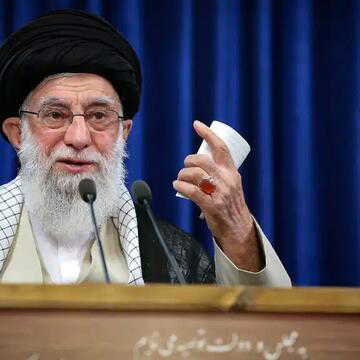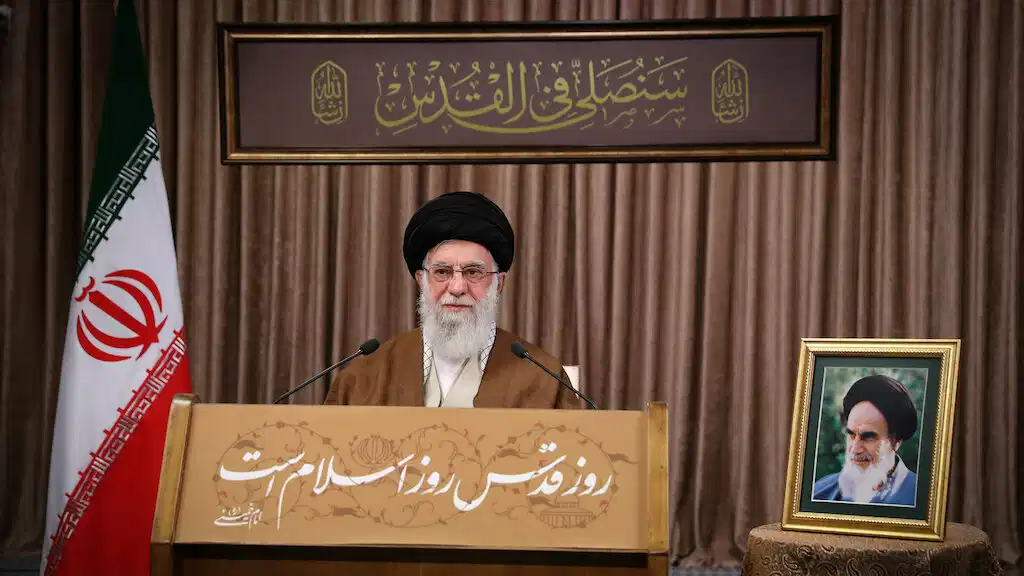
US President Donald Trump has announced that Iran’s Supreme Leader Ayatollah Ali Khamenei is dead following joint American and Israeli air strikes, describing the development as “the single greatest chance for the Iranian people to take back their Country.” In a post on social media, Trump said Khamenei was tracked using “highly sophisticated” intelligence systems and warned that “heavy and pinpoint bombing” would continue uninterrupted.
Two Israeli officials, speaking to the Associated Press on condition of anonymity, said that Israel had confirmed Khamenei’s death after strikes hit near his compound in Tehran. Iranian state media reported explosions across the capital, with smoke seen in central districts. Roads leading to the Supreme Leader’s offices were sealed off, airspace was closed, and mobile networks were disrupted. There has been no official confirmation from Tehran.
A rare transition at the top
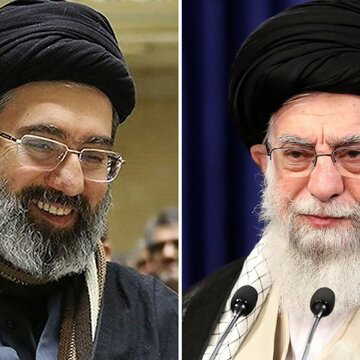
Khamenei, 86, had ruled since 1989, making him the Middle East’s longest-serving head of state. His death would mark only the second leadership transition since the 1979 Islamic Revolution led by Ayatollah Ruhollah Khomeini, who established the Islamic Republic. After Khomeini died in 1989, Khamenei was elevated from president to Supreme Leader.
Under Iran’s constitution, the 88-member Assembly of Experts selects the Supreme Leader. However, candidates for the Assembly are vetted by the Guardian Council, whose members are appointed directly or indirectly by the Supreme Leader, keeping the process tightly controlled.
Names in contention
Several senior clerics are being discussed as potential successors. Ayatollah Alireza Arafi, who leads Iran’s nationwide seminary system and serves on both the Guardian Council and the Assembly of Experts, is seen as a figure who would signal continuity.
Hojjat-ol-Eslam Mohsen Qomi, a key adviser within Khamenei’s office, is viewed as a trusted insider. Ayatollah Mohsen Araki, a long-time member of the Assembly of Experts, also has the religious standing often considered essential for the role.
Ayatollah Gholam Hossein Mohseni Ejei, Iran’s judiciary chief, stands out for his national security background and administrative experience. Ayatollah Hashem Hosseini Bushehri, Friday prayer leader in Qom and an Assembly member, is another senior cleric frequently mentioned.
High stakes for the region
As per a report by The Times of India, most of the potential contenders are in their mid-to-late sixties and do not carry the decades-long authority Khamenei consolidated. With Iran already engaged in escalating tensions with Israel and targeting US bases in the Gulf, the succession process unfolding behind closed doors could shape not only Iran’s internal balance of power but also its regional strategy and nuclear posture in the months ahead.