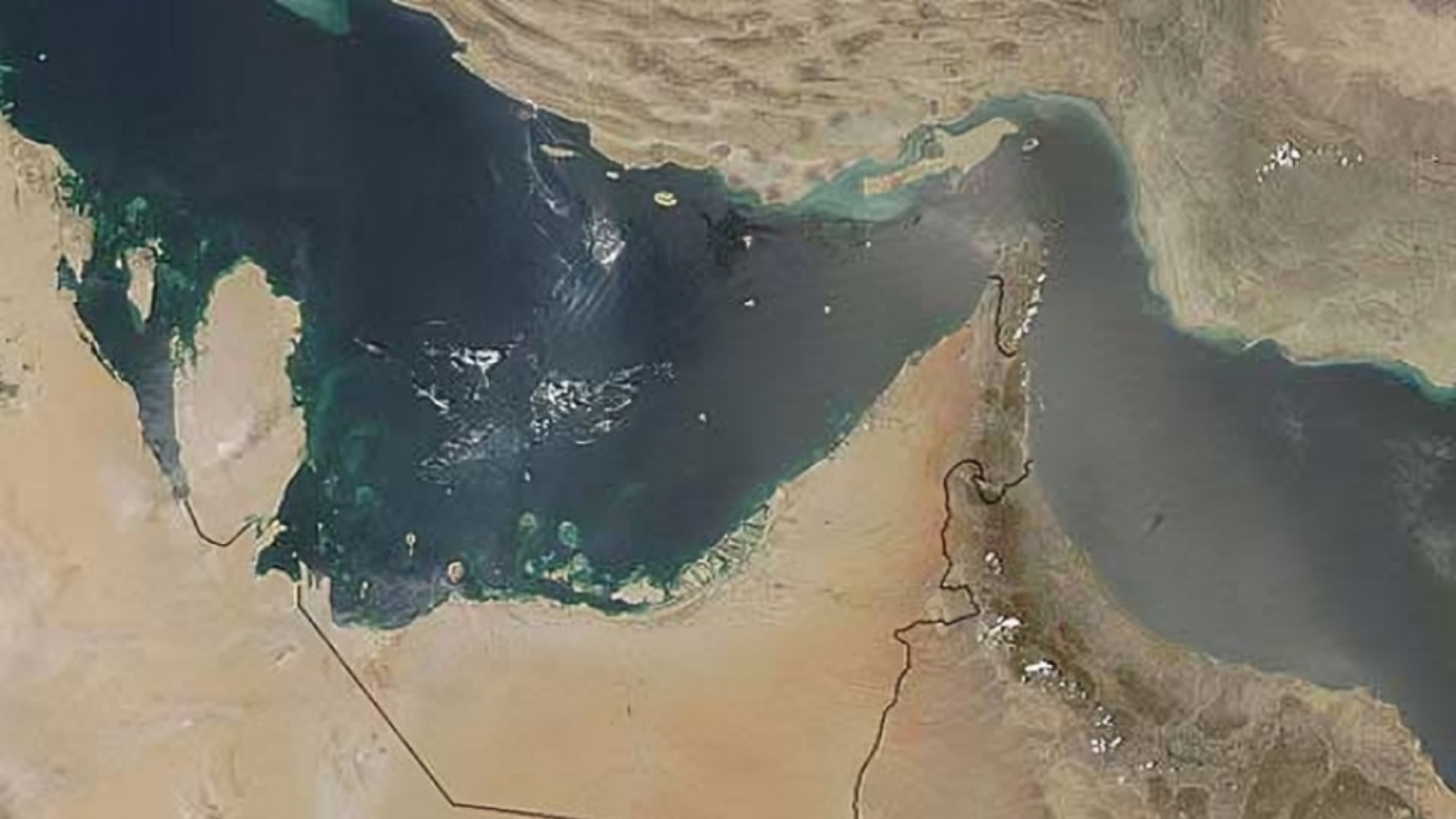
The Strait of Hormuz is only a narrow strip of water on the world map, but for India it is one of the most important energy lifelines. This passage between Iran and Oman connects the Persian Gulf with the Arabian Sea and the wider Indian Ocean. Through this corridor move crude oil, LNG and LPG that power economies, industries, transport systems and households across Asia.
For India, Hormuz is not a distant geography. It is petrol, diesel, cooking gas, fertiliser, inflation, the rupee, maritime security and household survival compressed into one narrow passage.
If Hormuz slows down, India feels the pressure. If Hormuz closes, India may face an energy shock.
The Chokepoint That Feeds the World
The Strait of Hormuz is one of the world’s most critical energy chokepoints. Around 20 million barrels of oil per day move through this route, equal to nearly one-fifth of global petroleum liquids consumption. It also carries a major share of global seaborne oil trade, making it one of the most sensitive corridors in the global energy system.
The LNG exposure is equally serious. Around one-fifth of global LNG trade passes through Hormuz, and a major portion of that LNG is headed towards Asian markets. China, India, Japan and South Korea are among the major economies exposed to this route.
This means Hormuz is not just a Gulf issue. It is an Asian energy security issue.
India’s Energy Dependence: The Numbers Behind the Risk
India is the world’s third-largest crude oil consumer and one of the largest importers. Its dependence on imported crude remains extremely high. India imports nearly 88% to 90% of its crude oil requirement. That means any disruption in global oil flows immediately affects fuel prices, inflation, transport costs, the rupee, government finances and household budgets.
India consumes roughly 5.5 million barrels of crude oil per day. Although it has diversified suppliers in recent years, a large part of its energy system remains exposed to maritime chokepoints. India now imports crude from nearly 40 countries, compared with around 20 earlier, and a larger share of crude is being routed through alternative maritime routes. This shows diversification, but it does not eliminate vulnerability.
The sharper risk lies in LPG and LNG. LPG is used by millions of Indian households for cooking. LNG is important for fertiliser plants, city gas networks, power generation, industries and transport. If these flows are disrupted, the impact does not remain inside refineries. It enters homes, farms, factories and markets.
What an Energy Lockdown Really Means
An energy lockdown does not always begin with dry petrol pumps. It begins quietly.
Tankers wait outside chokepoints.
Shipping insurance becomes expensive.
Freight charges rise.
Crude prices move up.
Refiners search for alternative supplies.
LPG cargoes become uncertain.
LNG prices jump.
The rupee comes under pressure.
Fertiliser costs rise.
Food inflation follows.
Finally, the shock reaches the ordinary citizen.
A family cooking dinner in Kolkata, a truck carrying vegetables in Maharashtra, a fertiliser plant in Gujarat, an airline refuelling in Delhi, a refinery in Jamnagar and a city gas network in Mumbai are all connected to the safety of this narrow waterway thousands of kilometres away.
Crude Oil: The First Shock
The first impact of a Hormuz crisis would be on crude oil. If Gulf crude becomes difficult to access, Indian refiners will have to source more from Russia, the United States, West Africa, Latin America and other suppliers.
India has already diversified its crude basket. Russia became a major supplier after the Ukraine war, while India has also increased purchases from the US, Brazil, Nigeria and other regions. This diversification gives India breathing space. But it does not make India immune.
Crude oil is not a single uniform product. Every crude grade has different sulphur content, density and refining behaviour. Refineries are configured to process specific blends efficiently. Sudden switching can increase costs, reduce margins and complicate refinery operations.
So even if India can find alternative crude, it may have to pay more.
LPG: The Household Pressure Point
The most politically sensitive risk is LPG. Cooking gas is not just an energy commodity in India. It is a household necessity. Any disruption in LPG imports can affect cylinder availability, consumer prices and the subsidy burden.
This is where Hormuz becomes personal.
A blockade or prolonged disruption can push the crisis from oil markets into Indian kitchens. LPG supply chains are harder to replace quickly because they require specialised vessels, terminals, storage and contracts. Unlike crude, which can be diversified more flexibly, LPG supply is more rigid.
Recent movement of India-bound LPG carriers through Hormuz has brought temporary relief, but it also underlines India’s dependence on uninterrupted passage. If this passage becomes unstable for a longer period, the impact can be felt directly by households.
LNG, Fertiliser and Food Inflation
The LNG risk is equally serious. Natural gas is used in fertiliser production, city gas distribution, industries and power generation. If LNG prices rise, fertiliser becomes costlier. If fertiliser becomes costlier, agriculture faces higher input costs. If agricultural costs rise, food inflation can follow.
This is how a maritime crisis near Iran can eventually affect the price of vegetables, grains and daily essentials in India.
Energy inflation rarely remains limited to energy. It travels through transport, agriculture, manufacturing, logistics and retail prices.
Rupee, Import Bill and Inflation
Every rise in crude prices increases India’s import bill. A higher import bill means more dollars leaving the country. This puts pressure on the rupee. A weaker rupee makes imports even more expensive. That creates a second round of inflation.
For a country that imports nearly nine-tenths of its crude requirement, oil price volatility is not just an energy issue. It is a macroeconomic issue.
Higher oil prices can widen the current account deficit, increase subsidy pressure, raise transport costs and affect consumer spending. If the government absorbs the shock, fiscal pressure rises. If consumers absorb it, household budgets suffer.
Global Oil Market: The Calm May Be Temporary
Oil markets often react before the actual shortage arrives. Even rumours of a Hormuz blockade can push prices higher because traders, refiners, shipping companies and governments begin to price in risk.
A serious disruption in Hormuz can remove millions of barrels per day from normal supply flows. Since around one-fifth of global oil movement is connected to this route, even partial disruption can create global price volatility. The market may appear calm for a few days if some tankers continue to move, but the underlying risk remains severe.
India’s Immediate Response
India has tried to reduce risk by widening its supply base. It now buys crude from a wider group of countries, including Russia, the United States, Brazil, Nigeria and other suppliers. A larger share of India’s crude imports is also being routed through alternative maritime routes.
This is a significant shift. It means India has learned from previous energy shocks and is trying to avoid overdependence on one route.
But diversification is easier for crude than for LPG and LNG. Crude can be sourced from multiple regions. LPG and LNG require more specialised logistics, long-term contracts and storage infrastructure. That is why the Hormuz risk cannot be dismissed.
Strategic Reserves: Useful, but Not Enough
India has strategic petroleum reserves, but the scale remains limited compared with the size of the economy and daily consumption. Strategic reserves are useful during short disruptions, but they cannot fully protect the country from a prolonged maritime crisis.
If India consumes roughly 5.5 million barrels of crude per day, even large reserves can disappear quickly during a sustained shock. Strategic storage must therefore be expanded, diversified and better integrated with refinery requirements.
India also needs stronger LPG storage and more flexible LNG arrangements. Household fuel security should be treated as seriously as crude security.
The Oman Subsea Pipeline Idea
One important long-term idea is a proposed subsea gas pipeline from Oman. The estimated cost of such a project is around ₹40,000 crore, or roughly $4.7 to $4.8 billion, and it may take five to seven years after approval.
This idea matters because it shifts the discussion from supplier security to route security.
Energy security is not only about who sells fuel. It is also about how that fuel reaches India. A pipeline that bypasses vulnerable surface shipping routes could become a strategic insurance policy, although such a project would be expensive, complex and long-term.
Maritime Security Is Economic Security
The Hormuz crisis also shows why maritime security is now economic security. The Indian Navy’s role in protecting sea lanes is not only a defence matter. It is linked to fuel prices, inflation, refinery operations, trade stability and household welfare.
A delayed tanker can affect refinery planning.
A spike in insurance can raise import costs.
A blocked route can increase fuel prices.
A maritime conflict can weaken the rupee.
In the twenty-first century, naval strategy and household economics are connected.
Energy Transition as National Security
The crisis also strengthens the case for India’s energy transition. Renewable energy, electric mobility, battery storage, green hydrogen, biofuels, domestic gas production and solar manufacturing are often discussed as climate policies. But they are also national security policies.
Every electric bus reduces diesel dependence.
Every solar plant reduces imported fuel pressure.
Every battery storage project strengthens grid resilience.
Every unit of green hydrogen can reduce fossil fuel vulnerability.
Every domestic energy source reduces exposure to distant conflicts.
India cannot eliminate oil and gas dependence overnight. But it can reduce the strategic risk over time.
The Bigger Question: Growth Without Vulnerability
India wants to become a major global economic power. More factories, airports, ports, roads, logistics networks, data centres, homes and vehicles will require more energy. A growing economy needs reliable fuel and electricity.
But this creates a contradiction.
India’s growth story depends on energy security, while its energy security remains exposed to global chokepoints.
The Hormuz crisis is therefore not just about one strait. It is about the foundation of India’s economic future. A country cannot build a high-growth economy on fragile sea lanes alone.
Is India Heading Towards an Energy Lockdown?
Not immediately. India has diversified suppliers, strategic reserves, refinery strength and diplomatic flexibility. Tankers are still moving. Alternative routes are being used. The government has options.
But the risk is real.
If Hormuz remains open, India can manage the pressure. If disruption continues for weeks or months, the shock can move from shipping lanes to refineries, from refineries to petrol pumps, from petrol pumps to transport costs, and from transport costs to food prices and household budgets.
Hormuz is far from India’s coastline, but its tremors can be felt across the country: in Delhi’s policy rooms, Mumbai’s markets, Gujarat’s refineries, Bengal’s transport networks and millions of kitchens where gas flames burn every day.
Hormuz Is Not Just a Strait, It Is a Warning
The Strait of Hormuz may look like a narrow blue line on the map, but for India it is a lifeline of oil, gas and cooking fuel. It connects West Asian geopolitics with Indian inflation. It connects naval security with household budgets. It connects tanker movement with fertiliser prices. It connects a distant conflict with everyday survival.
The lesson is clear.
India needs larger strategic reserves, stronger LPG and LNG storage, more flexible supply contracts, diversified routes, stronger maritime protection and faster energy transition. It must secure today’s fuel while building tomorrow’s independence.
In the twenty-first century, a blocked sea route can become an economic lockdown. For India, Hormuz is not just geography. It is energy, inflation, diplomacy, maritime security and household survival compressed into one narrow passage.
The Strait of Hormuz may appear as a thin stretch of water on the map, but for India it is a critical energy lifeline. This corridor between Iran and Oman links the Persian Gulf to the Arabian Sea and the wider Indian Ocean. Through it flows the oil and gas that power industries, transport systems and homes across Asia.
For India, Hormuz is not a distant location. It is directly linked to petrol, diesel, LPG cylinders, fertiliser costs, inflation, the rupee and everyday expenses. Any disruption here can quickly ripple through the Indian economy.
A global energy chokepoint that feeds the world
Hormuz is one of the most important energy chokepoints in the world. Around 20 million barrels of oil move through this route daily, close to one-fifth of global petroleum consumption. It also carries a large share of the seaborne oil trade.
The exposure is not limited to crude oil. Nearly one-fifth of global LNG trade passes through this route, much of it heading towards Asia. Major economies such as India, China, Japan and South Korea depend on this corridor.
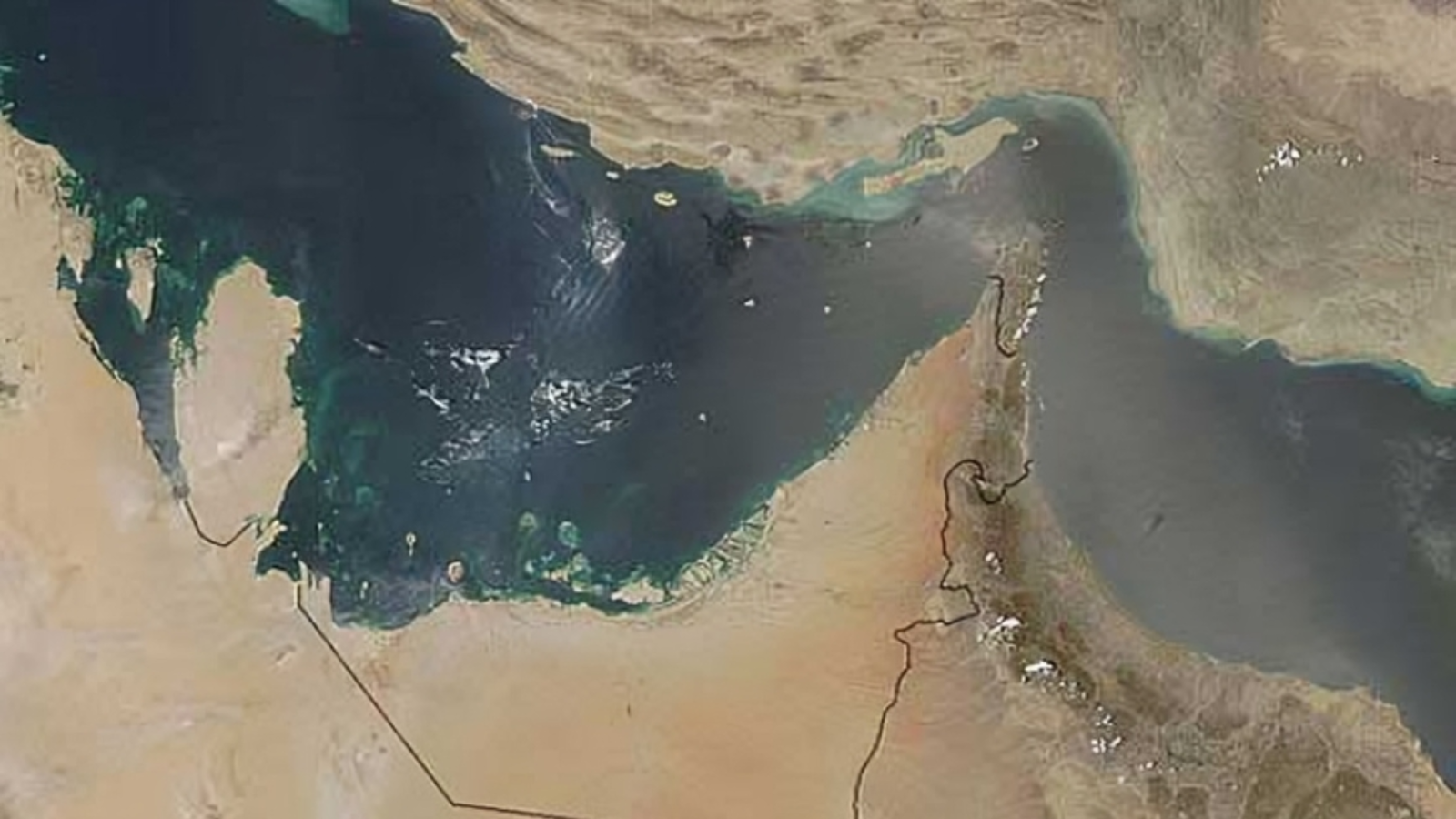 Strait of Hormuz /NASA
 This makes Hormuz not just a regional concern but a core issue for Asian energy security.
Also Read | UAE welcomes PM Modi with F-16 escort in Abu Dhabi | WATCH
India’s import dependence
India is the world’s third-largest consumer of crude oil and relies heavily on imports. Around 88 to 90 per cent of its crude requirement comes from overseas.
India consumes roughly 5.5 million barrels of oil per day. Over the years, it has expanded its supplier base from about 20 countries to nearly 40. This includes imports from Russia, the United States, Brazil and African nations.
While this diversification reduces some risk, it does not eliminate exposure to maritime routes like Hormuz.
The vulnerability is sharper in LPG and LNG. LPG fuels millions of kitchens, while LNG supports fertiliser plants, industries, city gas networks and power generation. Disruption in these supplies affects both the economy and daily life.
How an energy disruption unfolds
An energy crisis rarely begins with empty fuel stations. It starts quietly and builds over time.
Tankers face delays near chokepoints
Shipping insurance costs rise
Freight charges increase
Crude prices move up
Refiners look for alternative sources
LPG shipments become uncertain
LNG prices rise
The rupee weakens
Fertiliser costs increase
Food inflation follows
Eventually, the impact reaches households, transport networks and local markets.
Also Read | Trump had to give up his cellphone during high-stakes China summit —here's why
Crude Oil: The first layer of impact
If access to Gulf oil is disrupted, Indian refiners would need to source crude from alternative regions such as Russia, the US, West Africa and Latin America.
India has already increased imports from these regions in recent years. This provides flexibility, but switching supply is not always simple.
Crude oil varies in quality. Different grades have different sulphur levels and densities. Refineries are designed for specific blends, and sudden changes can raise costs and affect efficiency.
Even when alternative supplies are available, they may come at a higher cost.
LPG: Direct Impact on Households
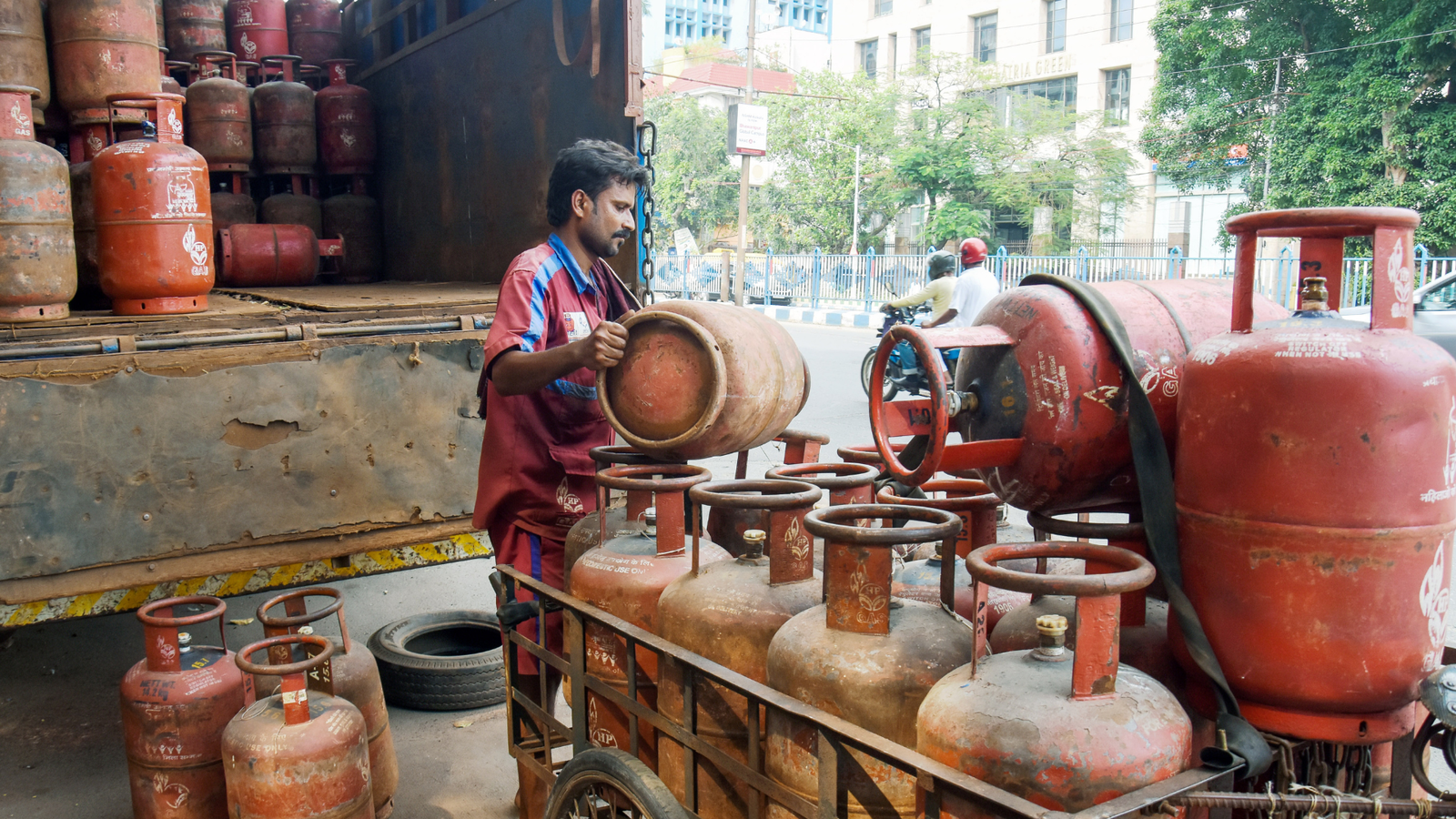
LPG is the most sensitive link in this chain. It is a daily necessity for millions of Indian households.
Any disruption in LPG imports can affect availability and pricing. Unlike crude oil, LPG supply chains are less flexible. They depend on specialised ships, terminals and storage systems.
This is where Hormuz becomes a household issue. A prolonged disruption can move the crisis from global markets into Indian kitchens.
LNG, fertiliser and food prices
LNG plays a key role in fertiliser production and industrial use. If LNG prices rise, fertiliser costs increase. Higher fertiliser costs raise agricultural input expenses, which can eventually push up food prices.
This creates a chain reaction where a maritime disruption affects agriculture and household consumption.
 /ANI
/ANI Energy price shocks rarely stay limited to the energy sector. They spread across transport, logistics, manufacturing and retail.
Also Read | What are PFAS? New study finds toxic chemicals in nearly all blood samples tested
Impact on rupee and inflation
Rising oil prices increase India’s import bill. This leads to higher demand for dollars, putting pressure on the rupee.
A weaker rupee makes imports more expensive, adding to inflation. This creates a cycle where rising energy costs feed into broader economic pressure.
Higher fuel prices can also increase government subsidy burdens or raise costs for consumers, affecting spending and growth.
Market sensitivity to Hormuz
Global oil markets often react even before actual supply disruptions occur. Any tension or uncertainty around Hormuz can push prices higher as traders factor in risk.
Since a large share of global oil flows through this route, even partial disruption can trigger volatility.
Short-term calm in the market does not remove underlying risk if shipping remains uncertain.
India’s current response
India has taken steps to reduce risk by expanding its supplier base and increasing imports from multiple regions.
This diversification offers some resilience, especially for crude oil. However, LPG and LNG remain more difficult to replace quickly due to infrastructure and contract limitations.
India’s energy system is better prepared than before, but it still depends on stable maritime routes.
Also Read | Hantavirus cases rise to nine as MV Hondius passengers return home: How far has it spread?
Reserves vs reality: How long can India hold out?
India maintains strategic petroleum reserves to handle short-term disruptions. These reserves can provide temporary relief during supply shocks.
However, their scale is limited compared to daily consumption. Prolonged disruptions could quickly deplete these reserves.
There is also a need to strengthen LPG storage and ensure more flexible LNG arrangements to protect household and industrial supply.
One proposed long-term solution is a subsea gas pipeline from Oman. Such a project could reduce reliance on vulnerable shipping routes. The estimated cost is significant, and timelines could extend over several years. While complex, such infrastructure highlights the importance of route security alongside supply diversification.
Sea lanes that shape the economy
 (Representational Image) /ANI
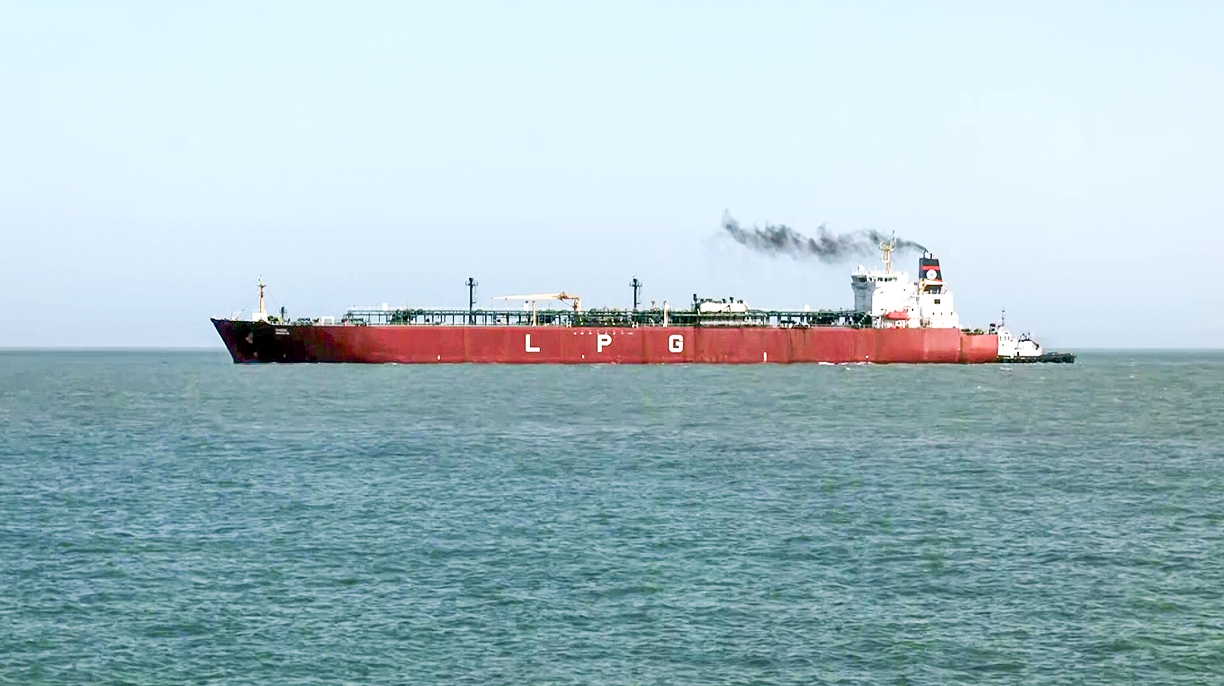
 The role of maritime security has become closely tied to economic stability. Safe sea lanes are essential for uninterrupted energy flows.
Shipping delays, higher insurance costs or route disruptions directly affect fuel prices and trade costs.
This makes maritime security not just a defence issue but an economic one.
Clean energy as a shield against global shocks
India’s push towards renewable energy and alternative fuels also has a strategic dimension.
Solar and wind reduce dependence on imported fuel
Electric mobility lowers oil demand
Battery storage improves energy resilience
Green hydrogen offers long-term alternatives
These steps gradually reduce exposure to external supply shocks.
Also Read | Trump reignites Venezuela debate with '51st state' post ahead of China trip
Growth vs energy security: India’s balancing act
India’s economic growth requires reliable energy. As demand increases, so does dependence on imports. This creates a structural challenge. Growth depends on energy security, but energy security is tied to global supply routes.
The Strait of Hormuz remains a key link in this chain.
Hormuz is not just a strait; it is a warning
The Strait of Hormuz is more than a geographic passage. For India, it connects global energy flows with domestic stability. It influences fuel prices, inflation, agriculture, industry and household budgets. A disruption here can move quickly across sectors and regions.
India has taken steps to diversify supplies and strengthen resilience. Yet, the dependence on maritime routes remains significant.
The lesson is clear. Energy security requires not just diversified suppliers, but secure routes, stronger reserves and long-term alternatives. In today’s interconnected economy, even a narrow waterway can shape the trajectory of growth and stability.