US President Donald Trump has said the recent memorandum of understanding with Iran should not be viewed as a sign of restraint by Washington, arguing instead that it reflects what he described as Iran's military defeat following a three-month conflict.
In an interview with Axios cited by NDTV, Trump rejected suggestions that the war had exposed limits to American power. Asked whether the conflict had taught him anything about those limits, he replied, "I haven't learned that lesson yet. I know there are, but there are no limits."
Trump defends decision to strike a deal
Trump said the agreement was aimed at preventing wider economic disruption rather than demonstrating weakness. Though he entered the conflict demanding Iran's unconditional surrender, the current memorandum does not include Washington's earlier demand that Iran halt nuclear enrichment and relocate its stockpile.
Also Read | 'You got the best': Trump says Israel is 'very happy' with new US-Iran agreement
Reiterating his view of the outcome, Trump said the agreement amounted to a probable "unconditional surrender".
"Who else could have done a blockade like that? I did a naval blockade where not one ship was able to get through. Some tried. It didn't last very long," he told Axios, per a report by NDTV.
Trump also argued that extending military operations would have had serious global consequences.
"The only way I can get tougher is if I go in there for another two or three weeks and continue to bomb the hell out of 'em. Right? But what does that get us? The Strait of Hormuz will not be open. We wouldn't have oil for months. This is the kind of thing that could cause a worldwide depression," he said.
Questions emerge over next phase
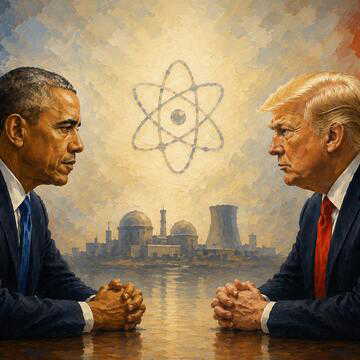
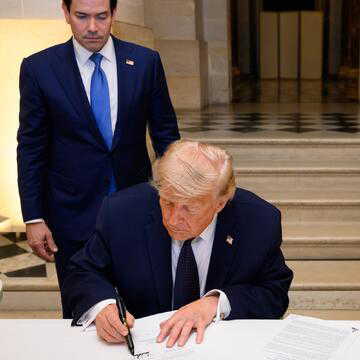
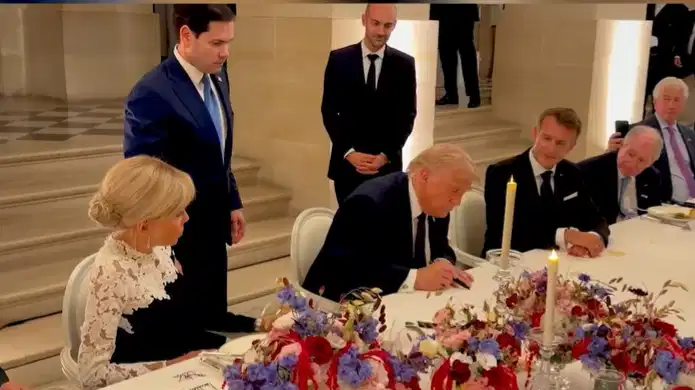
The memorandum signed by Trump and Iranian President Masoud Pezeshkian has opened a 60-day window for negotiations on broader issues, including Iran's nuclear programme.
However, uncertainty remains after Vice President JD Vance postponed a planned visit to Switzerland, where talks on the next steps in the US-Iran agreement were expected to take place.
Earlier, Vance had said, "As they dial up their good behavior, we can dial up the economic relief. If they dial down their good behavior, we can turn it off."
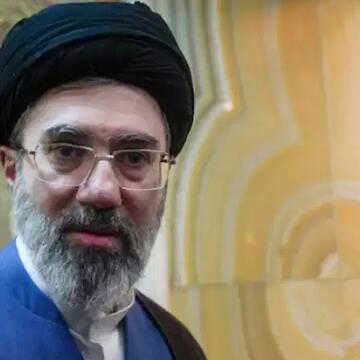
Iran's Supreme Leader Ayatollah Mojtaba Khamenei also expressed reservations about the agreement, saying future "face-to-face negotiations" with the US would not "mean accepting the enemy's point of view".
Strait of Hormuz reopens
Following the agreement, US forces lifted their naval blockade of Iranian ports. Maritime trackers reported that oil tankers and other commercial vessels had resumed transit through the Strait of Hormuz.
Also Read | What are the 14 clauses of the US-Iran peace deal? Explained
Iranian state media said shipping had "normalised" at southern ports, though authorities noted that movement through the waterway remains under military supervision and requires coordination.
Meanwhile, Trump envoy Steve Witkoff told US lawmakers that Iran would invite the International Atomic Energy Agency to inspect its nuclear facilities and begin efforts to identify the locations of enriched nuclear material believed to be buried under rubble.
FAQs:
What did Trump say about the Iran deal?
He described it as a sign of Iran's military defeat and not a limit on US power.
What happens next under the US-Iran memorandum?
Both sides have 60 days to negotiate a broader agreement, including nuclear issues.