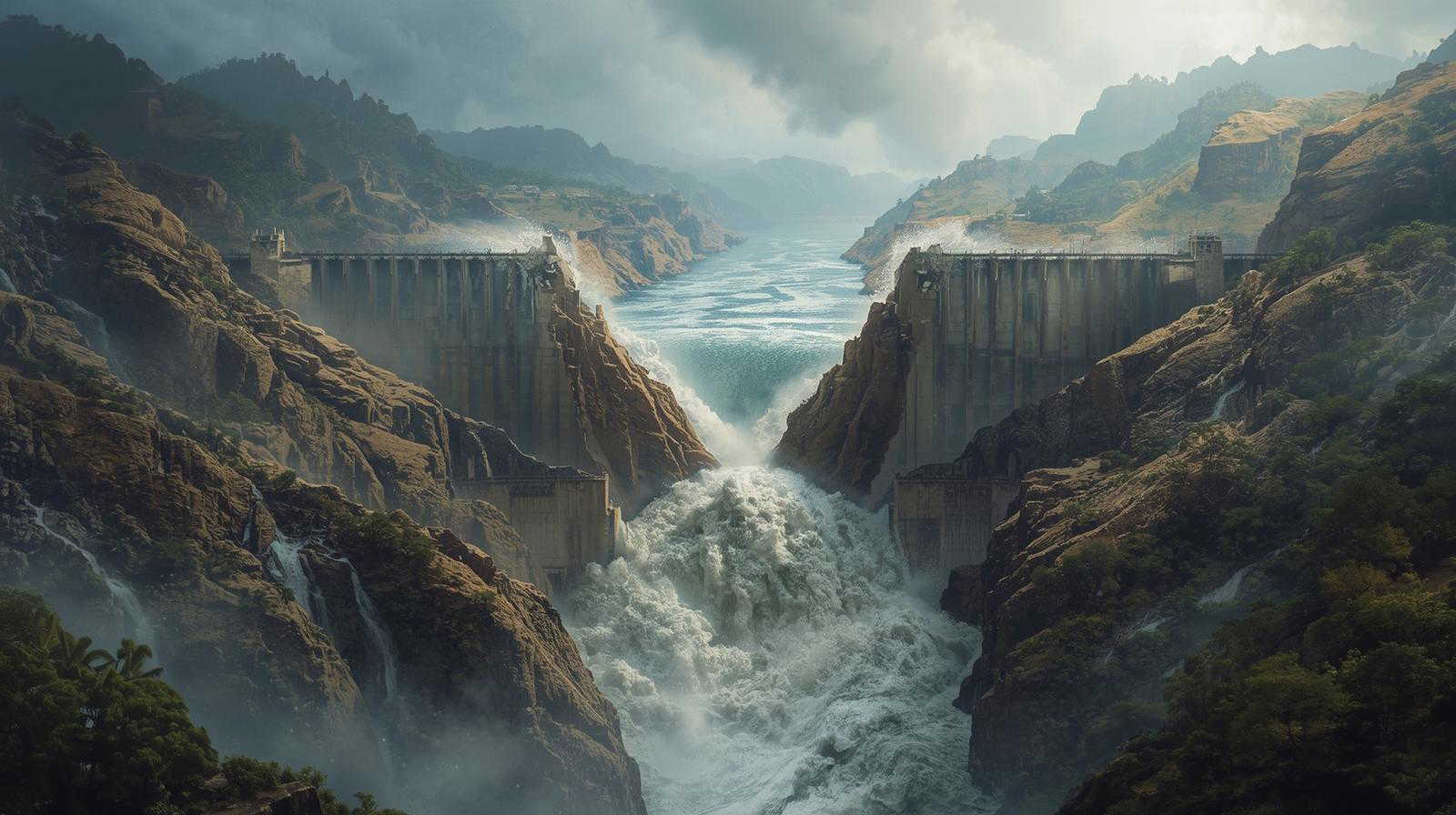
China is moving ahead with one of its biggest and most debated infrastructure projects, a massive hydropower system on the Yarlung-Tsangpo River in Tibet. The project has raised serious concerns for India and neighbouring countries, especially those dependent on the Brahmaputra river for daily life, farming and fishing.
The Yarlung Tsangpo flows out of Tibet and enters India as the Brahmaputra before continuing into Bangladesh. It is a significant river for millions of people across the region. According to CNN, experts have warned that large-scale construction upstream could change the river’s natural flow in ways that are still not fully understood.
The project, estimated to cost $168 billion, plans to use a sharp 2,000-metre drop in altitude to generate hydropower. While Beijing has described the dam as a source of clean and climate-friendly energy, specialists caution that it could disturb fragile ecosystems and displace indigenous communities living in the area.
The hydropower system is expected to be highly complex, involving multiple dams, reservoirs and underground power stations connected by tunnels. Brian Eyler, director of the Energy, Water and Sustainability Program at the Stimson Centre in Washington, called it the "most sophisticated the planet has ever seen," and added, "It's also the riskiest and potentially the most dangerous."
China's Ministry rejects the concerns
China’s Ministry of Foreign Affairs has rejected these concerns, stating that the project has undergone "decades of in-depth research" and that authorities have "implemented thorough measures for engineering safety and ecological protection to ensure it will not adversely affect downstream areas."
For India, the risks are significant. Changes in water flow upstream could affect sediment movement, fish migration and seasonal flooding patterns, which are crucial for agriculture and biodiversity downstream. Although much of the Brahmaputra’s water comes from Indian monsoon rains and tributaries, experts say upstream changes could still disrupt the river’s natural balance.
As per the report of NDTV, the dam also has geopolitical implications. "If you connect the dots of Chinese infrastructure development in the Himalayas, especially in areas where China borders India along Tibet, they are strategically placed," said Rishi Gupta, assistant director at the Asia Society Policy Institute in New Delhi. He added, "The project aligns with China's broader goal of leveraging its natural resources to consolidate control over critical regions like Tibet and its borders."
ALSO READ | ‘Syria is proud’: Family hails Ahmed al-Ahmed for heroic act during Bondi Beach shooting
The Yarlung Tsangpo region is ecologically sensitive and lies near major nature reserves. It is home to endangered species such as Bengal tigers, clouded leopards, black bears and red pandas. Scientists and rights groups have long expressed doubts about building large infrastructure projects in such fragile terrain.
Human displacement is another concern. Tens of thousands of people live in the counties where the project will be built, including indigenous groups like the Monpa and Lhoba. Chinese officials have acknowledged that the project will involve relocating local communities.
"People could face forced displacement from their ancestral homes... destruction to the source of local income, destruction of local ecological balance and wildlife habitat, influx of migrant workers from China replacing the local population in the region," said Tempa Gyaltsen Zamlha, deputy director of the Tibet Policy Institute in Dharamsala.
Brian Eyler, director of the Energy, Water and Sustainability Program at the Stimson Centre in Washington, described it as “the most sophisticated the planet has ever seen, adding, “It’s also the riskiest and potentially the most dangerous.”
In July, a senior official from Arunachal Pradesh warned that the project could pose an existential threat to the state and even be used as a "water bomb".
ALSO READ | Lack of security: New Delhi shuts down Indian visa application centre in Dhaka, hints at stern measures
"China cannot be trusted. No one knows what they will do and when," Khandu told the Press Trust of India, warning that controlling water flow could flood or dry out large parts of the region.
India has said it is "carefully monitoring" the situation and has promised "necessary measures to protect our interests, including preventive and corrective measures to safeguard life and livelihood of Indian citizens."
China’s past handling of the Mekong River has increased suspicion, with downstream countries accusing Chinese dams of worsening drought conditions, claims Beijing has denied.
The uncertainty is already influencing India’s response. Officials from India’s largest state-backed hydropower company are pushing ahead with a proposed 11,200-megawatt dam on the Brahmaputra, partly due to concerns over China’s upstream project.