Iranian President Masoud Pezeshkian has apologised to neighbouring countries following missile attacks carried out during the ongoing conflict involving Iran, Israel and the United States. Speaking in an address broadcast by Iranian state television, the president said Tehran would avoid targeting nearby nations unless attacks were launched against Iran from their territory.
"I apologise to the neighbouring countries that were attacked by Iran. The interim leadership council agreed yesterday that no more attacks will be made on neighbouring countries and no missiles will be fired unless an attack on Iran originates from those countries," Pezeshkian said.
At the same time, he made it clear that Iran would not accept pressure to surrender.
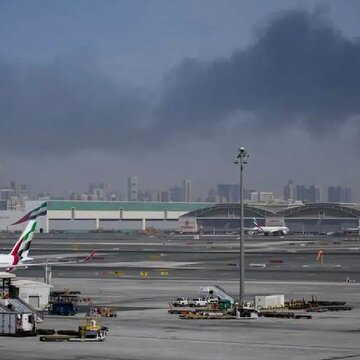
Also Read | Explosions rock Dubai as missile intercepted mid-air; airport operations briefly halted
"The enemies must take their wish for the surrender of the Iranian people to their graves," he said.
Escalation after killing of Iran's Supreme Leader
Iran has been launching missile strikes over the past week in retaliation for the killing of its Supreme Leader Ayatollah Ali Khamenei. The attacks have reportedly struck several Gulf locations, including Dubai, Abu Dhabi, Qatar, Kuwait and Bahrain.
Videos circulating online have shown scenes of explosions and large-scale damage in parts of the region as tensions escalated.
The developments follow coordinated airstrikes by the United States and Israel on February 28. The operation, named ‘Operation Epic Fury’, targeted multiple locations across Iran, including the capital Tehran.
During the strikes, Ayatollah Khamenei was killed while at his compound in Tehran. According to reports, members of his family, including his daughter, son-in-law and granddaughter, were also killed in the attack.
Khamenei’s wife, Mansoureh Khojasteh Bagherzadeh, later died from injuries sustained during the strikes.
Gulf region on high alert
In the aftermath of the strikes and Iran’s retaliation, several parts of the Gulf region have reported missile alerts, explosions and air raid sirens.
Cities such as Dubai and Abu Dhabi in the United Arab Emirates have experienced repeated warnings as defence systems intercepted incoming drones and missiles.
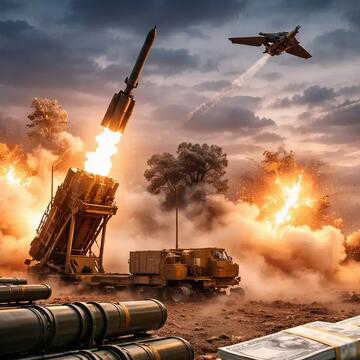
Also Read | $4 million missiles vs $20,000 drones: The costly dilemma shaping the Iran conflict
Operations at Dubai International Airport were temporarily suspended on Saturday after what authorities described as a “minor incident”.
The Dubai Media Office said in a statement, "For the safety of passengers, airport staff, and airline crew, operations at Dubai International (DXB) have been temporarily suspended."
The conflict, which began with the February 28 airstrikes, has led to widespread disruption across the region. Several airspaces in the Gulf have been closed, resulting in thousands of flight cancellations.
Missiles and drones have also targeted US bases and facilities in countries including Qatar, Bahrain, Saudi Arabia, Kuwait and the United Arab Emirates.
According to an Associated Press report citing officials, the death toll has risen to at least 1,230 people in Iran, over 200 in Lebanon, and around a dozen in Israel. Six US troops have also been reported killed.