

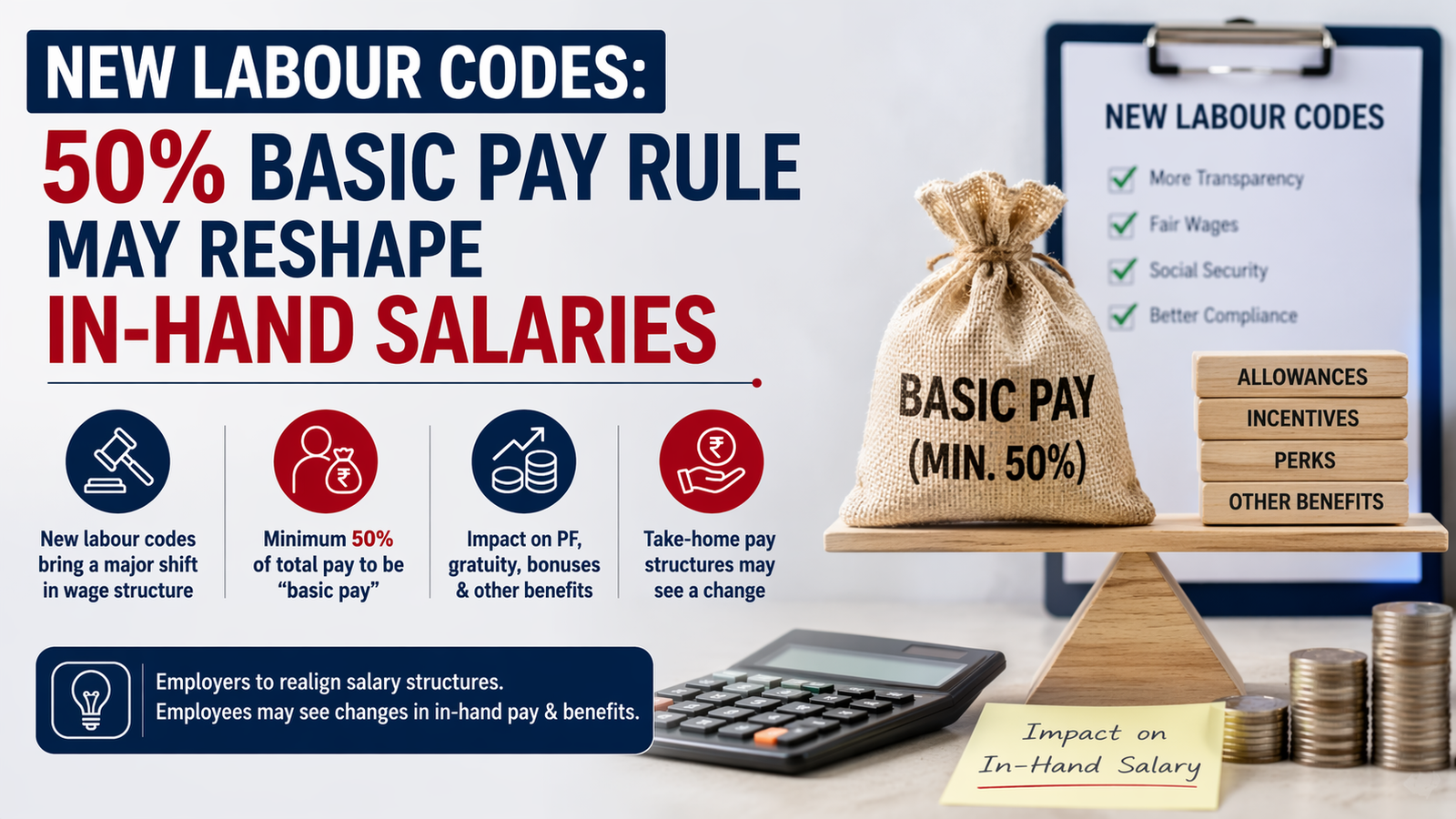
India’s sweeping labour reforms are beginning to alter how salaries are structured, with the 50% basic pay rule under the Code on Wages emerging as a key change. While the reform aims to strengthen social security, it could lead to lower monthly take-home salaries for many employees. The new framework is part of four consolidated labour laws, including the Code on Wages, Industrial Relations Code, Code on Social Security, and Occupational Safety, Health and Working Conditions Code, which came into effect on November 21, 2025.
What the 50% basic pay rule means
Under the revised wage definition, basic pay, dearness allowance, and retaining allowance must together make up at least 50% of an employee’s total remuneration. This effectively caps the share of allowances such as HRA, bonuses, and special pay components that companies can use in structuring salaries. If these excluded components exceed 50% of the total cost to the company (CTC), the excess must be added back into wages for calculating statutory contributions like the provident fund and gratuity.
Why companies are restructuring salaries
Earlier, many employers kept basic pay between 30–40% of total CTC to reduce statutory payouts and optimise tax efficiency. With the new rules, companies are now reworking salary structures by increasing the basic component and reducing allowances. Experts say the intent is not to increase tax burdens but to standardise wage definitions and ensure stronger social security coverage for employees. The most immediate effect for employees could be a dip in monthly take-home pay. This is mainly due to two factors:
Higher statutory deductions:
As basic pay rises, contributions towards provident fund and gratuity increase, reducing the cash component received each month.
Reduced tax-efficient allowances:
Allowances such as HRA and leave travel benefits, which previously helped lower taxable income, may shrink. This could raise taxable income, particularly for those using the old tax regime.
Long-term benefits vs short-term impact
While employees may see lower in-hand salary, the flip side is improved financial security. Higher contributions to provident fund and gratuity translate into better retirement savings and a stronger safety net over time.
Also Read | Jacqueline Fernandez seeks approver status in ₹200 crore ED money laundering case
Tax implications vary
The tax impact depends on the regime an employee chooses. Under the old regime, higher deductions may still provide some relief, though reduced exemptions could offset gains. Under the new tax regime, where exemptions are minimal, the effect is likely to be more visible as reduced take-home pay.
Also Read | Framed as safety, exposed as failure: Delhi’s policing crisis under scrutiny
A structural shift in compensation
The 50% rule marks a significant shift in how salaries are designed in India. By prioritising long-term benefits over short-term liquidity, the labour codes aim to create a more balanced and secure compensation system—though not without immediate trade-offs for employees.