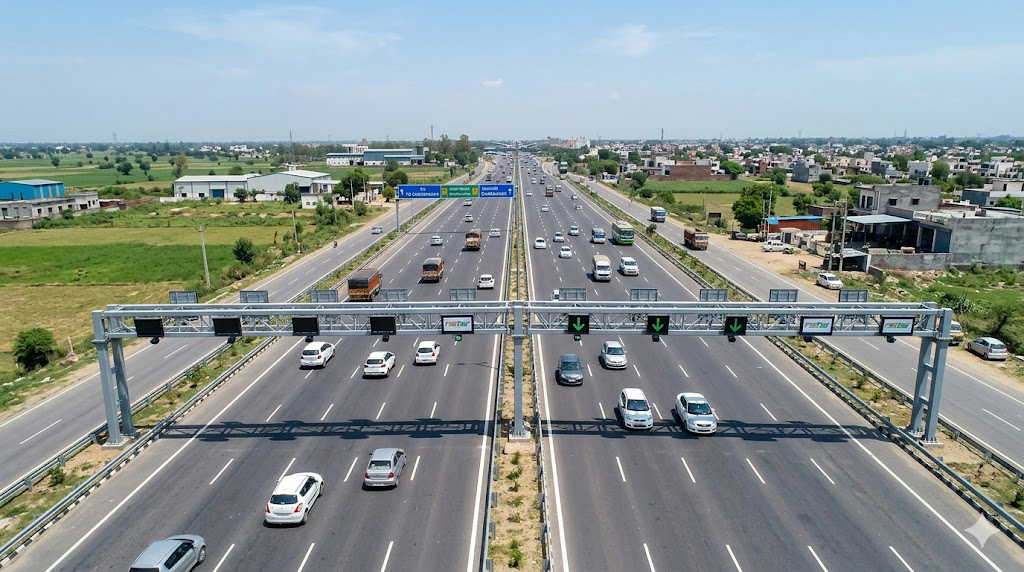
Travelling between Delhi and Chandigarh is set to become faster and smoother with the introduction of a barrier-free tolling system at the Gharaunda toll plaza in Karnal. The National Highways Authority of India has rolled out its Multi-Lane Free Flow (MLFF) toll collection technology, eliminating the need for vehicles to stop at the toll point.
The move marks a significant shift in highway travel on NH-44, one of North India's busiest road corridors. Instead of slowing down and queuing at toll booths, motorists can now continue driving at regular highway speeds while toll charges are deducted automatically through FASTag-linked accounts.
According to NHAI officials, the project is aimed at reducing congestion, cutting travel time and improving overall commuter convenience.
How the new tolling system works
According to The Indian Express, the MLFF system relies on a network of advanced cameras, sensors and electronic toll collection technology installed on overhead gantries. As vehicles pass beneath these structures, the system automatically identifies them and deducts the applicable toll amount through FASTag.
Unlike conventional toll plazas that require physical barriers and manual checks, the new mechanism allows uninterrupted movement of traffic. Authorities believe the technology will help decongest one of the most frequently used stretches connecting Delhi, Haryana and Chandigarh.
NHAI officials said the initiative is part of a broader effort to modernise India's highway infrastructure and bring it in line with global standards.
Also Read | Odisha’s cultural legacy takes centre stage at Delhi showcase honouring Upendra Bhanja
Faster journeys and lower fuel consumption
According to The Indian Express, the biggest advantage for commuters is expected to be the reduction in delays caused by long queues at toll plazas. Daily office-goers, commercial transport operators and families travelling between major cities are likely to benefit the most.
Since vehicles no longer need to repeatedly brake, idle and accelerate near the toll point, fuel consumption is also expected to decline. This could lead to lower travel costs and reduced emissions over time.
Officials believe the system will particularly improve traffic flow during peak travel periods and holiday rushes, when congestion near toll booths often becomes a major bottleneck.
Also Read | From Delhi posters to Middle-earth cafés: Giorgia Meloni reveals the personal side of diplomacy
What motorists need to keep in mind
According to The Indian Express, to avoid penalties, vehicle owners must ensure that their FASTag remains active and has sufficient balance. The tag should be properly affixed to the windscreen, and the vehicle registration plate must remain clearly visible.
In cases where toll deductions fail due to low balance or inactive FASTags, NHAI will issue electronic notices. Motorists can view and settle these notices through the NIC portal or the Rajmargyatra mobile application. Payments made within 72 hours will attract the standard toll amount, while delays beyond that period could result in double charges.
Authorities have also tightened enforcement around the MLFF zone, with strict action planned against toll evasion, number plate tampering and unauthorised stoppages near the corridor.