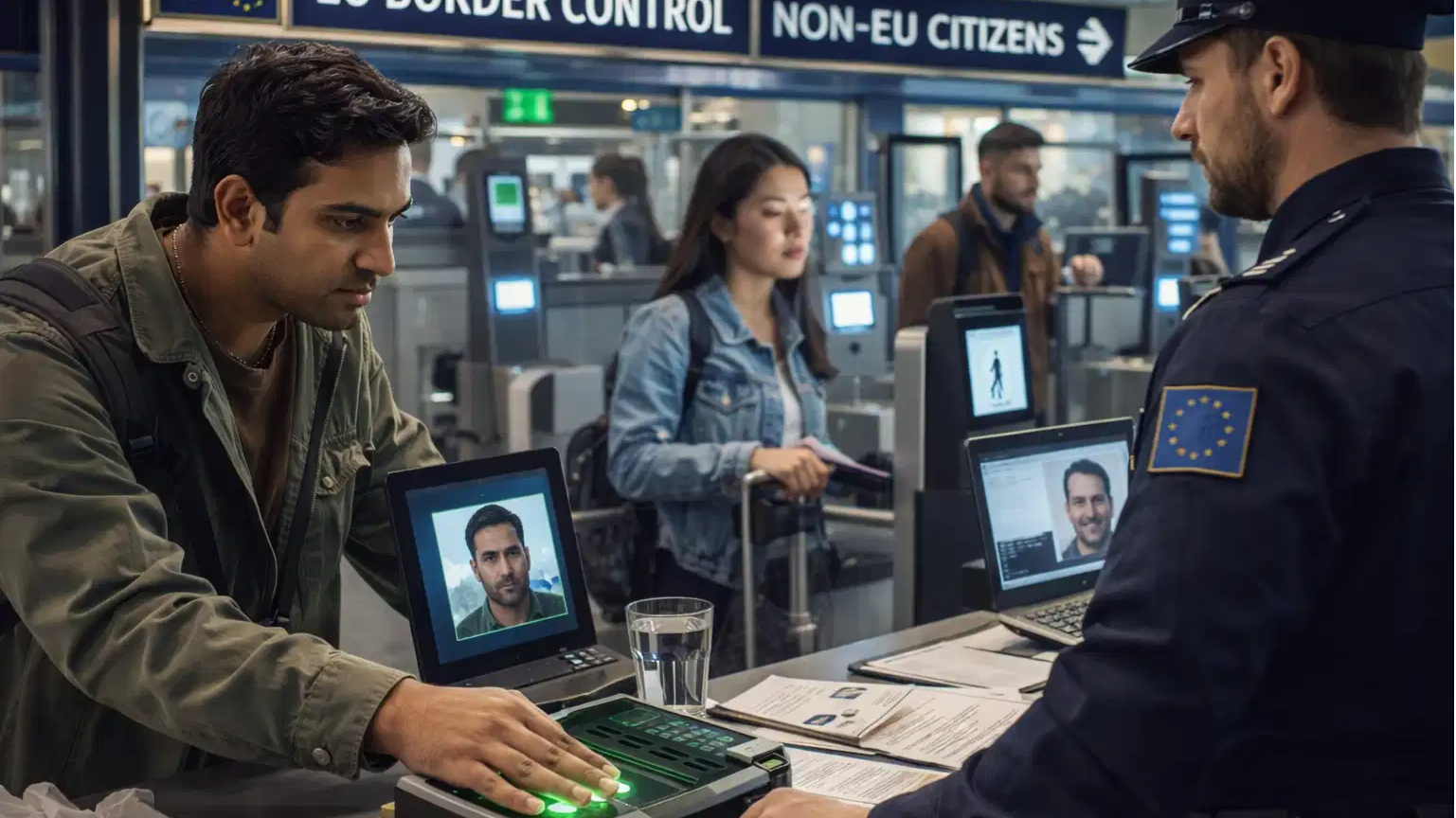
Europe has implemented the highly anticipated digital border control systems that have indicated a huge shift in the way non-EU citizens will be entering or exiting the Schengen area of the European Union.
According to the official EU website as well as various news sources, the recently launched system, which is termed the Entry/Exit System (EES), went live on April 10, 2026.
Also Read | FBI busts global phishing empire that scammed millions worldwide
What changes at immigration counters
As part of the updated protocol, visitors will be expected to offer their biometric identification in addition to passport information.
The process introduces several key changes:
Biometric registration on first entry: Travellers must submit fingerprints and a facial scan, either through self-service kiosks or with border officials
Digital tracking replaces stamps: Entry and exit records will now be stored electronically instead of stamped in passports
Travel verification checks: Officials may request details such as accommodation, return tickets and purpose of visit
Simplified repeat travel: Once registered, travellers can use biometric verification for faster processing on future visits
The rules apply to all short-stay visitors, including Indian travellers, who are permitted to stay up to 90 days within a 180-day period.
Delays likely during initial rollout
Although the system seeks to enhance security at the borders, identify overstays, and curb identity fraud, there have been warnings that there could be some delays in the initial stages.
Also Read | Birthday turns tragic: Indian techie dies in US waterfall accident
Visitors should therefore anticipate lengthy queues at airports and borders during the early stages while the systems adjust to the changes. EES is one component of the broader strategy adopted by the EU regarding the implementation of digitized and tech-based borders.
Even though the system will simplify travel in the long run, in the short term, it adds another step, which includes the use of technology, and more time will be required when going through immigration.