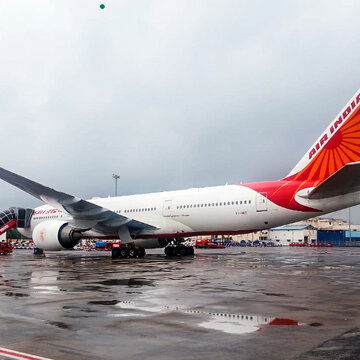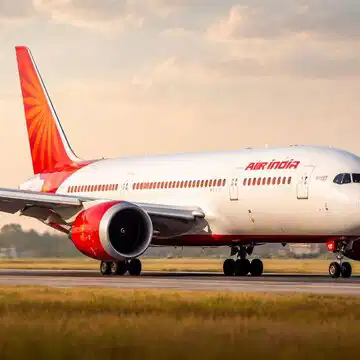
India’s aviation sector is bracing for a fresh wave of fare hikes, as Air India on Tuesday announced an increase in ticket prices across both domestic and international routes. While domestic fares will see a moderate rise, international ticket prices are expected to surge significantly.
The airline also confirmed the introduction of an additional fuel surcharge — a move already initiated by IndiGo and other carriers. The cumulative effect is pushing air travel further out of reach for many passengers, raising concerns across the industry.
A key factor behind the fare hike is the ongoing geopolitical conflict impacting global aviation routes. Experts point out that Iranian airspace traditionally serves as the shortest corridor connecting Asia with Europe and North America.
However, with Iran’s airspace now closed due to the war, airlines are being forced to take longer alternative routes, either south via Saudi Arabia or north through Azerbaijan and Georgia.
This detour is adding one to two extra hours per flight, translating into an additional operational cost of ₹25–50 lakh per journey.
Also Read | Air India, Air India Express to operate special Gulf flights on April 8: Check routes and cities
Airlines facing heavy losses as fuel costs surge
The financial strain on airlines is intensifying. Industry data suggests that Indian carriers have collectively incurred losses exceeding ₹2,500 crore as of Tuesday due to the ongoing crisis.
The burden is not just from extended flight durations. Aviation fuel prices have nearly doubled amid the conflict, significantly increasing operating expenses. Officials highlight that fuel alone accounts for nearly 40% of total flight costs.
For instance, IndiGo’s Delhi–Manchester route now requires an additional three hours, while Air India flights to the US are taking nearly five hours longer — compounding both cost and logistical challenges.
India hit harder due to Pakistan airspace ban
While airlines worldwide are grappling with similar disruptions, Indian carriers are facing a uniquely difficult situation.
Since the Balakot Airstrike in 2019, Pakistan has closed its airspace to Indian airlines, a restriction that remains in place.
As a result, Indian carriers are now navigating around both Pakistan and Iran, forcing them to take significantly longer southern routes via Oman. In contrast, foreign airlines can still use Pakistan’s airspace, giving them a competitive advantage in terms of cost and time.
Flight cuts and idle aircraft add to financial stress
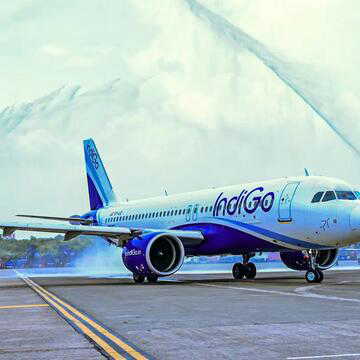
The operational impact is already visible. Sources indicate that IndiGo, which had planned to operate 310 international flights daily during the summer schedule, is currently running only about 60% of them.
Also Read | Unmanned catering vehicle hits IndiGo aircraft at Kolkata airport, no injuries reported
Similarly, Air India has reduced its West Asia operations to 30–40 flights from an earlier 100. Other carriers like SpiceJet and Akasa Air are facing comparable constraints.
This has led to a growing number of idle aircraft — a worrying trend for the industry. Since most aircraft are leased, airlines must continue paying lease rentals and insurance costs, even when planes remain grounded.
Foreign airlines step in as Indian carriers scale back
With Indian airlines cutting back on international routes, foreign carriers are rapidly filling the gap.
Airlines such as Swiss International Air Lines, British Airways, and Air Canada are expanding their presence on key routes. Meanwhile, Emirates has already begun increasing flight frequencies.
Industry experts warn that this shift could have long-term consequences, as passengers switching to foreign airlines may not easily return to Indian carriers.
Airline officials caution that the situation could worsen if the conflict persists, fuel prices remain elevated, and restricted airspaces do not reopen.
With rising costs, shrinking operations, and intensifying global competition, India’s aviation sector is entering a turbulent phase — one that could reshape travel patterns and pricing for the foreseeable future.