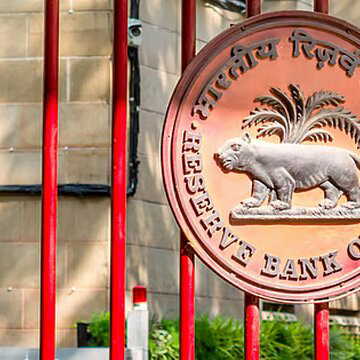
The Reserve Bank of India (RBI) has kept the policy repo rate unchanged at 5.25 per cent in its first monetary policy announcement for the financial year 2026-27. The decision comes amid rising global uncertainties and geopolitical tensions, prompting the central bank to adopt a cautious stance.
RBI Governor Sanjay Malhotra said the Monetary Policy Committee (MPC) unanimously agreed to hold rates steady. "After the detailed assessment of the evolving macroeconomic and financial developments and the outlook, the MPC voted unanimously to keep the policy repo rate unchanged under the liquidity facility at 5.25 per cent," RBI Governor Sanjay Malhotra.
Also Read | RBI flags 5 big risks to India’s economy amid global uncertainty: Here's all you need to know
Relief for borrowers
For home loan borrowers and prospective buyers, the decision offers stability. Since the repo rate remains unchanged, banks are expected to hold lending rates steady, ensuring that equated monthly instalments (EMIs) do not increase for now.
The repo rate has remained unchanged since December 2025, and this continued pause gives borrowers better clarity in managing finances, especially at a time when household budgets are under pressure.
Other key rates unchanged
Along with the repo rate, other key policy rates have also been left untouched. "Consequently, the SDR rate remains at 5 per cent and the MSF rate and the bank rate at 5.5 per cent," he added.
The MPC meeting, held from April 6 to 8, reviewed macroeconomic and financial conditions before arriving at the decision.
Global risks shape policy outlook
The RBI's move reflects concerns over global headwinds, particularly tensions in West Asia and disruptions in supply chains. The Central bank noted that while India's economy showed strong growth and low inflation earlier, conditions became more challenging in March as geopolitical tensions intensified.
Despite this, the RBI maintained that India's macroeconomic fundamentals remain strong and are better placed than in previous crisis periods and compared to many other economies.
Also Read | Air India ticket prices set to rise—here's how much more you will have to pay
The decision signals a balanced approach, holding rates steady while closely tracking global developments, with recent signs such as a ceasefire in West Asia offering some optimism for stability ahead.