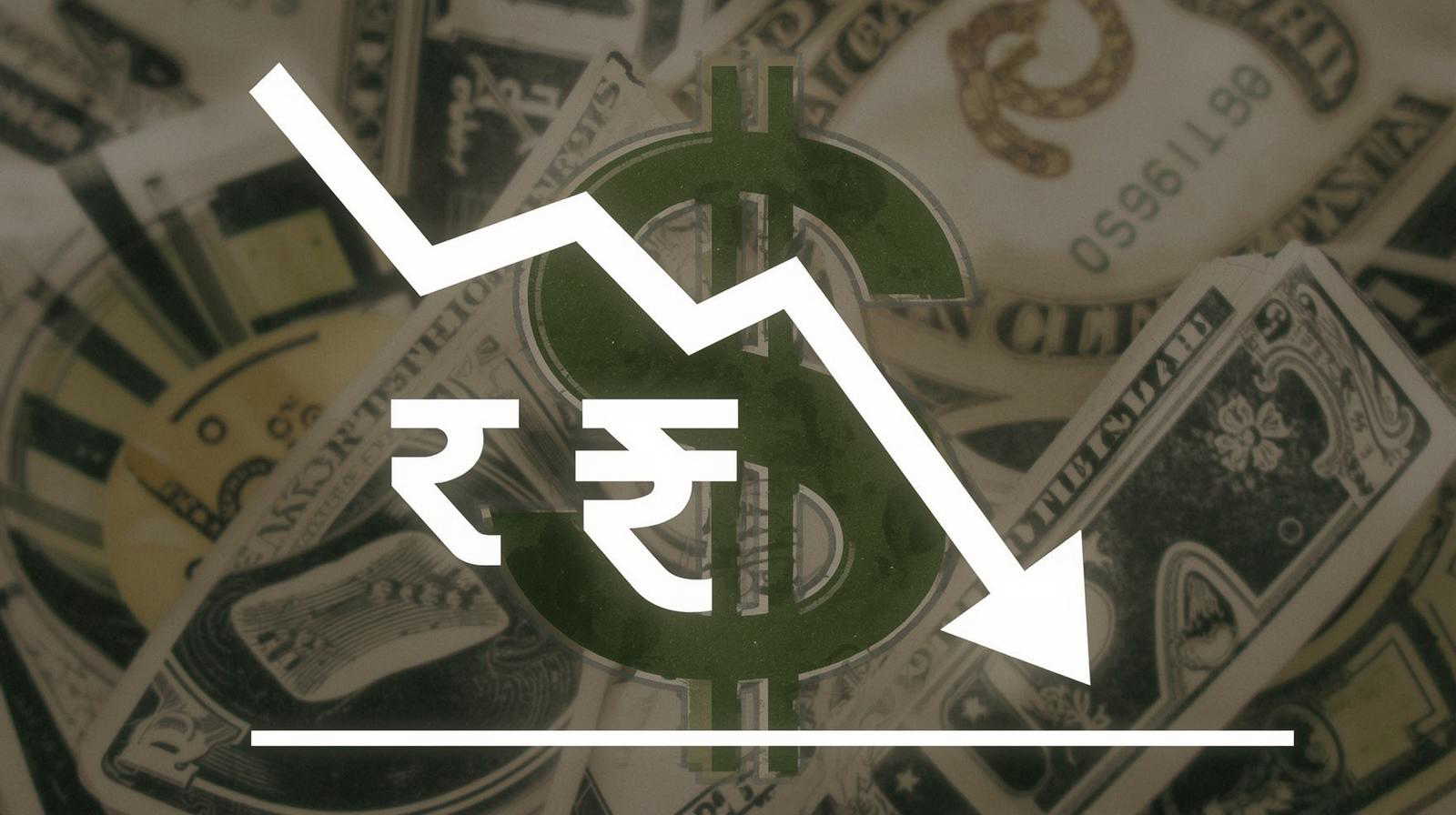
The Indian rupee traded at 92.00 against the US dollar in the morning hours of Thursday, breaking its own record for the third time in less than a week. On Wednesday, the rupee had depreciated 31 paise to settle at 91.99 against the US dollar.
On Tuesday, after recovering from its all-time lows, the currency gained 22 paise to finish the trading day at 91.68 per dollar.
Dollar index bounces back
Following the recent announcement from the Federal Reserve that they will not be increasing interest rates, the dollar index has bounced back from its lowest point of the last 4-1/2 years. This news was coupled with an increase in US Treasury yields as the Fed also stated that inflation is still higher than anticipated and they continue to see a stable labour market.
Also Read | Why Dubai gold prices have crossed Dh630 and what it means for buyers
What led to fall of rupee?
Emerging market currencies remain under pressure due to continued outflows of foreign capital, uncertainty around the geopolitical situation and increased levels of risk aversion. As a result, the rupee has hit an all-time low.
According to a report by news agency Mint, the dollar index, which measures the greenback's strength against a basket of six currencies, was trading 0.29 per cent lower at 96.16.
According to the report by Mint, Amit Pabari, MD, CR Forex Advisors said the steady capital drain has kept dollar demand elevated.
"A sustained move above 92.00 could open the door toward 92.20–92.50, but RBI support and a broadly softer dollar backdrop may cap upside and gradually pull the pair back toward 91.00–91.20," Pabari was quoted as saying by the news agency.
Gold and silver jump
Meanwhile, according to a Reuters report, at the start of Thursday trading period, both gold and silver futures posting respective increases of 6 per cent each, at all-time high price levels. In India, 10 grams of gold rose to Rs 1.75,869 and one kilogram of silver jumped to an all-time high of Rs 4,07,456.
Also Read | Duty-free gems and jewellery exports from India set to boost international trade
What gets costlier and who will benefit?
Imports: India's major imports include crude oil, coal, chemicals, plastics, electronics, machinery, fertilisers, vegetable oils, gold, pearls, gemstones and iron and steel. A weaker rupee will make these items more expensive and will also lead to higher fuel prices, mobile device component prices, vehicle prices, household appliance prices, and other similar products.
Foreign travel and education: Overseas travel will get more expensive as travelers will have to shell out more rupees per dollar. At the same time, students wanting to study abroad will need to pay more rupees to cover their tuition and living expenses abroad.
Exports: As Exporters can be benefitted as there are more rupees received per dollar, while those depending on input materials from abroad will tend to get poorer margins. Low import dependence sectors, like textiles, usually do much better compared with the ones that have higher import dependence, like electronics for example.
Remittances: The NRIs sending money to India will benefit as each dollar will convert into a higher rupee amount.