Prime Minister Narendra Modi has firmly denied reports suggesting the Centre is weighing a tax or surcharge on overseas travel as oil prices rise. The clarification came after speculation gained traction alongside a fresh increase in petrol and diesel prices, the first such revision in over four years, triggered by a spike in global crude linked to the US-Iran war.
PM rubbishes ‘foreign travel tax’ claims
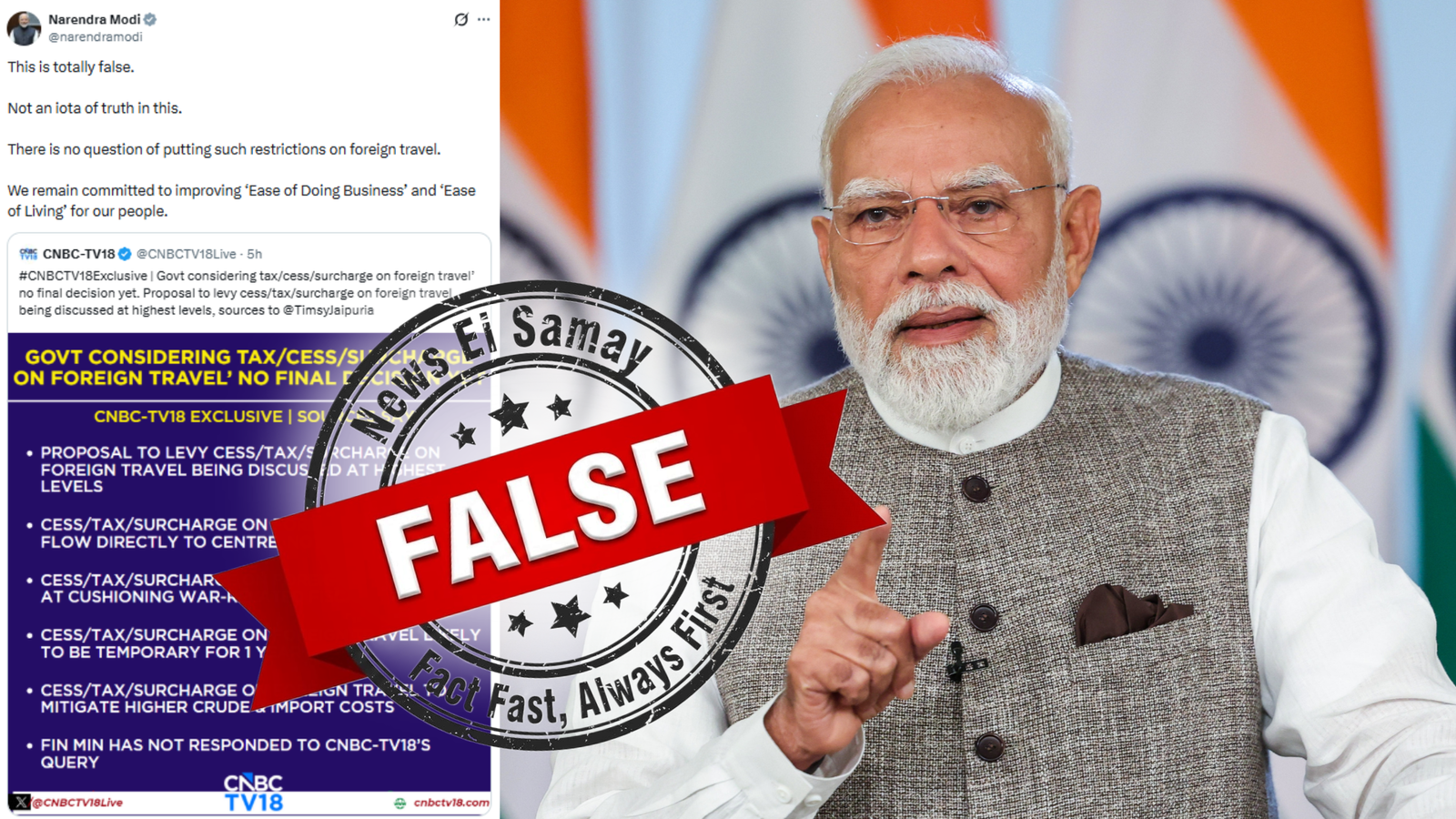
The reports, first aired by CNBC-TV18, claimed that the government was discussing a temporary levy on international travel to ease fiscal strain caused by expensive crude imports. Responding directly, Modi rejected the suggestion in unequivocal terms.
Also Read | PM Modi begins key five-nation tour amid Iran war concerns
“This is totally false. Not an iota of truth in this. There is no question of putting such restrictions on foreign travel. We remain committed to improving ‘Ease of Doing Business’ and ‘Ease of Living’ for our people,” he said in a post on X.
This is totally false.
— Narendra Modi (@narendramodi) May 15, 2026
Not an iota of truth in this.
There is no question of putting such restrictions on foreign travel.
We remain committed to improving ‘Ease of Doing Business’ and ‘Ease of Living’ for our people. https://t.co/9lxjbxz0nV
The statement effectively ended the speculation around any immediate policy move targeting outbound travel. Soon after, the channel withdrew its report, acknowledging the inaccuracy and expressing regret.
Fuel prices and economic pressure
The controversy surfaced at a time when India is grappling with rising fuel costs. With over 85 per cent of its crude oil sourced from imports, the country remains vulnerable to global price swings. The ongoing tensions in West Asia have added to the pressure, pushing up costs and raising concerns about inflation and fiscal balance.
Also Read | ‘Unacceptable’: India reacts as owner flags ‘safety at stake’ after Oman ship attack
PM calls for cautious spending
In a separate appeal, Modi urged citizens to adopt a more cautious approach to fuel and foreign exchange use. He suggested that people rethink non-essential expenses such as gold purchases and international travel.
"We have to save foreign exchange by any means," he said, noting that petrol and fertiliser costs have surged due to the crisis.
Highlighting lessons from the pandemic, he added, "We got into work-from-home, virtual meetings, video conferencing, and many other methods during Covid-19. We got habituated to them. The need of the hour is to resume those methods."
The Prime Minister also encouraged reduced edible oil consumption, lower dependence on chemical fertilisers, and greater use of Swadeshi products as part of a broader push toward economic resilience.