More than a century after they entered a European collection, the historic Anaimangalam copper plates from the Chola era have finally returned to India.
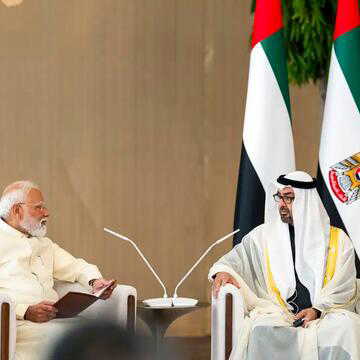
The Netherlands formally handed over the rare 11th-century artefacts during Prime Minister Narendra Modi’s visit to the country, closing a long chapter in the history of colonial-era cultural displacement.
Also known internationally as the Leiden Plates, the inscriptions had remained in Dutch possession for decades and were housed at Leiden University. Their repatriation followed years of diplomatic negotiations involving the Indian government, Dutch authorities and the university administration.
Also Read | ‘Jihadi drug’ Captagon seized for first time in India under Operation Ragepill
Historians regard the plates as one of the finest surviving records from the reign of Rajaraja Chola I, who ruled between 985 and 1014 CE.
A rare window into Chola trade, religion and diplomacy
The inscriptions record grants made to the Chudamani Vihara, a Buddhist monastery in Nagapattinam built by a ruler of the Srivijaya kingdom in present-day Indonesia. Historians say the plates offer extraordinary insight into maritime trade routes, diplomatic exchanges and religious coexistence between South India and Southeast Asia during the height of the Chola empire.
#WATCH | The Hague | Prime Minister Narendra Modi meets King Willem-Alexander and Queen Máxima of Nertherlands, during the second leg of his five nation visit.
— ANI (@ANI) May 16, 2026
(Source: ANI/DD) pic.twitter.com/AkIfvpz905
Scholars have long viewed the artefacts as evidence of how medieval South India functioned as a globally connected trading and cultural centre.
The plates themselves are monumental in scale, consisting of 21 large and three small copper sheets weighing nearly 30 kilograms, bound together with a copper ring carrying the royal Chola seal. Historians believe the original grant was issued during Rajaraja Chola’s reign, while his son Rajendra Chola I later ordered the inscriptions to be permanently engraved onto copper plates.
Colonial trail traced back to Dutch rule
According to experts, the artefacts were smuggled out of India during the reign of the Dutch on the Coromandel Coast in the eighteenth century and made their way into the hands of Europeans through the officials associated with the Dutch East India Company.
The Netherlands has officially agreed to return the Leiden Copper Plates (the Anaimangalam copper plates) to India
— Union Public Service Commentary (UPSC) (@upsc_unofficial) May 16, 2026
The plates, which have been in the Netherlands since the 18th century, are expected to be displayed in Tamil Nadu,possibly at the Gangaikonda Cholapuram temple . https://t.co/SO2VXLDrOM
The plates then became part of the Leiden University’s Asian collections in the nineteenth century where they have been well-preserved until today.
Also Read | Free ride over: How much will you now pay on Ganga Expressway? New toll rates explained
Their retrieval can be attributed to the trend in the international community regarding repatriation of artefacts from the colonial period. This process was said to have become faster after the Netherlands introduced its own restitution program for colonial items in 2022.
In the opinion of many scholars of history and culture, the retrieval of the Anaimangalam plates is more than retrieving artifacts. It involves retrieving parts of India’s historical memory that had been kept abroad for many years.