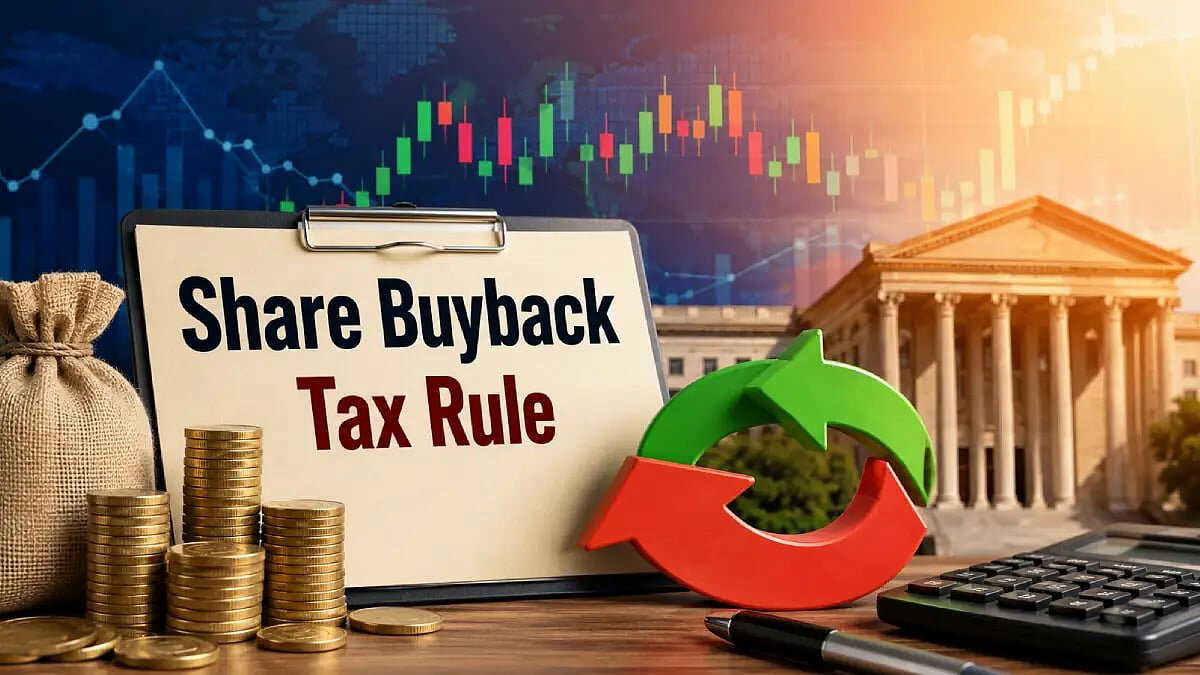
A fresh wave of share buyback announcements is sweeping India’s stock market, with companies like Wipro and Bajaj Auto taking the lead. The momentum follows changes in tax rules introduced in the Union Budget 2026 by Nirmala Sitharaman, which have simplified how buyback gains are taxed.
Major buyback announcements take centre stage
Among the most notable moves, Wipro has unveiled a buyback plan worth ₹15,000 crore. The company has set the buyback price at ₹250 per share and plans to repurchase up to 60 crore shares, representing about 5.7 per cent of its total equity.
Bajaj Auto has also announced a substantial buyback worth ₹5,633 crore. It will repurchase shares at ₹12,000 each, amounting to nearly 46.94 lakh shares or 1.68 per cent of its equity base.
Also Read | From Pikachu statues to themed flights: Inside Japan’s first-ever Pokémon-themed airport opening in 2026
Other companies such as Aurobindo Pharma, Kajaria Ceramics and Kriyent have also rolled out buyback plans in recent months, signalling a broader corporate trend.
What changed in Budget 2026?
The key shift lies in how buyback proceeds are taxed. As announced in the budget, investors will no longer be taxed on the entire buyback amount. Instead, tax will apply only to the actual profit made.
For instance, if shares were purchased at ₹1,000 and later bought back at ₹1,400, the taxable amount will now be limited to the ₹400 gain. Earlier, there were complexities around taxing the full buyback value.
How your buyback gains will be taxed
The rate of tax depends on how long the shares were held:
Short-term capital gains apply if shares are held for 12 months or less, taxed at 20 per cent.
Also Read | No rides, no deliveries? Gig workers plan massive protest over fuel costs
Long-term capital gains apply if shares are held for more than 12 months. Gains up to ₹1.25 lakh in a financial year are exempt, while amounts above this threshold are taxed at 12.5 per cent. Indexation benefits do not apply.
Why this matters for investors
The revised framework makes buybacks easier to understand and more straightforward from a tax perspective. By focusing only on actual gains, the structure removes earlier ambiguity and improves clarity for shareholders.
With the new rules in place from April 1, 2026, companies appear to be moving quickly to return surplus cash to investors. The recent announcements suggest that buybacks could remain a prominent tool for shareholder payouts in the months ahead.