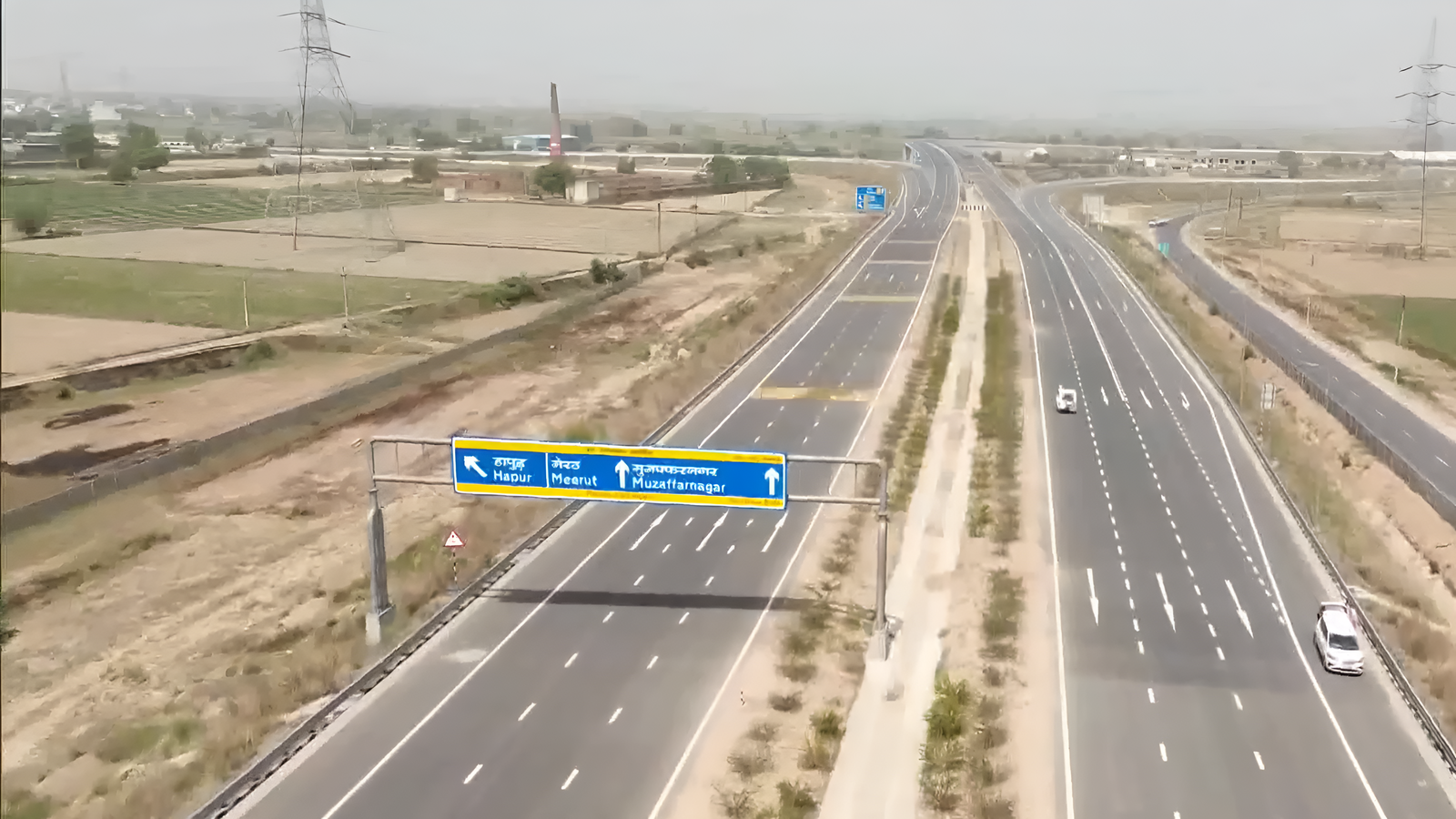
Travel on Uttar Pradesh’s newly-opened Ganga Expressway is no longer free. The toll-free period introduced after the expressway’s inauguration has officially ended, bringing paid travel into effect for commuters using the high-speed route between Meerut and Prayagraj.
The 594-km access-controlled expressway was inaugurated on April 29, 2026, and is designed to improve connectivity between western and eastern Uttar Pradesh. Toll charges will now apply through a distance-based system using FASTag technology.
Also Read | Monsoon may hit Kerala early, but El Nino threat looms large
Toll charges fixed for different vehicles
Authorities have introduced a “closed toll system” on the Ganga Expressway, where users are charged strictly on the basis of the distance travelled. The rates vary depending on the category of vehicle, as per NDTV reports.
For cars, jeeps and vans, the toll has been fixed at Rs 2.55 per kilometre. Two-wheelers, three-wheelers and tractors will pay Rs 1.28 per kilometre. Light commercial vehicles and minibuses have been charged Rs 4.05 per kilometre.
Heavy vehicles, including buses and trucks, will pay Rs 8.20 per kilometre, while large multi-axle vehicles and heavy machinery carriers will be charged Rs 12.60 per kilometre. Vehicles with seven or more axles will have to pay up to Rs 16.10 per kilometre.
A car travelling the full stretch between Meerut and Prayagraj will reportedly pay around Rs 1,515 in toll charges. Small commercial vehicles may pay about Rs 2,405, while buses and trucks could pay close to Rs 4,840.
FASTag and digital toll collection
The expressway uses Multi-Lane Free Flow (MLFF) technology for toll collection. Vehicles equipped with FASTag can pass through toll plazas without stopping, as the system automatically scans the tag and deducts the amount electronically.
Officials said the MLFF setup also reads vehicle registration numbers to ensure smooth toll collection. Entry and exit points are currently handling some manual processing, but authorities are working to convert the entire system into a fully free-flow network.
Separate government rules for national highways also allow motorists without valid FASTags to pay higher charges through cash or UPI methods.
Also Read | Big boost for India as UAE unveils $5 billion investment plan during Modi talks
Districts connected by the expressway
The Ganga Expressway passes through 12 districts, including Meerut, Hapur, Bulandshahr, Amroha, Sambhal, Badaun, Shahjahanpur, Hardoi, Unnao, Raebareli, Pratapgarh and Prayagraj.
Officials said the corridor has been divided into 12 construction packages, each spanning nearly 49 to 53 kilometre. Two main toll plazas and 19 ramp plazas have been set up along the route to manage traffic movement and toll collection.