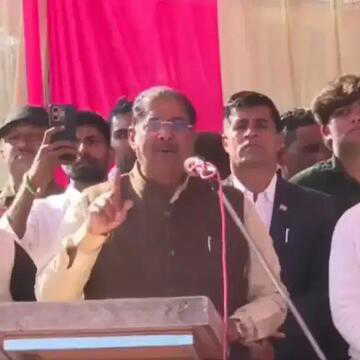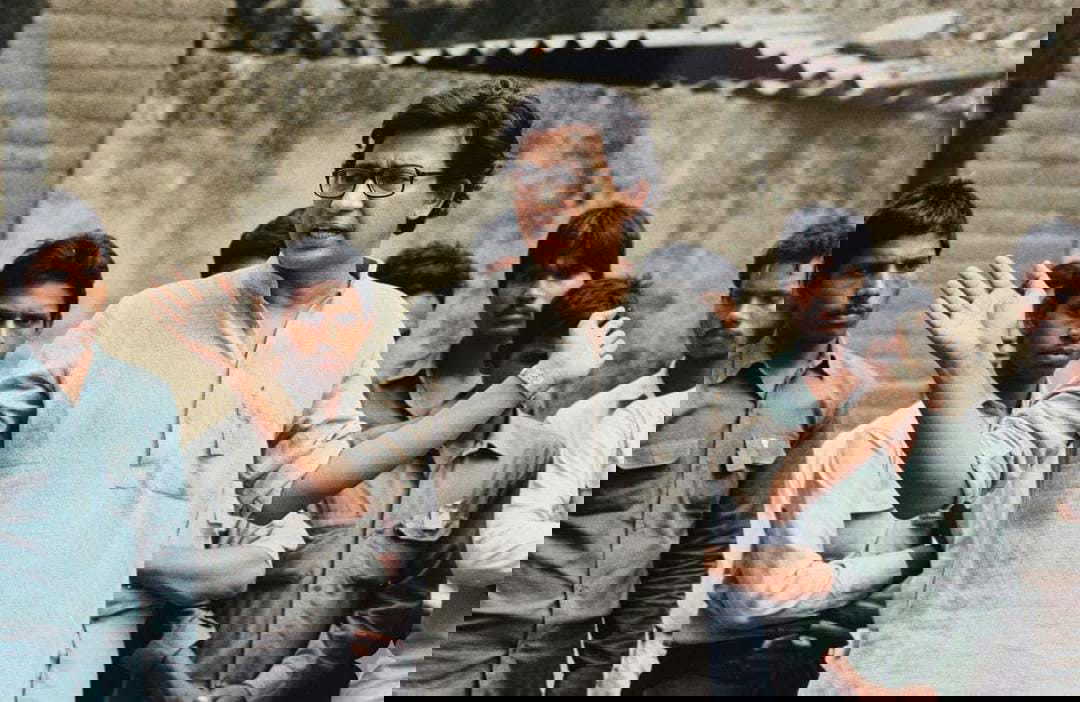
Thirty-five years ago, on this day in 1989, playwright and street-theatre activist Safdar Hashmi was fatally attacked while performing a play on the streets of Ghaziabad. His death marked a turning point in India’s cultural and political history, raising important questions about dissent, art, and most importantly, democracy.
Even after three and a half decades later, Hashmi remains a powerful symbol of resistance through theatre.
Who was Safdar Hashmi?
Safdar Hashmi was a communist playwright, director, actor, lyricist, and cultural activist, best known for taking theatre out of elite spaces and into the streets.
As per Bharatpedia, Born on April 12, 1954, in Delhi, he grew up in a progressive, Marxist environment. He studied English Literature at St. Stephen’s College and later completed his master’s degree at Delhi University.
Hashmi believed that art should speak directly to ordinary people. He was closely associated with the Students’ Federation of India and the Indian People’s Theatre Association (IPTA). For him, theatre was not entertainment alone, but a political tool to question power, inequality, and injustice. Actress Saba Azad is his niece.
ALSO READ | PM Modi likely to address North Bengal rally, Amit Shah and JP Nadda to follow
Safdar Hashmi and his theatre career
In 1973, Hashmi co-founded Jana Natya Manch, popularly known as JANAM (acronym), which means “birth.” The group focused on street theatre, or nukkad natak, performing in working-class neighbourhoods, factories, and union meetings. Through simple language, songs, and sharp satire, JANAM addressed issues like unemployment, inflation, violence against women, farmers’ distress, and political corruption.
One of his most famous plays, 'Kursi, Kursi, Kursi', critiqued political power during the Emergency period. Another, Machine, was performed before more than 2 lakh workers at a trade union meeting in 1978. By the time of his death, JANAM had staged around 4,000 performances of 24 street plays.
ALSO READ | Umar Khalid marks 5 years in jail as trial in 2020 Delhi Riots case yet to begin. Here’s a rundown
Fourteen years after that event, a Ghaziabad court convicted ten people for his murder. Safdar Hashmi’s life and work continue to inspire artists who believe that theatre belongs to the people, and that dissent through art must never be silenced.
On January 1, 1989, Hashmi was attacked while performing Halla Bol during the Ghaziabad municipal elections. He succumbed to his injuries the next day. Two days later, his wife, Moloyshree Hashmi, returned to the same spot with the JANAM troupe and completed the play, turning grief into defiance.