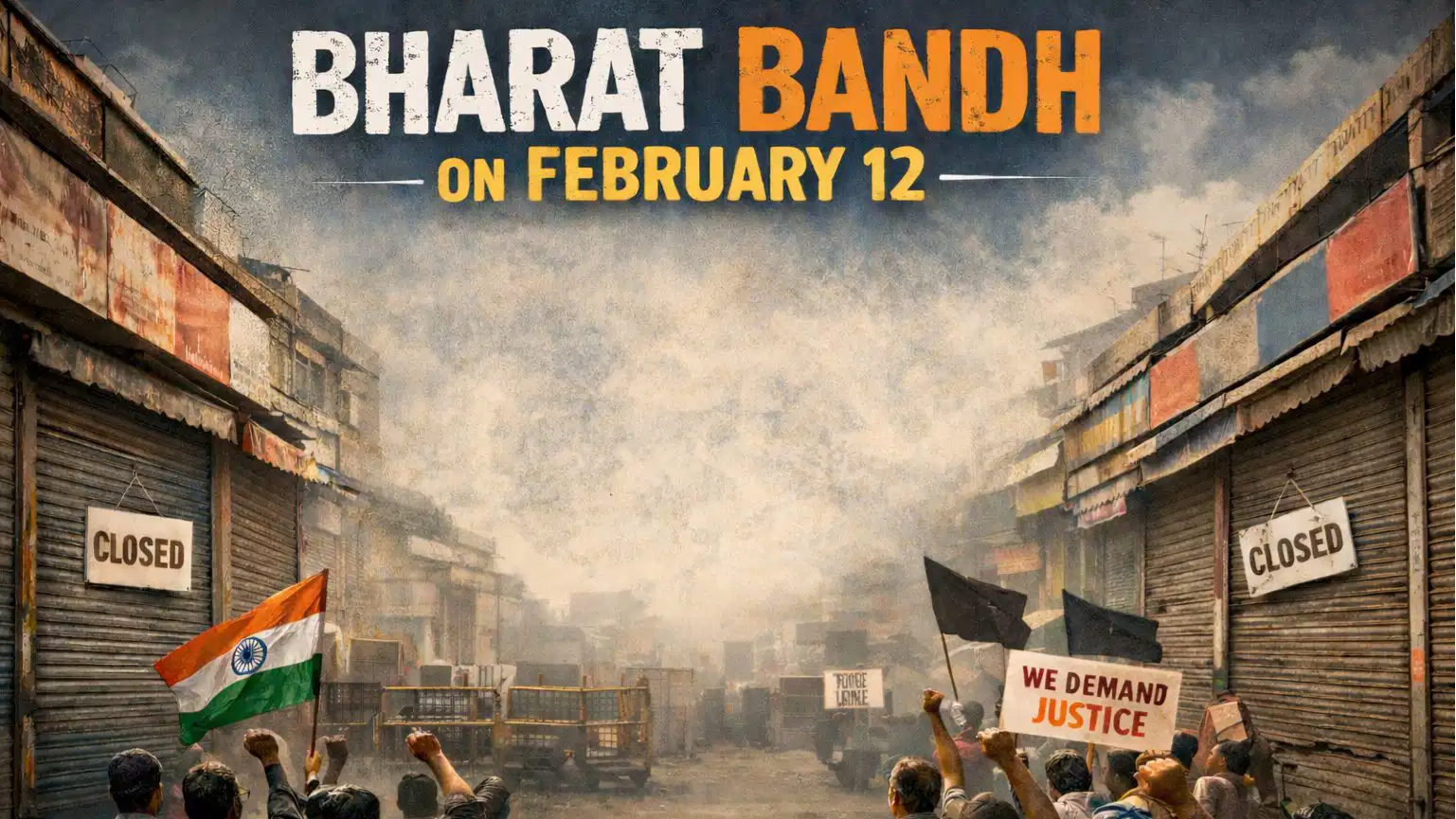
India may experience significant disruption on February 12 as central trade unions and farmers' organisations have planned a nationwide strike, known as 'Bharat Bandh'. Public sector banks, government offices, transportation services and markets in various states will likely be impacted. Some schools and colleges may also close in areas affected by protests, depending on local conditions.
The strike is organised by a joint platform of central trade unions, supported by farmer groups protesting against the new labour codes and the proposed India-US trade deal.
Also Read | Three-hour takedown, AI labels and stricter oversight: What the new rules mean for social media platforms
Who will take part in in strike?
A joint forum of 10 central trade unions, including INTUC, AITUC, HMS, CITU, AIUTUC, TUCC, SEWA, AICCTU, LPF and UTUC, has announced the strike.
According to an India TV report, All India Trade Union Congress General Secretary Amarjeet Kaur told reporters that this time "not less than 30 crore workers will participate in the strike called on February 12 (Thursday)".
Key demands
The unions are against the four labour codes that replaced 29 labour laws last year. They argue that the new codes weaken workers' rights, lower job security and make it easier for employers to hire and fire staff. They have also expressed concerns about privatisation, wage issues and the lack of social security.
According to the unions, strike notices have been issued in most sectors and industries and preparations are underway. Their main demands include getting rid of the four labour codes and rules, withdrawing the Draft Seed Bill, the Electricity Amendment Bill and the Sustainable Harnessing and Advancement of Nuclear Energy for Transforming India (SHANTI) Act.
They are also asking for the restoration of MGNREGA and the removal of the Viksit Bharat-Guarantee for Rozgar and Ajeevika Mission (Gramin) Act, 2025.
What will remain closed?
Schools and colleges: While there is no national announcement for school and college closures, in some states, including Kerala, Karnataka and Odisha, schools and colleges may close if local groups support the bandh or if transport services are affected, stated the Economic Times report.
Banks: The State Bank of India announced on Tuesday that a nationwide bank strike will take place on February 12, 2026. They warned customers that services might be affected. According to Economic Times, the bank stated, "Work may be impacted to a limited extent during the strike."
Also Read | Abhishek Banerjee's speech in Lok Sabha covers Pahalgam attacks to MSP issue - key details here
IDBI Bank has also received an official strike notice from bank unions. However, other banks, including the Reserve Bank of India, have not declared the day as a bank holiday, meaning branches are expected to stay open. Customers might face issues with branch services, cheque clearances, deposits and withdrawals. Online banking and ATM services may still be available, though there could be minor delays. Private banks may operate, but services might differ by location.
Stock market: Trading in equity, derivatives, bonds, commodities, forex and other market-related instruments will not be affected by the strike. BSE and NSE will remain open and operate normally on February 12.
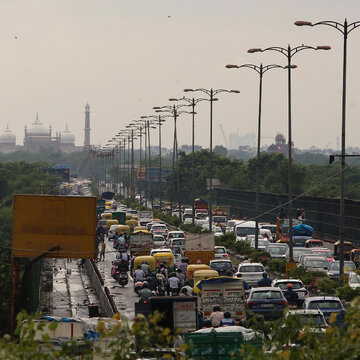
Markets and transport: Public transport services in some areas may be disrupted due to protests and possible road blockades or "chakka jam." Markets and shops in the affected areas may stay closed. Government offices in several states could have fewer employees or be closed, depending on how many show up. Emergency services, like hospitals and ambulances, are expected to operate as usual. Airports and essential utilities are also likely to run normally, but travellers should leave early to avoid traffic problems.