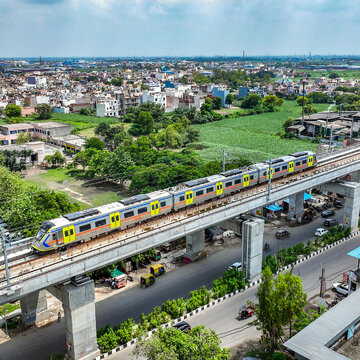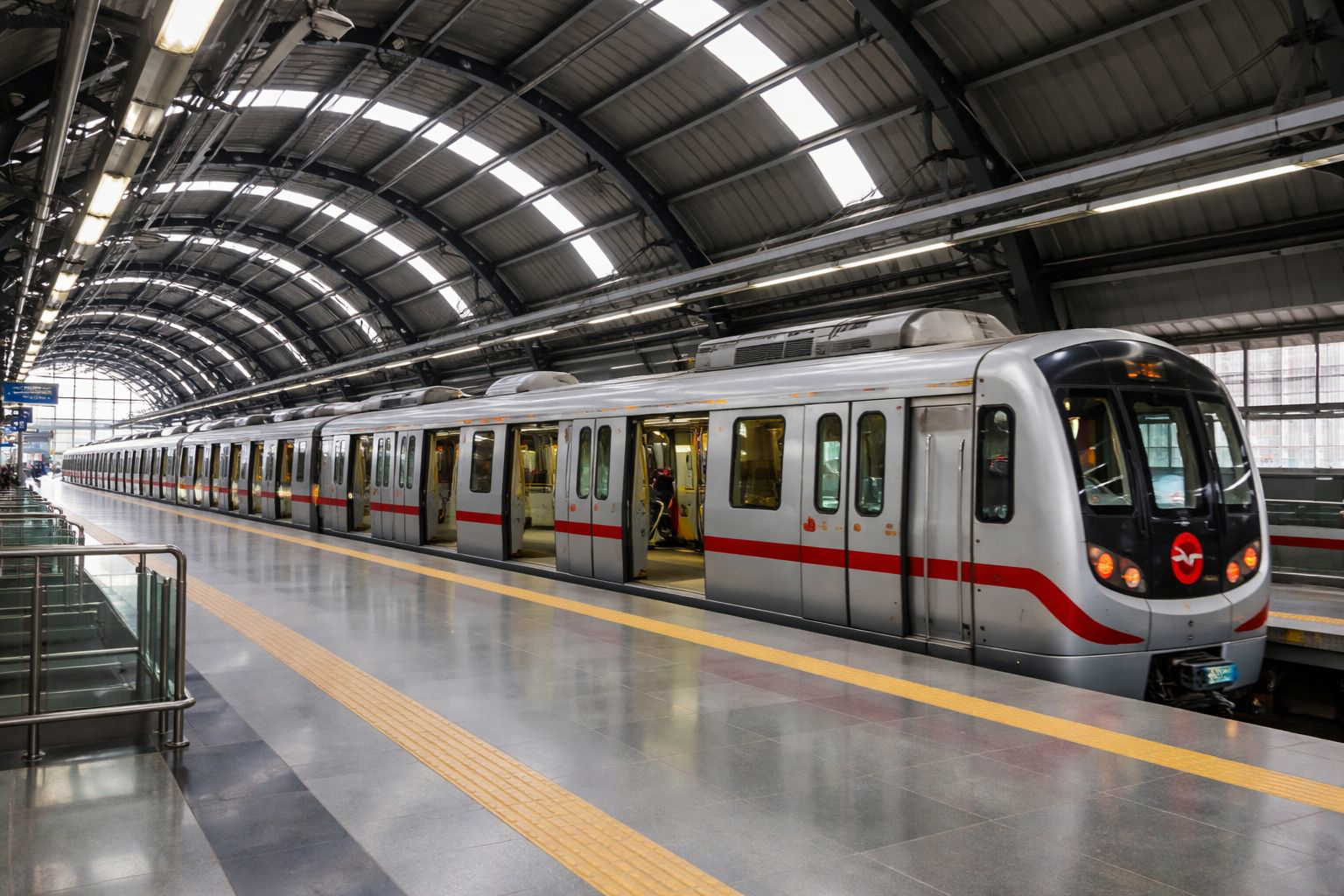
Prime Minister Narendra Modi on Sunday inaugurated the remaining sections of the Namo Bharat Rapid Rail Transit System (RRTS) corridor, marking the complete operationalisation of the Delhi-Ghaziabad-Meerut network.
The newly opened stretches include a 5 km section between Sarai Kale Khan and New Ashok Nagar in Delhi and a 21 km segment between Meerut and Modipuram in Uttar Pradesh. With this, the entire corridor is now functional, significantly reducing travel time between Delhi and Meerut to just 55 minutes — down from nearly three hours by road.
Union minister Manohar Lal Khattar and Delhi Lieutenant Governor V. K. Saxena flagged off the service from the Sarai Kale Khan station.
Delhi overtakes New York in metro network length
According to NDTV, Khattar said that Delhi’s metro network, combining the Delhi Metro Rail Corporation system and the Delhi section of the RRTS, has now surpassed New York City's.
"Delhi had a metro network of around 393 km, and with the addition of the RRTS (Delhi section), it has reached around 420 km. New York’s Metro route is around 399 km, and the Delhi Metro network has surpassed it today,” Khattar said.
He described the RRTS as another form of fast-moving metro rail and highlighted plans for future corridors linking Karnal, Bawal and Neemrana from Sarai Kale Khan, pending Cabinet approval.
Sarai Kale Khan emerges as a mega transport hub
Sarai Kale Khan is poised to become one of Delhi’s largest multimodal transport hubs. The station integrates RRTS services with Hazrat Nizamuddin Railway Station, Delhi Metro’s Pink Line, Veer Haqiqat Rai ISBT and the Ring Road.
Officials from the National Capital Region Transport Corporation (NCRTC) said a 280-metre foot overbridge equipped with six automatic travelators is being constructed to connect the RRTS station with Hazrat Nizamuddin Railway Station. The FOB is expected to open by March.
Spread across 215 metres in length, 50 metres in width and 15 metres in height, the station features five entry-exit gates, 14 lifts and 18 escalators to efficiently handle heavy passenger volumes. A dedicated drop-off zone has been created beneath the elevated station, along with a bus interchange accommodating over 15 buses. Parking facilities include space for around 275 cars and 900 two-wheelers.
Also Read | What is the Rah-Veer scheme? How to get Rs. 25,000 for saving accident victims - here's all you need to know
Boost to connectivity and economy
Delhi Chief Minister Rekha Gupta hailed the corridor as a major step toward improving ease of living and regional development. Officials said the project will reduce congestion, curb pollution by encouraging public transport use, and stimulate economic activity across the NCR. The RRTS is also planning two additional corridors: first, Delhi-Gurugram-SNB-Alwar and second, Delhi-Panipat-Karnal. All of them will converge at Sarai Kale Khan, enabling seamless interoperability.
To facilitate smooth transfers between corridors, the station has been designed with six platforms and four tracks, allowing passengers to switch lines without changing trains.
Also Read | Kerala to be renamed ‘Keralam’ after Union Cabinet approval
With the full commissioning of the Delhi-Ghaziabad-Meerut RRTS corridor, the capital’s public transport network has not only expanded significantly but also positioned itself among the largest metro systems globally. As Sarai Kale Khan evolves into a central mobility hub, the project signals a transformative shift in regional connectivity and urban commuting across Delhi-NCR.