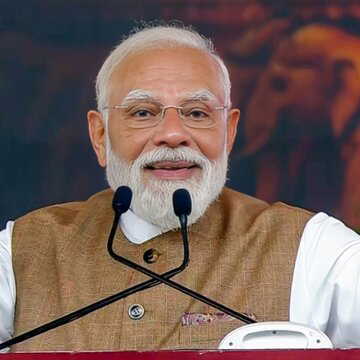
India’s ambitious high-speed rail expansion plans are beginning to take shape, with the proposed Delhi-Varanasi bullet train corridor expected to drastically cut travel time between major north Indian cities. Union Railway Minister Ashwini Vaishnaw on Monday said the new corridor could reduce travel time between Delhi and Lucknow to nearly two hours, while the Delhi-Varanasi journey may take just three hours and 50 minutes.
Speaking at the annual business summit organised by the Confederation of Indian Industry, Vaishnaw said the high-speed corridor would significantly change travel patterns and economic activity across the region. The proposed network was announced in the Union Budget 2026-27 and is among several new bullet train corridors planned by the Centre following the ongoing Mumbai-Ahmedabad high-speed rail project.
At present, the fastest trains between Delhi and Lucknow, including the Vande Bharat Express and the Shatabdi Express, take more than six hours to complete the journey. The proposed bullet train route is expected to cut that duration by more than half, potentially making rail travel a more attractive option than domestic flights on the sector.
Also Read | Delhi launches citywide rescue campaign to shift homeless people to shelters
Railways eye major shift from air travel
According to The Indian Express, Ashwini Vaishnaw, Union Minister of Railways of India, suggested that several future bullet train corridors could eventually dominate short-haul air travel in India. He said proposed routes such as Mumbai-Pune, Pune-Hyderabad and Hyderabad-Bengaluru would bring down travel time so sharply that passengers may increasingly prefer rail over flights.
According to the minister, the Mumbai-Pune corridor could reduce travel time to just 28 minutes, while Pune to Hyderabad may take under two hours through high-speed rail connectivity.
The Railway Ministry believes such corridors could help create integrated economic zones by improving mobility between major urban and industrial centres. Vaishnaw specifically said the Varanasi-Lucknow and Varanasi-Patna regions could emerge as a connected economic cluster once the project becomes operational.
Also Read | Is it possible to change terminals at Indira Gandhi International Airport Delhi in 15 minutes?
DPR revision and land acquisition under focus
The implementation responsibility for the seven proposed high-speed rail corridors has been assigned to the National High Speed Rail Corporation Limited. The Railway Board has directed the agency to revise and update the Detailed Project Reports prepared for the corridors.
Meanwhile, a Parliamentary Standing Committee on railways has advised the ministry to complete land acquisition and statutory clearances before formally sanctioning projects. The panel warned that delays in acquiring land and approvals could impact both timelines and the financial viability of the ambitious bullet train expansion programme.