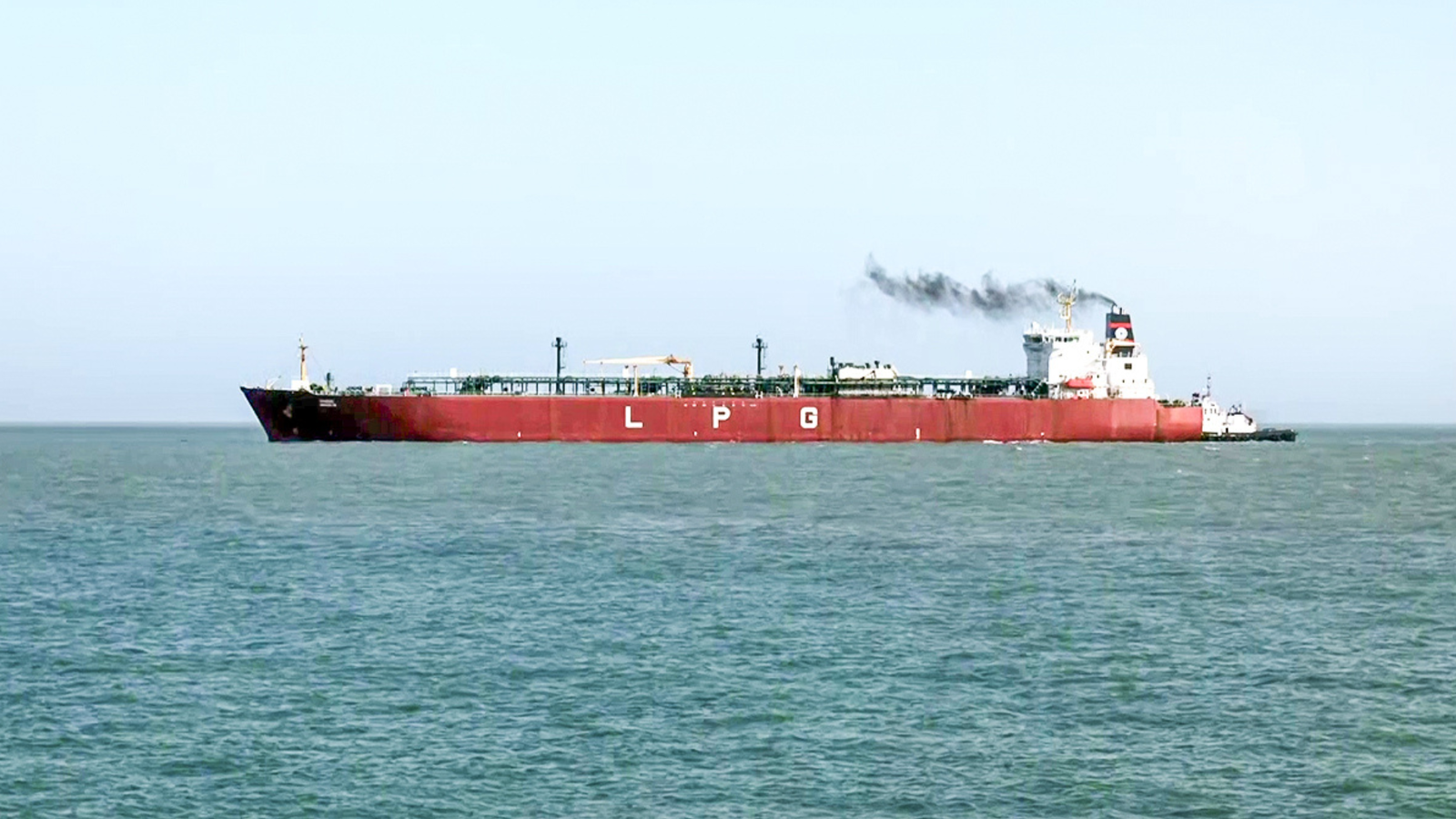
Jag Vikram, an India-flagged liquefied petroleum gas carrier, has successfully crossed the Strait of Hormuz, becoming the first Indian ship to navigate through the Strait of Hormuz since the two-week cease-fire between the US and Iran. The vessel has now entered the Gulf of Oman and is expected to reach Mumbai on April 15, according to an official government statement.
Ship-tracking data indicate that the tanker passed through the crucial waterway between Friday night and Saturday morning. By Saturday afternoon, it had moved east of the strait into the Gulf of Oman, exiting the Ras Al Kuh traffic separation scheme at 1.30 pm.
The government confirmed that the vessel is carrying around 20,400 tonnes of LPG and has 24 seafarers onboard.
Fleet movement and vessels in region
Owned by Mumbai-based Great Eastern Shipping Company, Jag Vikram is a mid-sized gas carrier with a deadweight capacity exceeding 26,000 tonnes. It is the ninth Indian vessel to exit the Persian Gulf region since early March.
Also Read | ‘Very disturbing’: India expresses concern after 303 killed in one day in Lebanon
Government data shows that several Indian ships are still operating in West Asian waters. Currently, 14 Indian vessels remain in the Persian Gulf, six in the Gulf of Oman, three in the Gulf of Aden, and three in the Red Sea. Among those in the Persian Gulf, six belong to the Shipping Corporation of India.
The India-flagged LPG vessel Jag Vikram has safely crossed the Strait of Hormuz today. The vessel is carrying approximately 20,400 MT of LPG cargo with 24 seafarers onboard. It is expected to arrive at Mumbai on 15 April 2026: Ministry of Petroleum & Natural Gas pic.twitter.com/ESiX76ltGD
— ANI (@ANI) April 11, 2026
Evacuation plans in place
Authorities have begun preparing contingency evacuation plans amid ongoing regional tensions. The Ministry of Petroleum and Natural Gas has also made a list of 17 ships that might be evacuated; these include ships carrying LPG, LNG, and crude oil. Of these, four are Indian-flagged. Separately, the Department of Fertilisers has listed 16 vessels, including one Indian-flagged ship, Jag Arnav.
At the peak of the conflict, at least 28 India-flagged vessels were present in the Strait of Hormuz region. While some have moved to safer areas, several remain alongside foreign-flagged ships carrying India-bound cargo.
Also Read | US secretary Marco Rubio to visit India in May after talks with Vikram Misri
The Directorate General of Shipping has also raised concerns over delays in passing on port-related concessions to exporters. It has been instructed that the benefits, like waiver of detention charges and ground rent, be passed on directly.
Despite the tensions, ports across India are functioning normally without any bottlenecks. India still depends very much on imports, and almost 88 per cent of its crude oil, around 50 per cent of natural gas, and 60 per cent of LPG are imported.