Gurugram remained in the grip of an intense cold wave on Wednesday after recording a minimum temperature of 0.8 degrees Celsius, according to the India Meteorological Department (IMD), placing it among the coldest locations in north India.
The city has been reeling under extreme winter conditions for several days. On Monday, Gurugram touched 0.6 degrees Celsius, its lowest temperature in nearly five decades, matching the record set on January 22, 1977. Historical data from IMD shows the city has dipped lower than this only three times, minus 0.4 degrees Celsius on December 5, 1966, 0 degrees Celsius on January 11, 1970, and 0.3 degrees Celsius on January 22, 1979.
The cold wave has spread across much of the National Capital Region and northwest India. Delhi’s Safdarjung station recorded a minimum of 3.8 degrees Celsius on Wednesday, while other parts of the plains also saw near-freezing conditions. Hisar recorded 2.6 degrees Celsius, Amritsar 1.1 degrees Celsius, Churu 1.3 degrees Celsius and Karnal 3.5 degrees Celsius.
Why the plains are colder than the hills?
In contrast, several hill stations reported higher night temperatures. Mussoorie recorded 7.7 degrees Celsius, while Shimla stood at 8.8 degrees Celsius.
Explaining the unusual pattern, IMD Director General M Mohapatra said cloud cover over the higher reaches, triggered by an active western disturbance, prevented heat from escaping during the night. “The night was cloudy over the hills, which is why minimum temperatures remained higher there,” he said.
Over the plains, however, clear skies combined with persistent cold northwesterly winds led to strong radiative cooling, causing temperatures to drop sharply.
Frost, fog and daily disruption
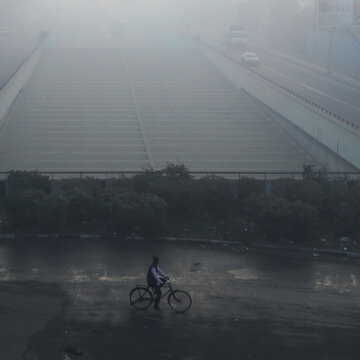
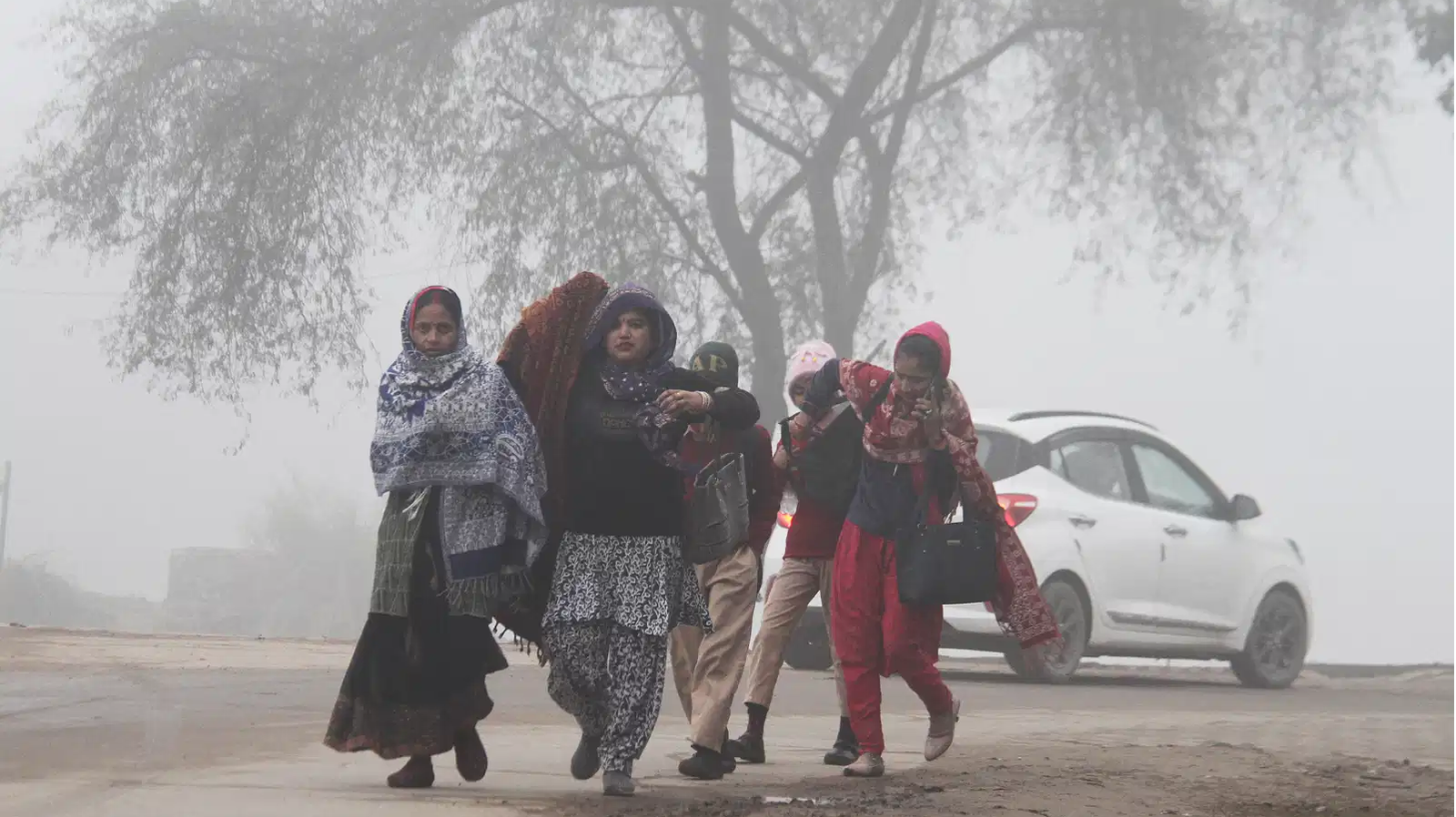
The severity of the cold was visible across Gurugram and surrounding areas, with frost forming on crops, open grasslands and vehicle windshields. Dense fog added to the discomfort and posed risks for commuters.
In a conversation with Times of India, Jeeva Thavasiraj, a 22-year-old site engineer working in Sector 66, said the cold was unlike anything he had experienced before. “I come from Tamil Nadu and have never faced this kind of cold. Even with heavy safety shoes, our feet become numb,” he said.
Also Read | Delhi-NCR wakes up to dense fog, AQI slips to 360; airport issues advisory
Sunita Devi, a daily commuter from Sohna, said travel had become difficult. “There was frost on our bus’s windshield and on crops in the fields. Visibility on elevated roads was very poor, and vehicles had to move slowly,” she said.
IMD has warned that cold wave conditions are likely to persist across parts of Haryana, Delhi and neighbouring states over the next couple of days, with little immediate relief in sight.