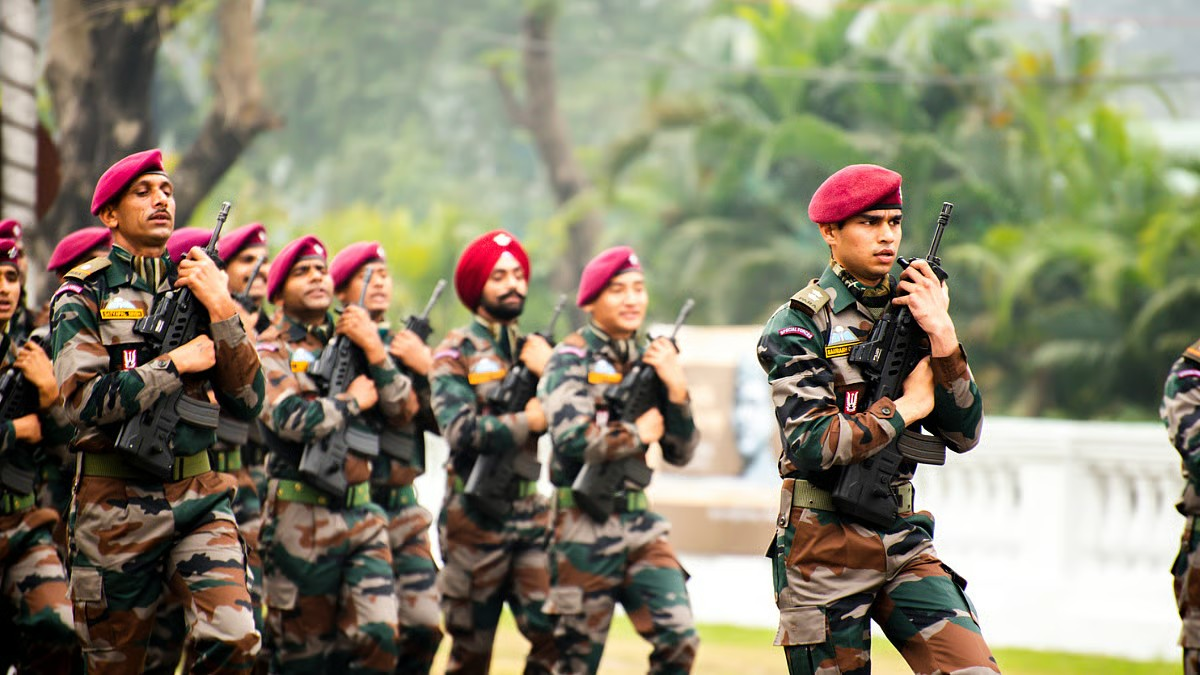
The Indian Army has rolled out a new set of dress regulations aimed at aligning military traditions with India’s evolving national identity. Detailed in a 174-page manual titled Army Uniforms-2026, the revised code introduces several changes to uniforms, ceremonial practices and appearance standards while retaining the core traditions of the force.
According to officials familiar with the development, this is the first comprehensive update to the Army’s dress regulations in eight years.
“In keeping with the nation’s sentiments and evolving sovereign identity, a number of deliberate refinements have been incorporated. Collectively, these refinements represent a progressive review of residual colonial-era vestiges while preserving the dignity, functionality and enduring traditions of the Indian Army,” the document stated in a section titled “Indigenisation and Alignment with National Ethos.”
Also Read | Assam AN-32 crash: Meet the five IAF personnel who made the supreme sacrifice
Bandi jackets get official place in Army’s formal attire
One of the notable changes is the formal inclusion of the closed-neck bandi jacket as authorised attire for officers. The jacket can now be worn over a full-sleeved shirt along with matching formal trousers and closed footwear during official occasions.
“A closed neck coat (bandi jacket) may be worn over a full sleeved shirt. The bandi jacket may be with or without the neck hook fastening (both patterns are authorised) and will be of solid, sober colour only. Matching formal trousers of sober design and formal closed footwear will be worn,” the manual stated.
The regulations also continue to permit women officers to wear sarees or kurta-salwar outfits with ankle-length straight pants and a dupatta. Sleeveless kurtas and casual lower garments such as palazzo and cigarette pants are not allowed.
Army trims colonial-era elements from ceremonial attire
The Army has removed the pouch belt from Mess Dress No. 5 and No. 6, uniforms commonly worn during state functions and formal receptions. However, certain regiments and corps will continue to be authorised to wear the belt during ceremonial regimental events.
The manual also removes outdated military terminology, including references containing the word “royal”.
Adjutant General Lt Gen VPS Kaushik wrote in the foreword that the new edition “reflects a considered step towards aligning the army’s dress regulations with contemporary Indian ethos through the progressive removal of residual colonial-era practices, accoutrements and terminology.”
Also Read | India strengthens missile defence and maritime strike capability with successful trials
Army introduces new winter uniform and updated appearance norms
The revised regulations introduce a new winter uniform called Dress 3B for all ranks, comprising an Angola shirt, battle jacket and beret.
The manual also lays down detailed grooming standards. Tattoos and body piercings remain prohibited, while bracelets are generally not permitted in uniform except for a single sacred thread worn during a pooja. Restrictions on visible religious symbols continue, with exemptions for Sikh personnel.
The regulations further specify limits on moustache length and prohibit the use of perfumes and deodorants while in uniform, although after-shave lotions are allowed. Separate guidelines have also been outlined regarding cosmetics and personal appearance for women personnel.
FAQs:
What are the major changes in the Indian Army's new uniform code?
The new Army Uniforms-2026 manual introduces bandi jackets, removes several colonial-era traditions, revises ceremonial dress rules and updates grooming standards.
Can Indian Army officers wear bandi jackets under the new dress regulations?
Yes, the Army has officially authorised officers to wear closed-neck bandi jackets as part of the formal dress code during approved occasions.