Each year, International Women’s Day is observed on March 8 to recognise the impact women have had on culture, society, the economy, and politics. The day also highlights the need to remove gender discrimination and promote equal opportunities.
For 2026, the theme is: “Rights. Justice. Action. For All Women and Girls.” It’s an opportunity to focus on building on the law, changing discriminatory legislation, and addressing social norms that restrict the rights of women and girls.
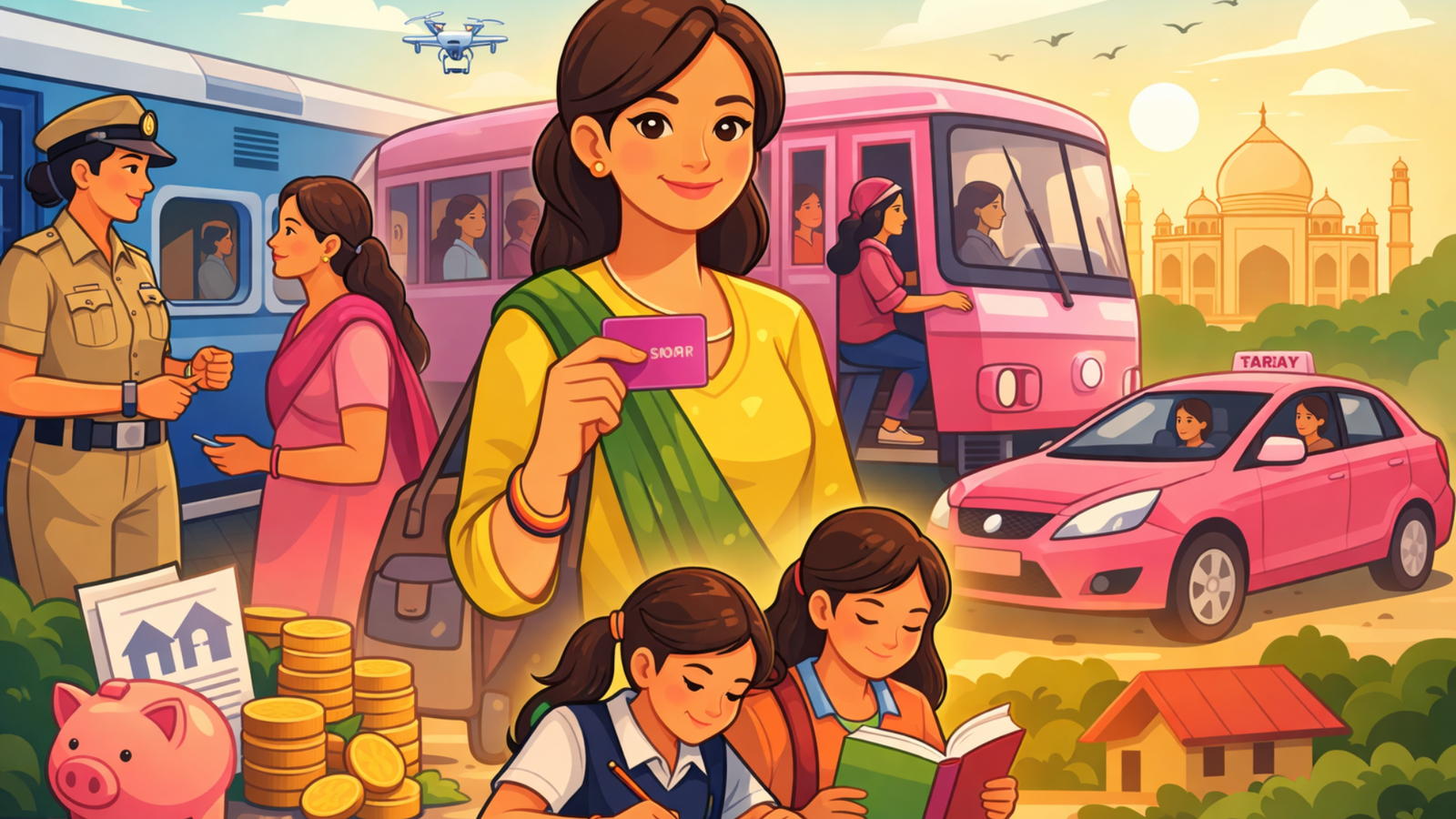
India has introduced several measures that aim to make the environment safer, more mobile, and more secure for women. These include everything from making travel easier for women to providing welfare programs, all aimed at making the daily environment safer for women.
Operation Meri Saheli: Safety support on trains
To improve safety for women travelling alone, the Indian Railways launched Operation Meri Saheli in 2020. Under the initiative, dedicated teams of women personnel from the Railway Protection Force (RPF) interact with female passengers, particularly those travelling alone.
Today, there are 250 teams of Meri Saheli that operate. It began as a pilot program for the South Eastern Railway zone in September 2020, but now the program is nationwide.
Also Read | International Women’s Day 2026: History, meaning and heartfelt wishes to share with the women in your life
Women-only cabs and autos
Cities have also introduced transport services with women drivers catering exclusively to women passengers. Kolkata and Delhi are some of the cities that have women-only cabs and auto-rickshaw services.
Ride-hailing apps have also introduced features that aim to increase the level of comfort for their passengers. For instance, the popular ride-hailing app Uber has introduced the “Women Rider Preferred” option that allows women passengers to request women drivers.
Saheli Pink Smart Card Scheme
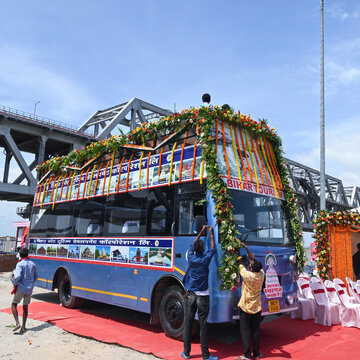
The Delhi government recently launched the Saheli Pink Smart Card Scheme that allows women to travel for free in buses. The unique aspect of this scheme is the inclusion of the travel option.
The smart card is not limited to Delhi Transport Corporation buses; it also allows women to use the Delhi Metro or the Regional Rapid Transport System (RRTS) to commute to their destinations.
Women-only rail coaches
Public transport systems in several cities have dedicated sections for women. In the Delhi Metro, the first coach of every train is reserved for women passengers.
In the Mumbai suburban trains, women are provided with separate compartments to help them commute more comfortably, especially during peak hours.
Also Read | How will International Women’s Day be celebrated in the United States? A look ahead of the global observance
Welfare schemes for women and girls
There are many schemes implemented by the government for the welfare of women and girls. Under the Beti Bachao Beti Padhao (BBBP) Scheme, implemented since January 2015, efforts are being made to reduce gender discrimination and improve the child sex ratio in some regions of the country. Under this, parents are able to open savings accounts for their daughters under the Sukanya Samriddhi Yojana.
The Pradhan Mantri Matru Vandana Yojana is another such initiative, under which pregnant women and new mothers receive a total of Rs 5,000 as an incentive if certain criteria are fulfilled.
The Kishori Shakti Yojana is a program for young girls aged 11 to 18 years. Under this, efforts are being made to improve the nutrition and health of young girls, and also to improve their skills and awareness about education and self-preservation.