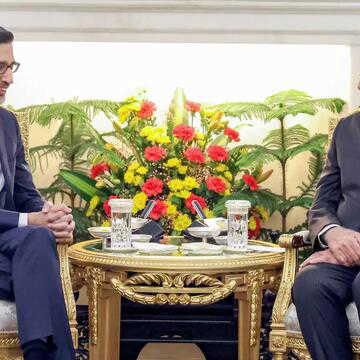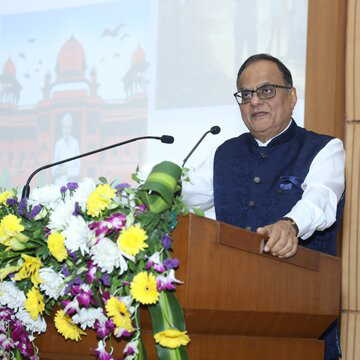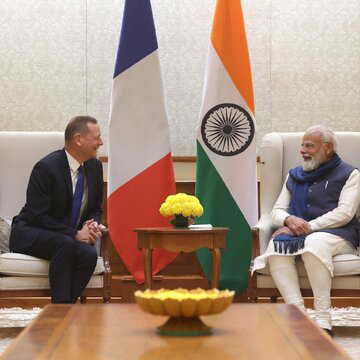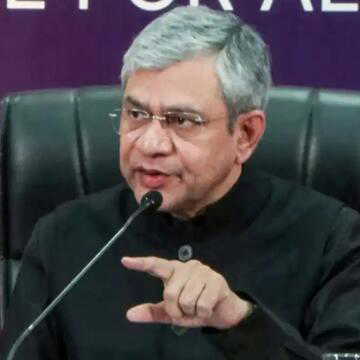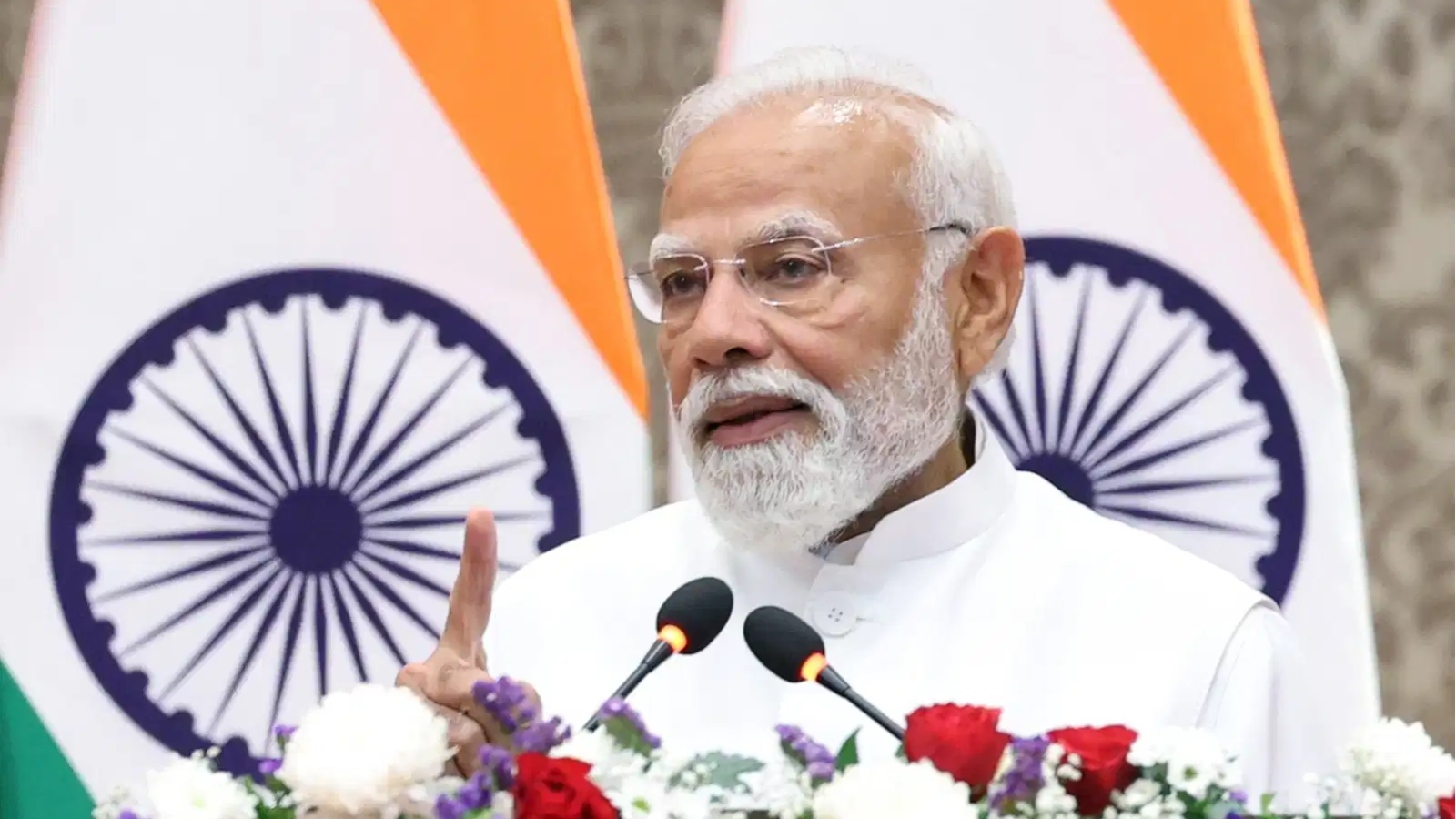
The India AI Impact Summit 2026 has begun in New Delhi. This is a historic moment in which the Global South is hosting such a grand event on Artificial Intelligence (AI). In an exclusive interview with news agency ANI, Prime Minister Narendra Modi emphasised the true spirit of this summit with its motto: "Sarvajan Hitay, Sarvajan Sukhaye" meaning 'welfare for all, happiness for all'.
The Summit aims to bring together heads of state and government, ministers, global tech leaders and players to deliberate upon leveraging AI to create inclusive growth, build strong public systems and catalyse sustainable development.
In his interview, the Prime Minister highlighted his vision for this new era and said that AI must accelerate global development while reamining deeply human-centric.
Also Read | 'Nice to be back': Google CEO Sundar Pichai arrives in India for AI Summit
Vision of the Summit
When asked about the vision of the Summit and its motto, PM Modi was quoted as saying by ANI, "Today, AI stands at a civilisational inflection point. It can expand human capability in unprecedented ways, but it can also test existing social foundations if left unguided. That is why we have deliberately framed this Summit around Impact that ensures meaningful and equitable outcomes, not just innovation.
The guiding spirit, 'Sarvajan Hitay, Sarvajan Sukhaye', reflects India's civilisational philosophy. The end goal of technology should be 'Welfare for All, Happiness of All'. Technology exists to serve humanity, not replace it."
He added that the Summit was "structured around people, planet and progress". "AI systems draw upon knowledge and data generated across societies worldwide. Therefore, we want AI's benefits to be diffused to everyone and not just hoarded by early adopters," the PM said.
AI's role in 'Viksit Bharat'
Ansering how he saw the role of AI in Viksit Bharat 2047, the PM was quoted as saying by ANI, "A major opportunity for India on its journey towards Viksit Bharat by 2047 is AI. AI has the potential to solve some of the fundamental problems of development while creating new opportunities for economic growth and providing opportunities for inclusive growth and bridging the rural-urban divide.
In the health sector, AI is making its presence felt. AI solutions are being used to diagnose tuberculosis, diabetic retinopathy, epilepsy, and many other diseases in primary and district health centres themselves.
Also Read | Rafale to be made in India? Rajnath Singh pushes local production as defence pact with France renewed
In education, AI-powered personalised learning platforms in Indian languages are helping students in rural and government schools receive customised academic support."
In a very unique initiative, Amul is leveraging AI to reach 36 lakh women dairy farmers across thousands of villages, providing real-time guidance in Gujarati on cattle health and productivity, empowering grassroots women producers.
At a time when the world is worried about AI deepening divides, India is using it to dissolve divides. We are making it an efficient tool for delivering healthcare, education and economic opportunity to every village, every district, and every citizen."
Bias and limitations of AI
Talking about the concerns regarding the bias and limitations of AI, he stated, "As AI adoption accelerates, the risks also scale. AI systems can inadvertently perpetuate biases related to gender, language and socio-economic background.
The AI Impact Summit 2026 is bringing together various stakeholders and creating global awareness on matters such as biases and limitations of AI. This is an issue that needs global cooperation.
For India specifically, we face unique challenges and opportunities. Our diversity – linguistic, cultural, regional – means that AI bias can manifest in ways that might not be obvious in Western contexts. An AI system trained primarily on English data or urban contexts may perform poorly for rural users or speakers of regional languages."
India's digital infra
The Prime Minister went on to elaborate on the success of Aadhaar, UPI and other digital public goods. "First, we built digital infrastructure as a public good, not a proprietary platform. This open and interoperable architecture allowed innovation to flourish on top of a common base layer.
Second, we designed for scale and inclusion from day one. Our systems work for 1.4 billion people, irrespective of their socio-economic status, literacy level, region or language," ANI quoted him as saying.
Also Read | 'India looks forward to your visit': PM Modi welcomes Emmanuel Macron as France President lands in Mumbai
"With its experience of building a human-centric Digital Public Infrastructure, India is best placed to ensure that AI’s benefits reach the last mile, to farmers in villages, students in small towns, MSMEs, women entrepreneurs, informal workers and youth across rural and urban India, and not remain confined to a narrow urban elite. Technology must serve every citizen, regardless of geography, gender or income, he added.
Safety of Indians from possible harm of AI technology
Iterating that technology is a "powerful tool", the Prime Minister stated, "It is up to us to ensure that it becomes a force for good. While AI may enhance human capabilities, the ultimate responsibility for decision-making must always remain with human beings. Around the world, societies are debating how AI should be used and governed. India is helping shape this conversation by showing that strong safeguards can coexist with continued innovation.
For this, we need a global compact on AI, built upon certain fundamental principles. These should include effective human oversight, safety-by-design, transparency and strict prohibitions on the use of AI for deepfakes, crime and terrorist activities."
He asserted that India was moving towards a more structured governance approach in AI regulation. "With the launch of the IndiaAI Safety Institute in January 2025, the country created a dedicated mechanism to promote the ethical, safe, and responsible deployment of AI systems," he said.
PM Modi highlighted a stronger sense of responsibility as AI became more advanced.
Will AI take away jobs?
"I understand the concern of our youth about AI-driven disruptions in the job market. Preparation is the best antidote to fear. That is why we have been investing in skilling and re-skilling our people for an AI-driven future. The Government has launched one of the most ambitious skilling initiatives in the world. We’re not approaching this as a future problem but we're treating it as a present imperative," stated PM.
He added that he view AI as a force that was capable of pushing the boundaries of what we thought possible. "History has shown that work does not disappear due to technology. Its nature changes and new types of jobs are created," the PM said.
Also Read | Delhi sees light rain, gusty winds a day after hitting earliest 30C in February since 2021
What is your vision on AI for 'Aatmanirbhar Bharat'?
"My vision for AI in Aatmanirbhar Bharat rests on three pillars: sovereignty, inclusivity, and innovation.
My vision is that India should be among the top three AI superpowers globally, not just in the consumption of AI but in creation. Our AI models will be deployed worldwide, serving billions in their native languages. Our AI startups will be valued in hundreds of billions, creating millions of high-quality jobs," stated the Prime Minister.