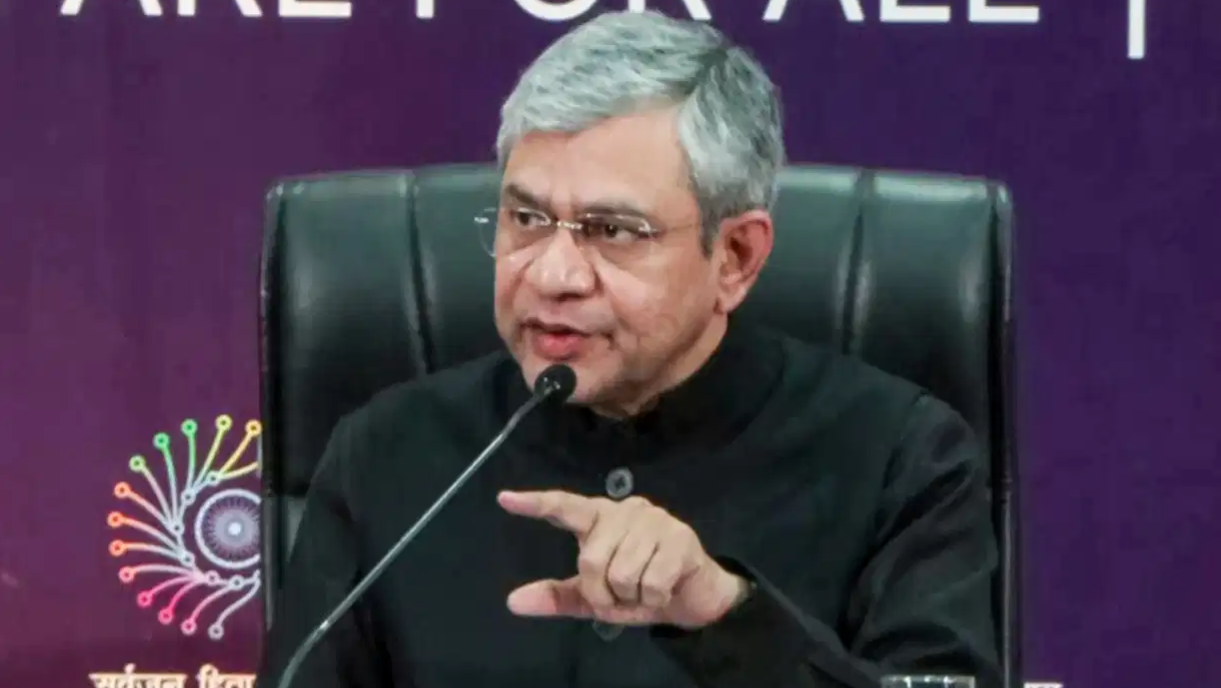
The Union government is in talks with social media companies on age-based access controls and the rising threat of deepfakes. Union IT Minister Ashwini Vaishnaw said stricter regulations may be needed to protect children and society from online harm.
He made the remarks at the India AI Impact Summit 2026, saying platforms must follow India's legal framework and the Constitution. Companies such as Netflix, YouTube, Meta, and X are required to comply with Indian laws, he said, Live Mint reported
"... and right now, we are in conversation regarding deepfakes, regarding age-based restrictions with the various social media platforms, and what is the right way, what is the right way to go," Vaishnaw stated.
He warned that deepfakes are increasing rapidly. The government is exploring what more can be done beyond existing rules.
Also Read | 'Whatever had to happen…': Indore man shows no remorse as gruesome classmate killing shocks city
Deepfakes under scrutiny
Vaishnaw said the issue has been studied in detail by a parliamentary committee. Any tougher law will need a broad political consensus, he added. The goal is stronger protection for society, especially children.
He stressed that discussions with industry stakeholders have already started. The government wants to identify the most suitable regulatory path, according to Live Mint.
Global push for age-based curbs
The minister noted that many countries now recognise the need for age restrictions. He referred to moves in Australia, France, and the United Kingdom to limit children's access to social media.
In Australia, the government plans to enforce a ban on children under 16 creating social media accounts, despite a legal challenge by the Sydney-based Digital Freedom Project in the High Court of Australia.
Vaishnaw said India had already taken a forward-looking step through the Digital Personal Data Protection (DPDP) Act. The law introduced age-based differentiation to regulate what content young users can access. He underlined that protecting children online is now a shared global priority.