A question posed to Prime Minister Narendra Modi during an official event in Norway has snowballed into a larger controversy involving press freedom, social media suspensions and a public exchange with India’s Ministry of External Affairs.
Norwegian journalist Helle Lyng claimed on Tuesday that her Instagram and Facebook accounts were suspended after a video of her questioning PM Modi during a joint event in Oslo went viral online.
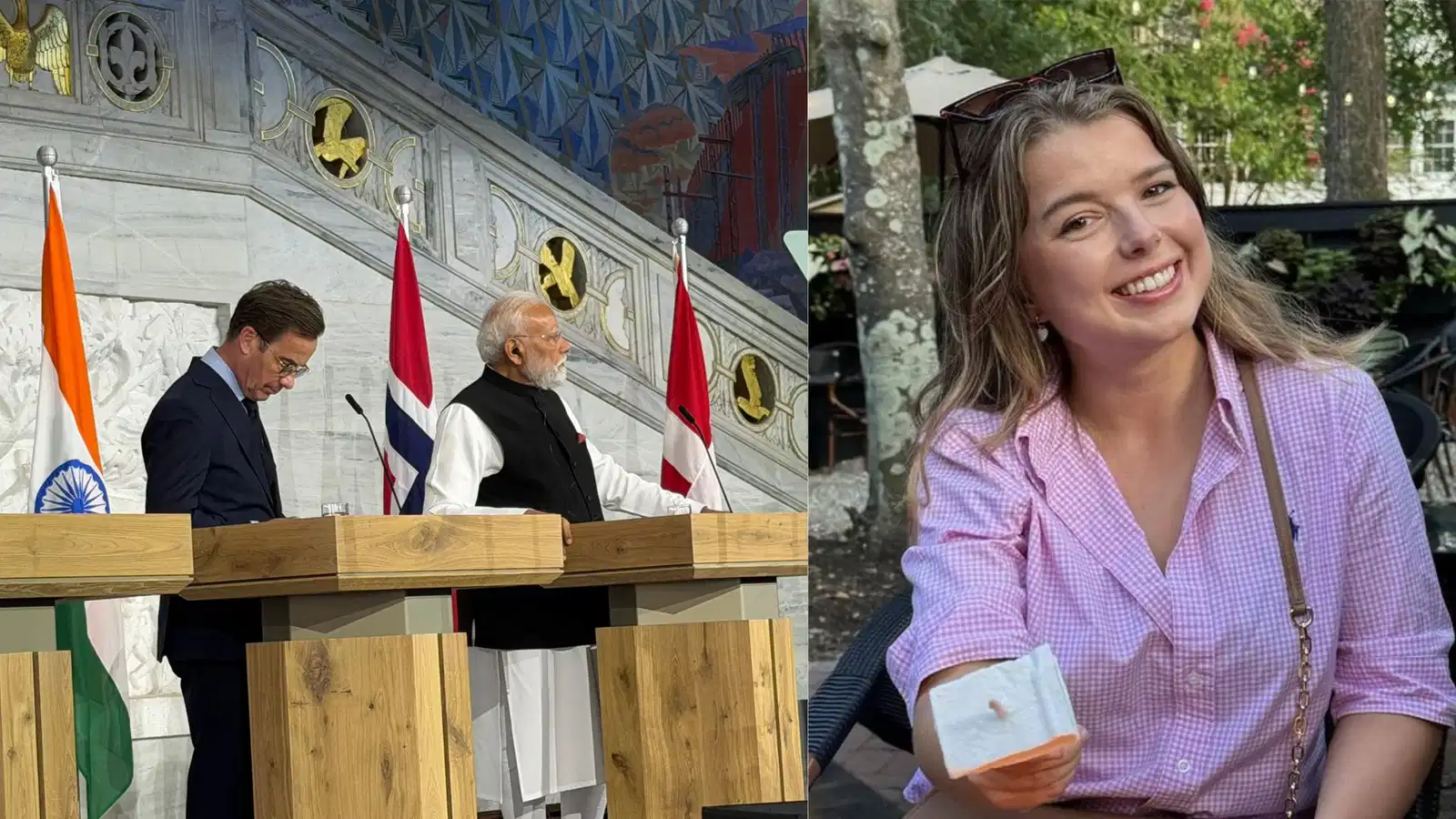
The incident began during a joint press statement event featuring PM Modi and Norwegian Prime Minister Jonas Gahr Støre in Oslo on Monday.
Also Read | Mercury at 48C: THIS district in India empties streets by 10 am
A video later shared by Lyng on social media showed PM Modi exiting the venue while a woman’s voice, identified as Lyng’s, asked why he did not take questions from “the world’s freest press”.
Primeminister of India, Narendra Modi, would not take my question, I was not expecting him to.
— Helle Lyng (@HelleLyngSvends) May 18, 2026
Norway has the number one spot on the World Press Freedom Index, India is at 157th, competing with Palestine, Emirates & Cuba.
It is our job to question the powers we cooperate pic.twitter.com/vZHYZnAvev
In her post accompanying the clip, Lyng referenced Norway’s ranking on the World Press Freedom Index and argued that questioning political leaders remained part of a journalist’s role.
Journalist says Instagram and Facebook accounts were suspended
A day after the video gained widespread attention online, Lyng posted on X claiming that both her Instagram and Facebook accounts had been suspended.
If youre trying to reach me on Instagram or Facebook, I would like to let you know I have been suspended from both accounts. I have wanted to respond to as many Indians as possible, but my responses will now be delayed. I hope I will get my accounts back. @Meta
— Helle Lyng (@HelleLyngSvends) May 19, 2026
“If you’re trying to reach me on Instagram or Facebook, I would like to let you know I have been suspended from both accounts,” she wrote, adding that she hoped to recover the accounts soon.
In another post, the journalist described the suspension as “a small price to pay for press freedom”.
Throughout all day I have struggled to log onto my Instagram account. Now I have been suspended. It is a small prize to pay for press freedom, but Ive never experienced it before. pic.twitter.com/XCitS65Rlg
— Helle Lyng (@HelleLyngSvends) May 19, 2026
Screenshots shared by Lyng appeared to show an Instagram suspension notice stating that she had 180 days to appeal the decision before the account could be permanently deactivated.
There has been no official confirmation from Meta regarding the reason behind the suspension.
Faceoff with India’s MEA during briefing
The controversy later spilled into an official Ministry of External Affairs briefing covering PM Modi’s Norway visit.
During the interaction, Lyng questioned Indian officials about press freedom and human rights, asking why foreign media should “trust” India and whether the Prime Minister would begin taking “critical questions” from the Indian press.
Responding to her remarks, MEA Secretary (West) Sibi George delivered a detailed defence of India’s democratic framework, constitutional rights and judicial system.
“We are proud to be a democracy,” George said during the exchange, while also highlighting India’s constitutional protections and legal mechanisms available to citizens.
Also Read | NEET row: From paper leaks to delays, Parliament and Tamil Nadu panel had warned about NTA
The interaction quickly circulated online, triggering sharply divided reactions across social media platforms.
Journalist rejects allegations of being a “spy”
As the controversy escalated, Lyng also issued a separate clarification denying allegations circulating online that she was linked to any foreign government or intelligence agency.
“I never thought I would have to write this, but I am not a foreign spy of any sort,” she wrote on X, adding that journalism can often be confrontational because reporters seek direct answers rather than prepared talking points.
The episode has since become part of a wider online debate surrounding political accountability, press access and the role of confrontational journalism during international diplomatic visits.