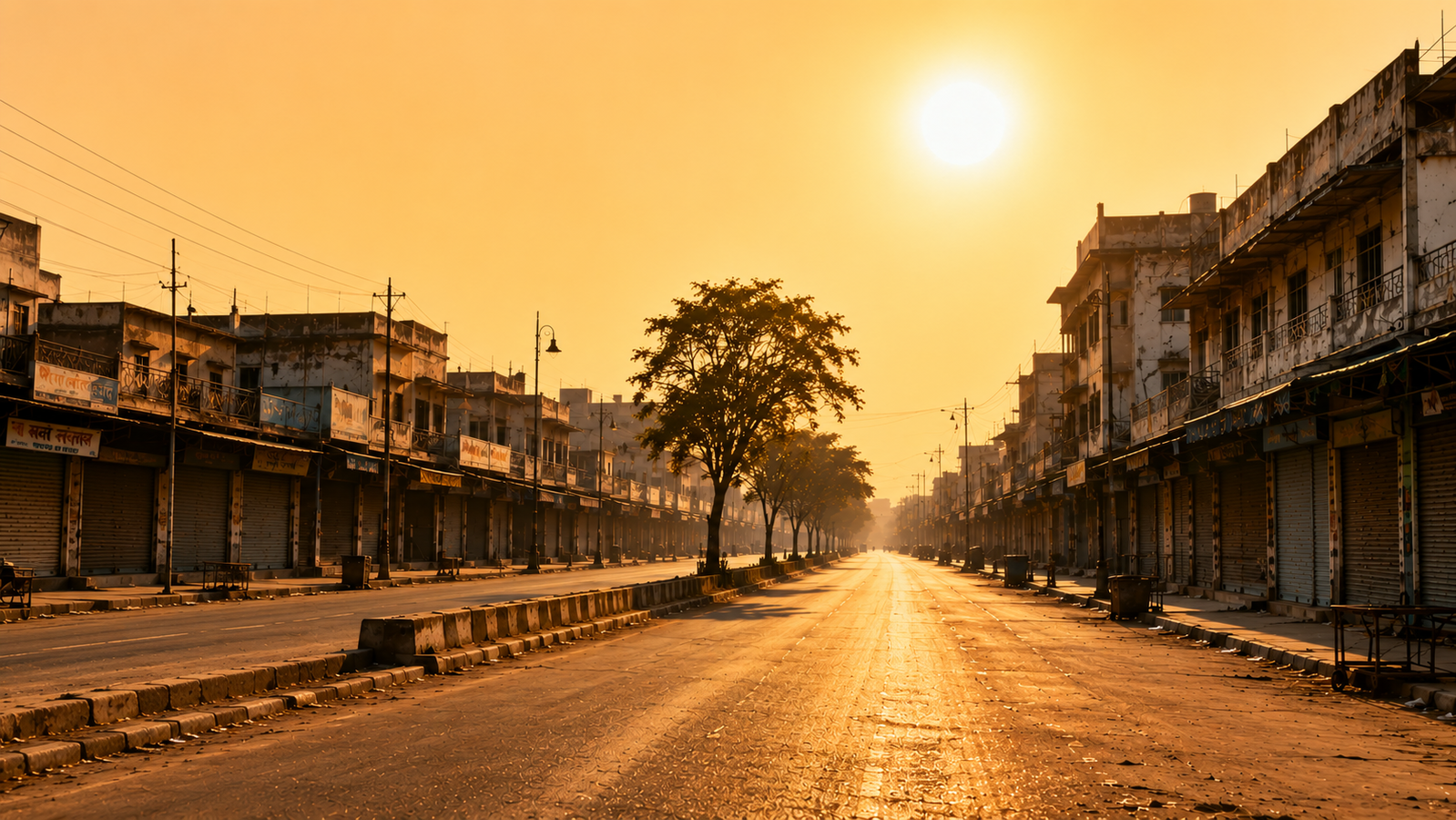
In Uttar Pradesh’s Banda district, the intense summer heat has begun dictating daily routines. With temperatures rising beyond 48C, most activity wraps up early, and by 10 am, roads are nearly empty.
Lakhan Gupta, a jeweller in Attara, has adjusted his schedule to cope. He steps out at 6 am to complete his work before conditions worsen and returns home by 9 am. After that, business slows to a halt. “Since April, I have sold almost nothing,” Gupta told Hindustan Times. “After 10 am, Banda becomes deserted. At first, you see one or two people outside. Then, as the day rises, there is only silence.”
Record temperatures raise concern
Banda has recorded some of the highest temperatures in the country this season. On April 27, the district logged 47.6C, the highest in India that day and its warmest April reading since 1951. The earlier record of 47.4C was recorded on April 30, 2022, and April 25, 2026. More recently, the mercury climbed to 48.2C, setting a fresh high.
Also Read | Delhi braces for extreme heat, temperature likely to touch 46C this week
The repeated spikes have placed Banda among the most heat-affected regions in India, drawing comparisons with traditionally hotter pockets.
Work and livelihoods under pressure
The heat has forced people to rethink how and when they work. Farmers have shifted to night-time farming using LED lights. Many labourers are avoiding daytime shifts altogether, even if it results in a significant drop in income. Contractors estimate that workers are giving up nearly 40% of their wages to avoid working between late morning and evening.
Food vendors have also changed their hours, choosing to operate only after sunset. Seasonal migration has begun earlier than usual this year. Prahlad Valmiki, a resident of Bhadedu village, pointed to the growing distress. “The time has come to look at this seriously. Otherwise Banda will not remain liveable,” he told Hindustan Times, adding that residents frequently raise concerns about heat, water scarcity, and crop damage.
Also Read | India meets record 260.45 GW power demand amid severe heatwave
Power systems struggle to cope
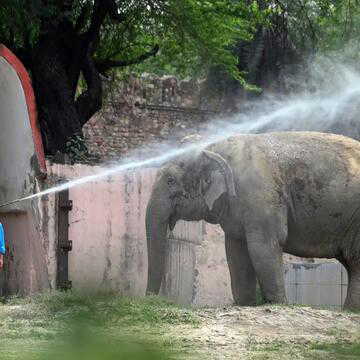
The prolonged heat has put electricity infrastructure under stress. At 44 substations, staff are pouring water over 1,379 transformers to prevent overheating, following multiple breakdowns over the past few weeks. Even with power supply running up to 16 hours a day, maintaining stability has become increasingly challenging.
Environmental degradation worsens impact
Experts link the worsening conditions to long-term ecological damage in the region. Studies tracking forest cover over decades show a steady decline, with dense forest areas shrinking considerably due to mining and agricultural encroachment.
Arjun P Varma of Banda Agriculture University highlighted the impact of these changes. “I myself work inside the office from 9.30 in the morning till evening now. I cannot go into the field,” Hindustan Times quoted Varma as saying.
Also Read | Air quality worsens in Delhi, Stage-I GRAP measures enforced
Rivers and hills show signs of stress
The environmental strain is visible across both hills and rivers in the district. Parts of the Vindhyan range have been severely affected by continuous mining, reducing their natural ability to store water.
At the same time, rivers like the Ken are facing heavy sand extraction. According to activist and journalist Ramlal Jayan, large quantities of sand are being removed daily, impacting water levels. Social activist Uma Shankar Pandey explained the consequences to HT. “Excessive extraction has stripped away natural river sand that helped retain water and recharge groundwater. In its place, exposed rocky surfaces increase runoff and reduce water retention.”
By evening, some movement returns as temperatures dip slightly. Markets reopen and people step out again, but for residents, the day continues to revolve around avoiding the hours when the heat makes normal life difficult.