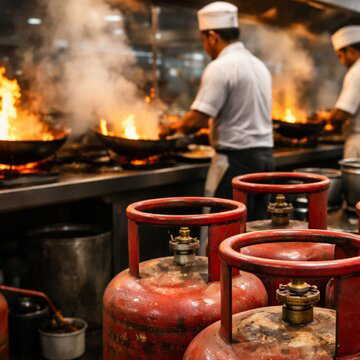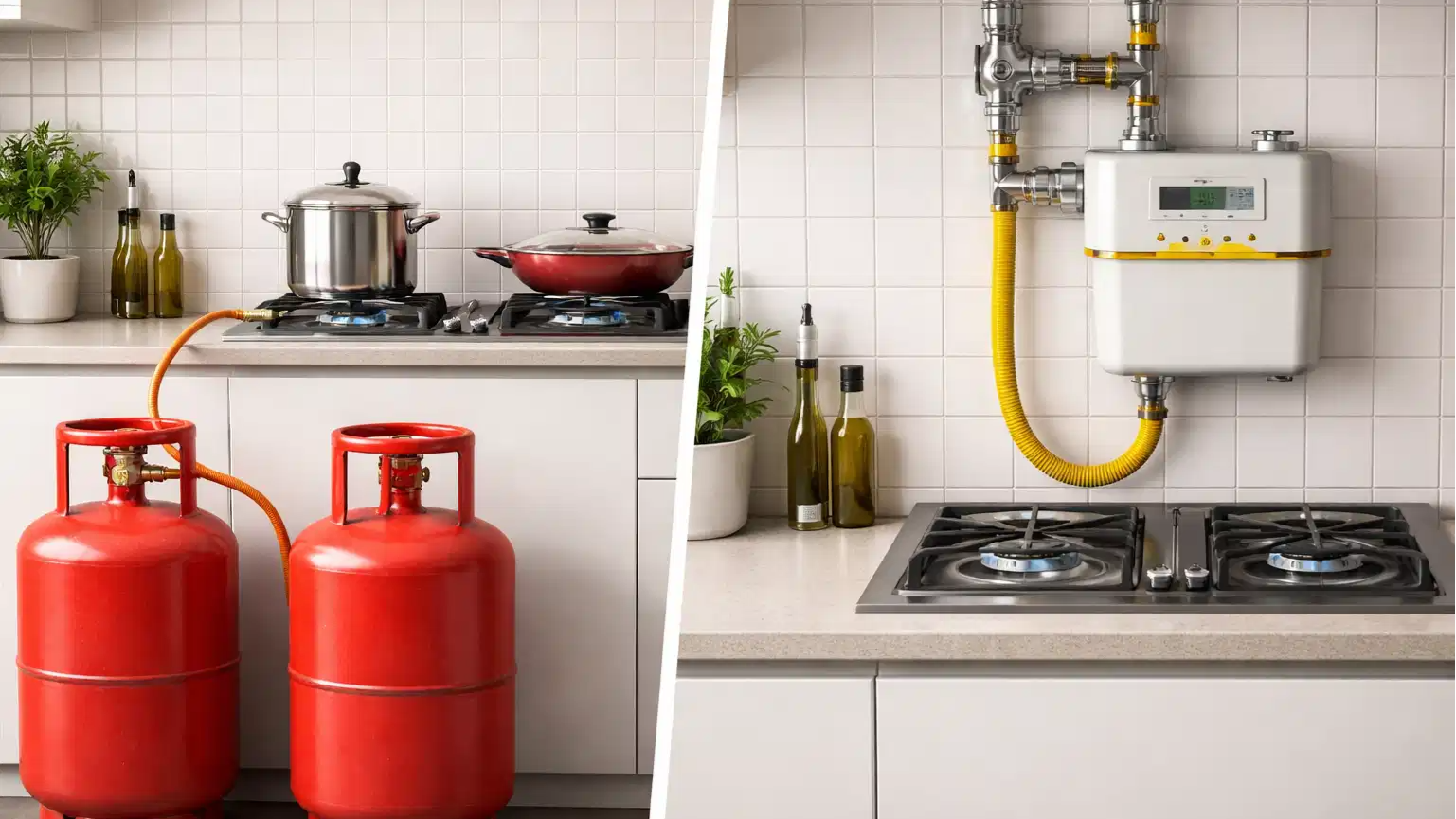
For decades, LPG cylinders have powered most kitchens across India. However, piped natural gas (PNG) is gradually gaining popularity in urban areas as gas pipeline networks expand. With advantages such as continuous supply, meter-based billing and built-in safety systems, many households are now considering PNG as an alternative to traditional LPG cylinders.
Understanding how these two fuels differ can help households decide which option works best for their cooking needs.
What is the difference between PNG and LPG?
LPG, or liquefied petroleum gas, is primarily a mixture of propane and butane. It is stored as a liquid under pressure inside cylinders that are delivered to homes. Once the gas runs out, the cylinder must be replaced with a new one.
Also Read | 550 Indians reach Armenia, 90 enter Azerbaijan from Iran as conflict escalates, MEA says
PNG, or piped natural gas, mainly consists of methane and is delivered directly to homes through underground pipelines. The supply works much like a water connection, allowing gas to flow continuously without the need to book refills.
Another major distinction lies in storage and delivery. LPG is stored under high pressure in cylinders, while PNG is supplied in gaseous form through pipelines at relatively lower pressure.
Which is better for home cooking?
Both LPG and PNG produce a stable flame suitable for everyday cooking. However, PNG is often seen as more convenient because it offers an uninterrupted supply.
With LPG cylinders, households must keep track of gas levels and book refills before the cylinder runs out. Delivery delays can sometimes interrupt cooking. PNG removes this concern because gas is supplied continuously through the pipeline network.
Consumers using PNG are also billed based on the amount of gas consumed, similar to electricity or water usage.
Cost comparison: PNG vs LPG
The price difference between PNG and LPG varies across cities depending on local tariffs. In many urban areas, PNG is considered slightly cheaper when compared on a per-unit energy basis.
Since PNG users pay only for the gas they consume, it can help reduce unnecessary usage. LPG cylinders, in contrast, come in fixed quantities and must be purchased as a full unit regardless of how much gas is needed.
Safety is another factor influencing the shift toward PNG. Natural gas is lighter than air and disperses quickly if a leak occurs. LPG, on the other hand, is heavier than air and can accumulate near the ground if not detected early.
PNG systems are also typically equipped with pressure regulators and automatic shut-off mechanisms that help reduce risks.
How to switch from PNG to LPG?
PNG is provided through city gas distribution networks operated by companies such as Indraprastha Gas, Adani Total Gas, GAIL Gas and others depending on the city.
Also Read | At least 10 dead after fire breaks out in ICU of SCB Medical College in Cuttack
1. Check PNG availability in your area
The first step is to verify whether a PNG pipeline network exists in your locality. You can do this by visiting the website of your city’s gas distributor or contacting their customer service.
2. Apply for a PNG connection
Once availability is confirmed, you can submit an application online or at a local office of the gas distribution company. The application usually requires your name, address, contact details and property information.
3. Submit documents and pay charges
Applicants generally need to provide identity proof (Aadhaar, PAN or voter ID), address proof, passport-size photographs and proof of ownership or rental agreement. A security deposit and installation fee may also be charged depending on the provider and city.
4. Site survey and pipeline installation
After verification, technicians conduct a feasibility survey of the house. They then install the gas meter, service regulator and internal pipeline that connects the kitchen to the city gas network.
5. Convert your stove and activate the connection
In most cases, the existing LPG stove can be used by replacing the LPG nozzle with a PNG-compatible one and adjusting the gas pressure. This conversion should always be done by authorised technicians for safety.