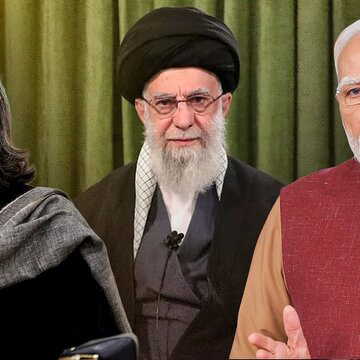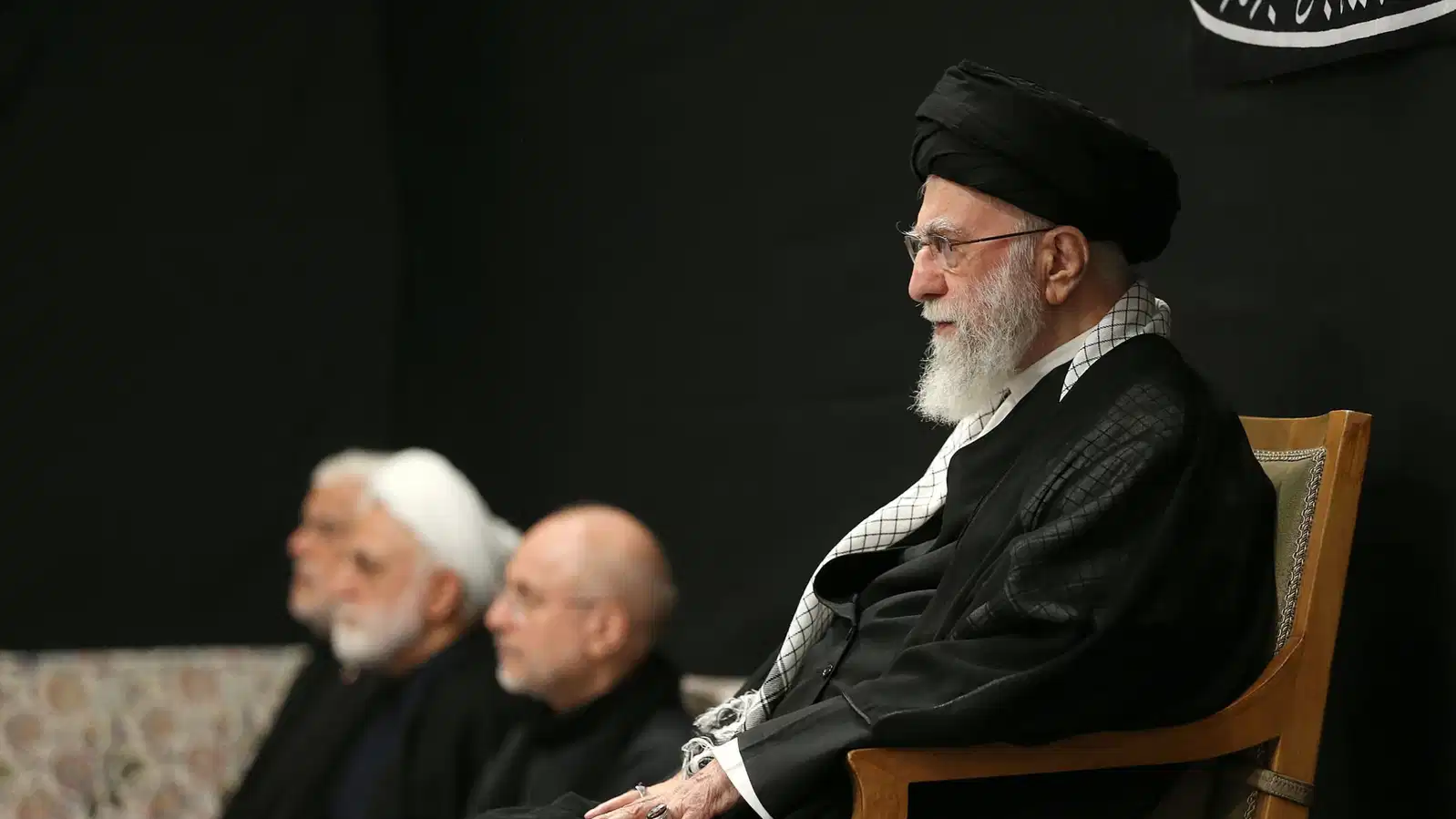
India has not issued a direct statement on the killing of Iran's Supreme Leader, Ali Khamenei, who was killed in a US-Israeli strike during the month of Ramadan. While political reactions have emerged domestically, the South Block has so far maintained silence on the assassination itself.
The Congress party, along with its leaders Mallikarjun Kharge and Sonia Gandhi, condemned the killing. The Indian government has, however, only criticised Iran's reported missile attack on UAE and has not commented on Khamenei's death.
The silence has triggered debate in India. Was Khamenei a friend of India? Or a difficult partner? The answer, diplomats say, lies in a complex history shaped by both cooperation and tension.
Chapter 1: When Iran backed India (1994)
Relations between India and Iran saw a critical moment in 1994. Pakistan had pushed for a resolution against India on Kashmir at the United Nations Commission on Human Rights. At the same time, it sought support within the Organisation of Islamic Cooperation (OIC).
India was diplomatically isolated. Then Prime Minister P. V. Narasimha Rao reached out to Iran's President Akbar Hashemi Rafsanjani. India's foreign minister visited Tehran. Iran assured support.
Also Read | India launches evacuation plan as Middle East airspace turmoil strands tourists
Iran blocked the move at the OIC. The resolution did not pass. Indian diplomats later described the support as decisive. However, ties faced strain in 2005 when India voted against Iran at the International Atomic Energy Agency over its nuclear programme. Tehran saw that move as a setback.
Chapter 2: Ideological differences under Khamenei
During Khamenei's premiership, ideological tensions became visible. As Supreme Leader, he often spoke about Muslim unity and commented on developments in Kashmir.
In 2017, he called for support for "oppressed Muslims" in Kashmir. After India revoked Article 370 in 2019, he urged justice. In 2020, during the Citizenship Amendment Act protests and Delhi riots, he criticised India sharply. In 2024, he again referred to Kashmir alongside other global conflict zones.
India responded by summoning Iranian envoys and describing the remarks as interference in internal affairs. Officials maintained that such comments were based on incorrect information.
Also Read | India releases statement as conflict deepens across the Gulf
Analysts note that Khamenei's statements often reflected his religious position rather than Iran's formal diplomatic stance.
Chapter 3: Strategic cooperation continued
Despite public disagreements, bilateral engagement continued. Prime Ministers Dr. Manmohan Singh and Narendra Modi met Khamenei during visits to Tehran. Discussions focused on trade, energy, and connectivity.
The Chabahar Port project moved forward during his tenure. The port provides India access to Afghanistan and Central Asia while bypassing Pakistan. Iran also supported the International North-South Transport Corridor initiative.
Energy trade was another pillar. Iran supplied crude oil to India under flexible payment terms, including transactions in Indian currency. India was also allowed to open a consulate in Zahedan near the Pakistan border.
Diplomats describe the relationship as pragmatic. While ideological differences created friction, economic and strategic interests kept engagement intact.
Following Khamenei's death, India appears to be balancing its position. It has avoided direct comment on the strike while calling for restraint in the region.
Experts say the future of India-Iran ties will depend on both regional stability and the direction taken by Iran's next leadership. For now, New Delhi's approach reflects caution rather than alignment.