India on Monday unveiled a revised Wholesale Price Index (WPI) series, shifting the base year from 2011-12 to 2022-23 and introducing broader coverage of commodities. Alongside the updated WPI, the government also rolled out Producer Price Indices (PPI), a move aimed at aligning India’s inflation measurement framework more closely with international standards.
The new WPI series comes at a time when wholesale inflation has been rising sharply, driven largely by higher fuel prices amid the conflict in West Asia, per a report by Hindustan Times.
Also Read | Government raises export tax on diesel and ATF amid Middle East tensions
New WPI basket expands coverage
The revised WPI tracks 957 individual items, significantly higher than the 697 commodities covered under the previous series. The update also changes the classification of several products.
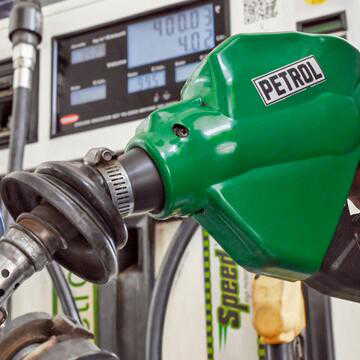
Per a report by HT, crude petroleum and natural gas, which were earlier classified under primary articles, have now been moved to the fuel and power category. The fuel basket has also been expanded to include energy generated from renewable sources.
Manufactured products continue to account for the largest share of the WPI basket.
Fuel prices drive inflation surge
According to the new data series cited by HT, wholesale prices increased 6.60 per cent between February and May 2026. Nearly half of this increase came from the fuel and power segment.
Year-on-year WPI inflation rose from 2.18 per cent in February to 3.98 per cent in March, 8.26 per cent in April and 9.68 per cent in May.
May marked the seventh consecutive month of rising inflation under the revised series, with March, April and May recording the highest monthly readings since the new dataset began in April 2023.
The fuel and power category witnessed the sharpest rise, moving from a contraction of 3.37 per cent in February to inflation of 30.33 per cent in May. During the same period, inflation in primary products increased from 1.64 per cent to 4.99 per cent, while manufactured goods rose from 3.61 per cent to 7.48 per cent.
Also Read | Indian Army clears Mepro X6 sights for Negev guns as BEL leads local production
Food inflation also accelerated, with the WPI food index rising 4.49 per cent year-on-year in May compared with 3.11 per cent in April. Within the fuel category, mineral oils inflation stood at 49.82 per cent, while crude petroleum and natural gas prices rose 61.51 per cent.
Producer Price Indices introduced
A major addition to the inflation framework is the launch of three Producer Price Indices: output PPI, input PPI and services PPI.
Output PPI, which measures prices received by producers, rose to 109.6 in May from 108.6 in April. The input PPI for manufacturing remained unchanged at 104.9 in May but was higher than 100.9 recorded in March.
The services PPI will be released on a quarterly basis.
FAQs:
What is the new base year for WPI?
2022-23.
What new indices were launched alongside WPI?
Output PPI, Input PPI and Services PPI.