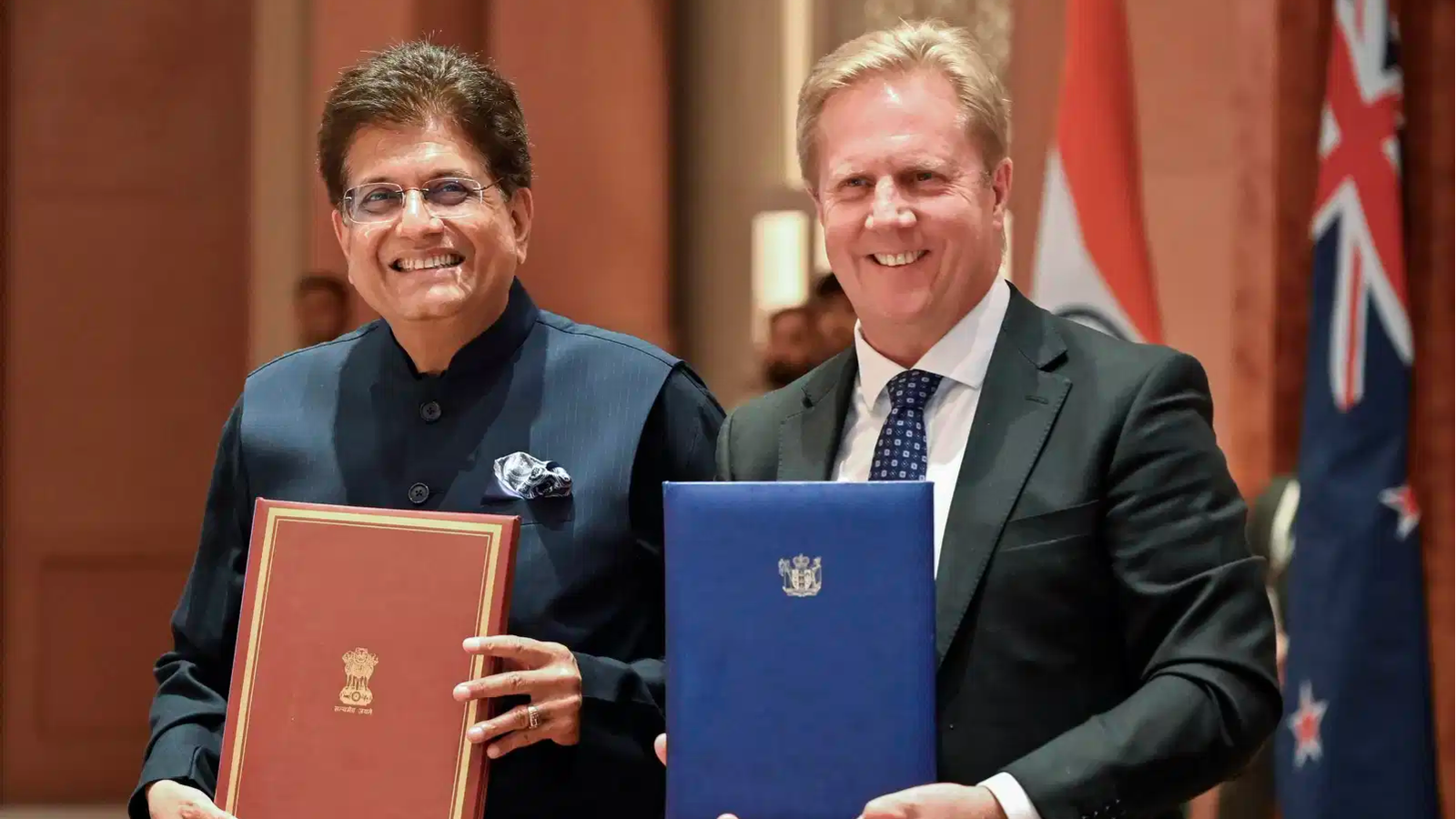
India and New Zealand on April 27 signed a Free Trade Agreement (FTA), marking a key step in expanding economic ties between the two nations. The deal follows the conclusion of negotiations in December 2025 and spans 20 chapters covering goods, dispute resolution, legal provisions and more.
'Defining milestone' in trade ties
Announcing the agreement, Union Commerce minister Piyush Goyal said the negotiations were completed within nine months. He described the pace as a reflection of "depth of trust and shared ambition between our nations".
Also Read | Will civilians soon fly to space with ISRO? Here's what we know
"Signing of this FTA marks another defining milestone in India's engagement with the developed world and brings us closer to PM Modi's vision of Viksit Bharat 2047," he said, noting that this is the seventh such agreement signed during his tenure.
Investment and market access
A key highlight of the agreement is New Zealand's commitment to invest $20 billion in India over the next 15 years. The FTA also removes 100 per cent duty on Indian exports to New Zealand, opening wider access for goods across sectors.
Labour-intensive industries such as textiles, leather, plastics and engineering products are expected to benefit from zero-duty entry into the New Zealand market. In return, India has opened 70.03 per cent of its tariff lines to New Zealand, covering 95 per cent of current imports.
Mobility and visa provisions
The agreement introduces new pathways for skilled professionals. At least 5,000 visas termed 'Temporary Employment Entry Visa' will be available for Indian workers in skilled roles, allowing stays of up to three years.
Sector-specific benefits
The FTA also outlines provisions for duty concessions on select products. Wine and spirits from India and wines from New Zealand will see tariffs reduced gradually over a 10-year period.
New Zealand is expected to gain from exports of wool, wood, coal and fruits such as avocados and blueberries. The agreement also includes cooperation in agriculture, with plans to support Indian farmers in areas like kiwi and apple cultivation, along with honey production.
Broad economic cooperation
The deal signals deeper economic collaboration between the two countries, combining trade, investment and sectoral partnerships under a single framework.