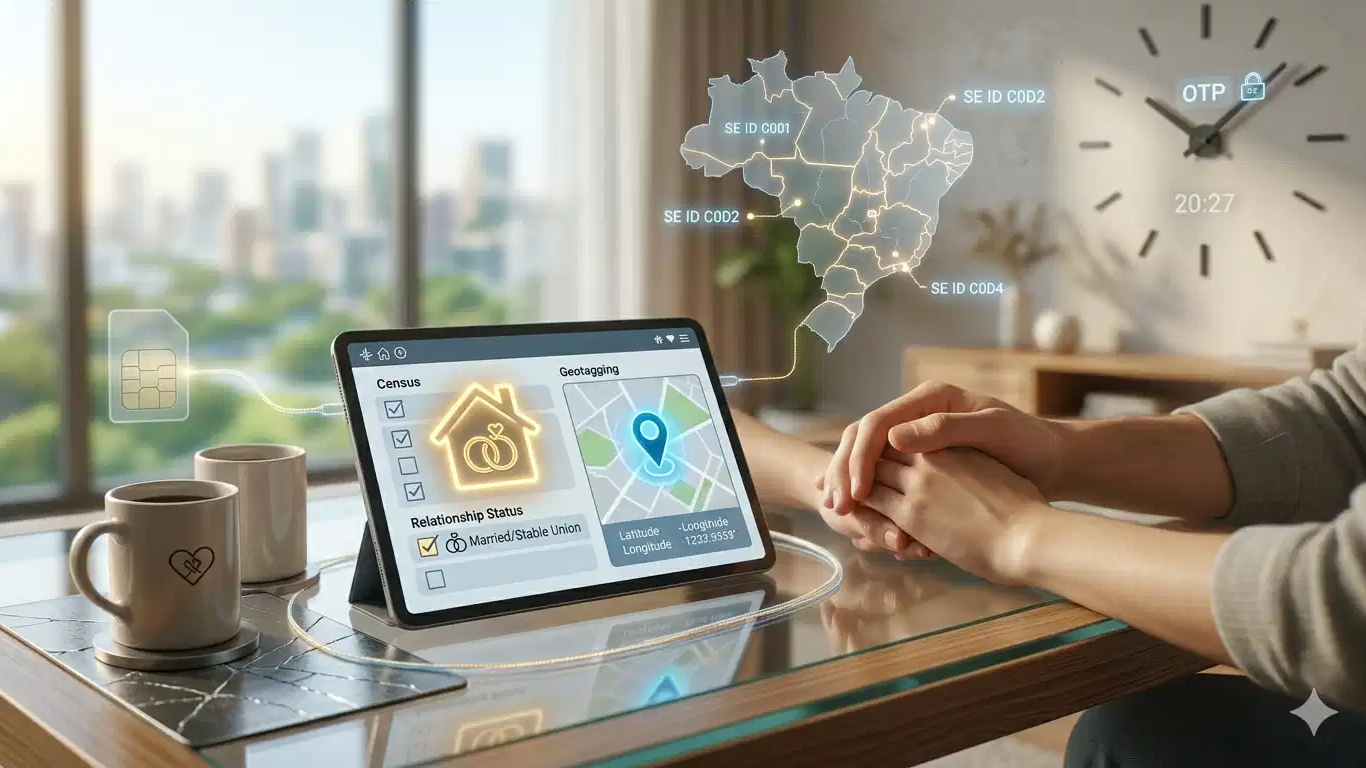
Live-in couples who describe their relationship as a "stable union" will be treated as married in Census 2027, according to clarifications shared on the census self-enumeration portal and as reported by The Times of India. The guidance applies both during self-enumeration and when an enumerator visits a household.
Live-in couples to be counted as married
In response to a frequently asked question (FAQ) listed on the census self-enumeration portal, authorities said, "If they (the couple) consider their relationship as a stable union, they should be treated as a married couple." The clarification comes ahead of the rollout of self-enumeration, a feature that allows households to submit their own details online.
Also Read | Govt may extend SIM-binding deadline for WhatsApp, Telegram and other messaging apps amid tech hurdles
Officials familiar with earlier census exercises noted that unmarried couples living together and identifying themselves as married were previously recorded in the same way. The number of married couples in a household is one of 33 questions included in the houselisting phase.
Houselisting phase and timeline
The houselisting operations will be conducted over a 45-day period between April 1 and September 30, with states and Union territories notifying their respective schedules. The first 15 days of this window will be reserved for self-enumeration, followed by a 30-day period when enumerators will visit households.
The census does not require respondents to submit documentary proof. Enumerators are instructed to record information as declared by residents, based on their knowledge and belief.
How self-enumeration will work
Self-enumeration begins in the NDMC area of Delhi on April 1 through a dedicated web portal. The facility is available in English and 15 Indian languages. The head of the household, defined as the person managing household affairs, or any responsible adult member can complete the process after OTP-based mobile verification.
Respondents can enter details of all members living in the household using a single access. A key step involves marking the exact location of the residence using a geotagging-based map. "Incorrect placement of marker may lead to non-availability of the household data in the enumerators' app," the FAQs note.
Submission and verification process
After entering information on housing conditions and amenities, users can submit the form or save it as a draft during the 15-day self-enumeration period. Once submitted, an SE ID is generated and must be shared with the enumerator, who will verify and upload the data after adding official identifiers.
Also Read | Who is Sqn Ldr Priya Sharma? India’s 7th woman fighter pilot flying Tejas
Officials said self-enumeration will take around 15-20 minutes. The portal will allow partial completion and saving progress, but any changes after submission or the self-enumeration window will only be made by the enumerator. All data will be encrypted and stored on secure government servers, and access to the portal will be limited to within India.