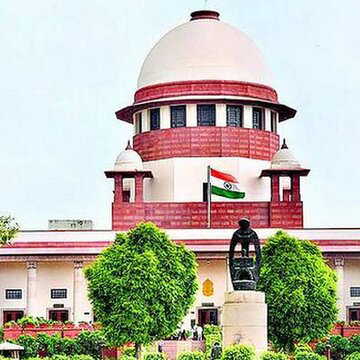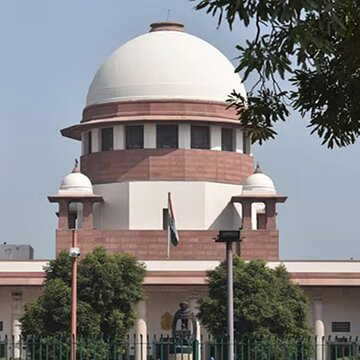
The Supreme Court asked the Election Commission of India (ECI) on Wednesday to respond to an application that seeks extension of the court's earlier orders on the publication of 'logical discrepancy' list to the State of Tamil Nadu, as reported by Live Law.
According to the application filed by Dravida Munnetra Kazhagam (DMK) Secretary RS Bharati, directed to the Supreme Court for its decision, the same directions that were previously issued by the Court during Special Intensive Review (SIR) of the electoral rolls in West Bengal should apply to the State of Tamil Nadu. This is regarding the public disclosure of the names of persons issued with notices for "logical discrepancies" during the revision process.
Also Read | Patna High Court flags 'poor implementation of the liquor law', grants bail to 463 accused in a single day
January 30, the last date for filing claims
The petition was heard by a bench of Chief Justice of India (CJI) Surya Kant and Justice Joymalya Bagchi and was being represented by senior Advocate Kapil Sibal, who informed the Supreme Court that the last date for filing claims and objections in Tamil Nadu is January 30.
Justice Surya Kant orally stated that the directions passed for West Bengal should also apply to Tamil Nadu.
"Once we have laid down some uniform guidelines for Bengal there is no reason it cannot be applied in Tamil Nadu. So no order will be required," Live Law quoted the CJI as saying.
ECI asks for time
Appearing for the Election Commission of India, senior advocate Dama Seshadri Naidu requested for time "seek instructions" and the matter therefore was adjourned till January 29.
Last week, the Supreme Court issued numerous orders to promote transparency and efficiency in checking for logical discrepancies in the SIR process. It has come to their attention that there are more than one crore individuals who received notices requesting an explanation for logical discrepancies appearing on the draft-voter’s registration list.
As such, the Court ordered that their names must be displayed at Panchayat offices. The Supreme Court also allowed these individuals, through authorised agents, to submit their documentation at their local-level offices and ordered that when documentation is submitted, an acknowledgment receipt will be provided to the submitting party.