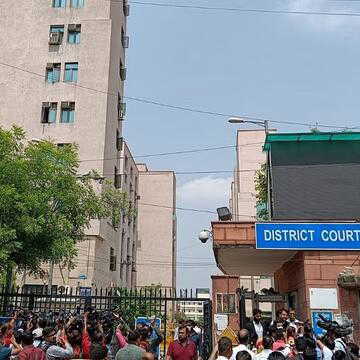
A Delhi court has cleared the way for the trial of alleged conman Sukesh Chandrasekhar and his associates after framing charges under the stringent Maharashtra Control of Organised Crime Act in the high-profile ₹217 crore extortion case. The order marks a major development in an investigation that has spanned several years and uncovered what authorities describe as a well-organised criminal network operating from inside prison walls.
Special Judge Prashant Sharma of the Patiala House Courts framed charges against Chandrasekhar, his wife Leena Paulose and nineteen other accused under provisions related to cheating, extortion, forgery, criminal conspiracy, impersonation and offences under the Information Technology Act. The inclusion of MCOCA provisions significantly raises the stakes, as prosecutors now seek to establish the existence of an organised crime syndicate rather than isolated criminal acts.
Alleged extortion racket operated from Tihar Jail
According to The Pioneer, Chandrasekhar orchestrated an elaborate extortion operation while lodged in Tihar Jail. Authorities allege that he impersonated senior government officials, including officers from the Union government and the Prime Minister's Office, to gain the trust of his targets.
The prosecution claims that Aditi Singh, wife of former Ranbaxy promoter Shivinder Mohan Singh, was among the principal victims. Investigators allege that more than ₹200 crore was extorted from her over an extended period through false promises and fabricated claims involving political influence and official intervention.
The Economic Offences Wing has alleged that several facilitators helped move and conceal the money through hawala channels and shell entities, creating a complex financial network designed to disguise the origin of the funds.
Also Read | Delhi HC backs Vasant Kunj tower project, says city cannot be frozen in the past
Evidence collected over four years
According to The Pioneer, officials have described the court's decision as a validation of an extensive investigation. The probe reportedly relied on a large volume of evidence, including electronic records, voice samples, forensic analysis, mobile phone data, financial transaction trails and witness statements.
Investigators also examined luxury assets and vehicles allegedly purchased using money generated through the extortion scheme. Authorities maintain that the collected material demonstrates the existence of a structured and coordinated criminal enterprise.
Also Read | Delhi HC upholds TRAI ad cap, says airwaves cannot be used for unlimited commercial gain
Jacqueline Fernandez angle kept public focus on case
According to The Pioneer, the case attracted widespread national attention after actress Jacqueline Fernandez was named in a related money laundering investigation by the Enforcement Directorate. The agency alleged that expensive gifts received by the actor were linked to proceeds generated through the extortion racket.
Fernandez has consistently maintained that she was a victim and denied any involvement in criminal wrongdoing.