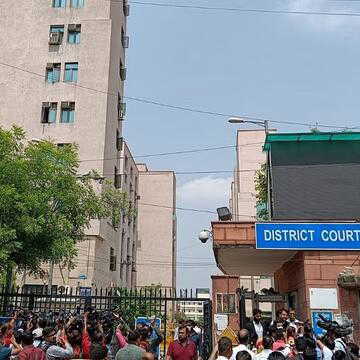
The Delhi High Court has upheld the Telecom Regulatory Authority of India's long-contested regulation restricting television channels to a maximum of 12 minutes of advertisements per hour, delivering a significant verdict in favour of viewer interests and public resource management.
A division bench of Justices Anil Kshetarpal and Amit Mahajan dismissed a batch of petitions filed by broadcasters, including entertainment, news and regional television channels, that had challenged the regulation introduced in 2012 and amended in 2013. The rule allows a maximum of 10 minutes of commercial advertising and two minutes of self-promotional content every hour.
Court rejects broadcasters' challenge
According to The Indian Express, the broadcasters had argued that advertising constitutes their primary source of revenue and that the ceiling directly affects their financial sustainability. They contended that the restriction interferes with their right to commercial speech and violates constitutional guarantees relating to equality and freedom of expression.
The court, however, found little merit in these arguments. It is observed that television broadcasters do not enjoy an unrestricted right to use public airwaves for commercial purposes. Since broadcasting depends on access to spectrum, which is a limited public resource, reasonable regulation is both permissible and necessary.
The judgement stressed that access to airwaves comes with corresponding obligations designed to protect the larger public interest.
Also Read | Shraddha Walkar case to move faster as Delhi court orders daily hearings from July 20
Viewer welfare takes priority
According to The Indian Express, during the proceedings, the Centre argued that broadcasters often extend commercial breaks to maximise revenue, resulting in a poorer viewing experience. Excessive advertising, it said, reduces programme content and inconveniences viewers.
Accepting this position, the court noted that the regulation seeks to strike a balance between commercial interests and audience rights. It held that limiting advertising time is not an attempt to suppress speech but a mechanism to ensure that public resources are used responsibly.
The bench observed that viewer welfare remains a legitimate regulatory objective and that authorities are empowered to impose reasonable conditions on broadcasters operating through the public spectrum.
Also Read | Sukesh Chandrashekar faces organised crime charges as Delhi court clears way for trial
Airwaves belong to the public, says court
According to The Indian Express, a key aspect of the judgment was the court's reaffirmation that spectrum and airwaves are scarce national resources held in trust by the State on behalf of citizens.
The bench said broadcasters cannot claim an unfettered right to exploit these resources for profit. It further held that TRAI's advertisement cap has a direct connection with the constitutional principle that community resources should be utilised for the common good.
The ruling brings to a close a legal battle that stretched for more than a decade, with the earliest petitions filed in 2013. The verdict is expected to have a lasting impact on the television broadcasting industry, reinforcing the regulator's authority to balance commercial interests with public welfare.