The Supreme Court on Friday questioned whether children of economically and educationally advanced families within backward classes should continue receiving reservation benefits, particularly in cases where both parents are Indian Administrative Service (IAS) officers or senior government employees.
The observations came during the hearing of a petition related to the “creamy layer” exclusion under the Other Backward Classes (OBC) category.
Also Read | Delhi HC raps WFI, seeks Vinesh Phogat’s entry into Asian Games trials
बता दें कि ये कुछ नया नहीं!
— Dr. Neha Das (@neha_laldas) May 22, 2026
OBC आरक्षण में यही नियम लागू है!
यानी अगर माता पिता दोनों IAS (यानी Group A service) में हों, तो वो OBC क्रीमी लेयर माना जाता है और उसको फिलहाल आरक्षण नहीं मिलता!
लेकिन एक याचिकाकर्ता ने ये मांग की थी कि उसको OBC आरक्षण मिलना चाहिए, जबकि उसके माता… https://t.co/wXF6yrmDv1
The court turns to the creamy layer question
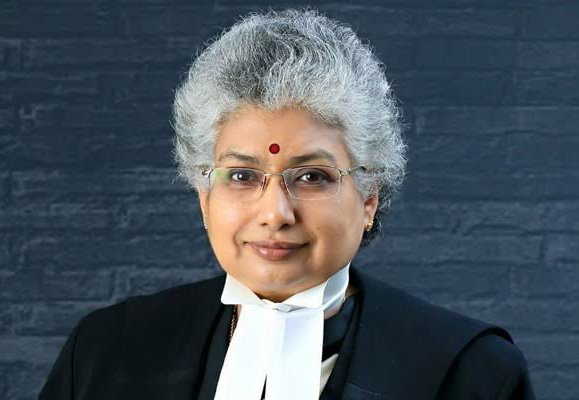
A bench of Justices B V Nagarathna and Ujjal Bhuyan made the remarks while hearing a plea challenging a Karnataka High Court order that upheld the exclusion of a candidate from reservation benefits on the ground that he fell within the creamy layer category.
The petitioner belonged to the Kuruba community, classified under Category II(A) among Karnataka’s backward classes, and had sought appointment under the reserved category in Karnataka Power Transmission Corporation Limited.
Success, it appears, may complicate the claim
During the proceedings, Justice Nagarathna orally observed, “If both parents are IAS officers why should they have reservations? With education and economic empowerment, there is social mobility. So then again to seek reservation for the children, we will never get out of it.”
The court also noted that once families attain social and economic advancement through reservation, there must be a discussion on whether future generations should continue availing the same benefits.
Beyond earnings
Reports said the petitioner’s parents were government employees and their combined annual income exceeded the prescribed creamy layer threshold.
The caste validity certificate was denied after authorities concluded that the candidate fell within the creamy layer category. The bench issued notice in the matter while continuing to examine the broader legal questions surrounding reservation and social mobility.
Also Read | Centre to SC: Will bring back 5 deported to Bangladesh, verify citizenship
STORY | SC questions quota to children of economically, educationally advanced families in backward classes
— Press Trust of India (@PTI_News) May 22, 2026
Observing that with educational and economic empowerment there is social mobility, the Supreme Court on Friday questioned the continued grant of reservation benefits to… pic.twitter.com/raSX1VTUxB
The rulebook may need a second reading
The observations come months after another Supreme Court ruling clarified that parental income alone cannot determine whether an OBC candidate belongs to the creamy layer.
In a March judgment, the court said the status and category of posts held by parents must also be considered while deciding eligibility for reservation benefits.
Under existing reservation rules, the creamy layer principle applies to OBC categories and excludes socially advanced families from reservation benefits once they cross specified criteria linked to occupation, status and income.
The principle does not currently apply to Scheduled Castes (SC) and Scheduled Tribes (ST), while the Economically Weaker Sections (EWS) category follows a separate income-based framework.