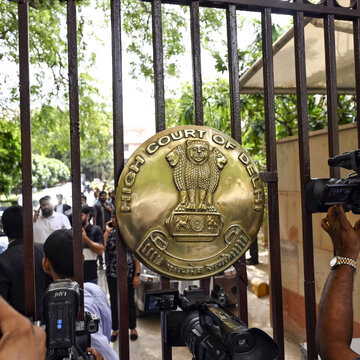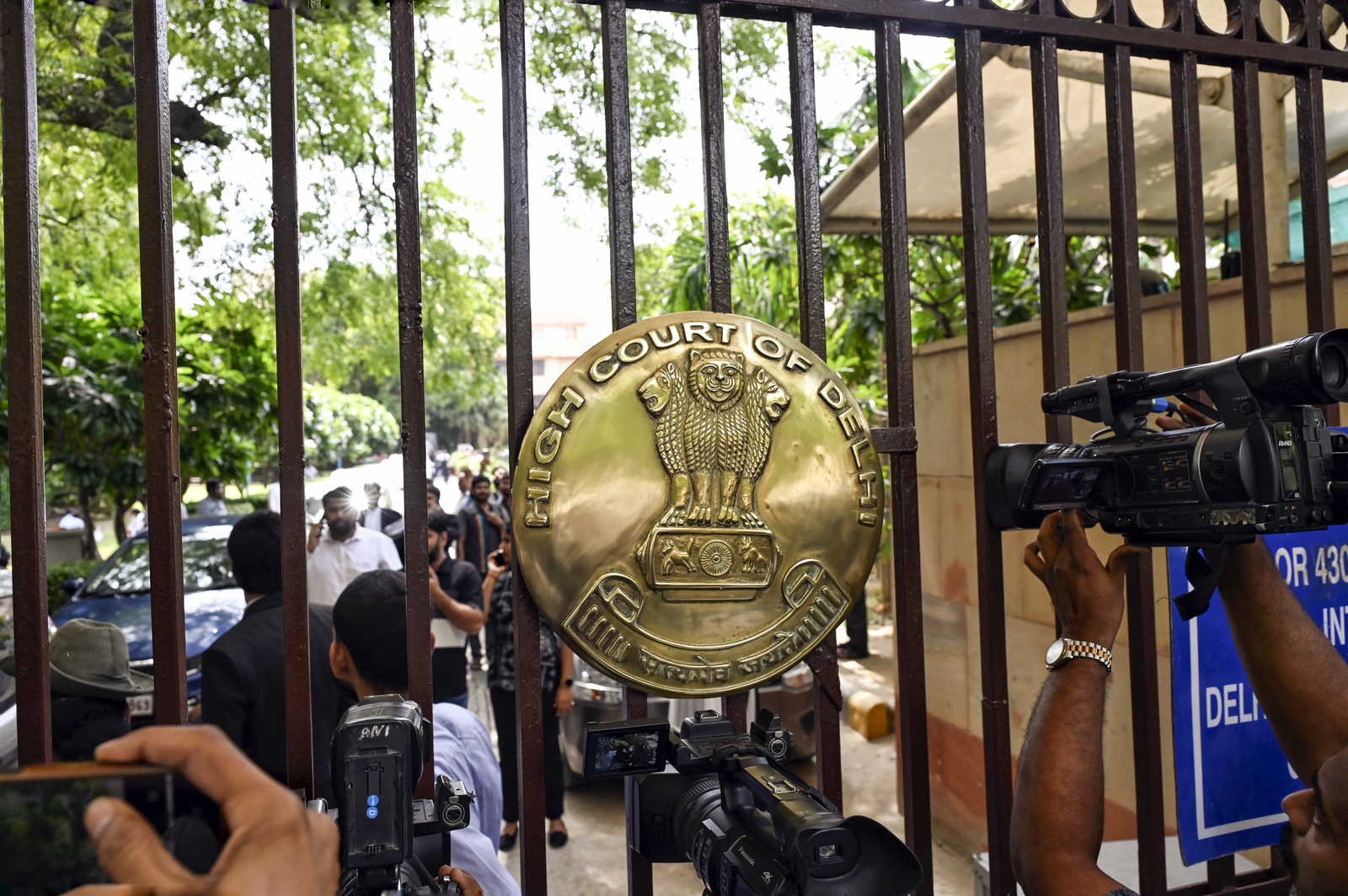
Telegram has moved the Delhi High Court against the Central government's decision to temporarily block its services across India until June 22, escalating a major confrontation between one of the world's largest messaging platforms and Indian authorities over the NEET-UG 2026 re-examination.
The company has argued that the restriction disproportionately affects more than 150 million users in India while doing little to eliminate cheating networks that have already migrated to alternative platforms.
The Delhi High Court agreed to hear the urgent petition after Telegram sought immediate intervention against the ban.
Telegram says millions of users are paying the price
The matter was mentioned before a vacation bench of Justice Tejas Karia by advocate Madhav Khosla, who represented Telegram.
According to submissions made before the court, the platform has argued that the government's decision has disrupted communication for millions of ordinary users who rely on Telegram for personal, educational and professional purposes.
Telegram contends that a nationwide ban is an excessive response to the actions of a relatively small number of bad actors.
The platform has maintained that restricting access for an entire country penalises legitimate users while failing to address the broader ecosystem of online fraud.
Why did the Centre impose the temporary ban?
The government invoked Section 69A of the Information Technology Act, 2000, after alleging that organised cheating syndicates were extensively using Telegram ahead of the NEET-UG re-test scheduled for June 21.
According to Financial Express, multiple Telegram channels were being used to circulate leaked or fake examination papers, coordinate fraudulent activities and demand money from students and parents.
Some of the channels allegedly operated under names such as "PAPER LEAKED NEET", "Re-NEET 2026", "Private Mafia" and "REE NEET MAFIAA".
Officials claimed these groups charged anywhere between a few thousand rupees and several lakh rupees by falsely promising access to examination papers.
The government also ordered Telegram to disable its message-editing feature for already-posted messages until June 30, arguing that the feature complicated investigations by allowing timestamps and content to be altered.
Also Read | Delhi HC collegium drops one judgeship nominee, adds two new names in rare move
NTA admits the ban is not a complete solution
Interestingly, the National Testing Agency has acknowledged the limitations of the measure.
According to Financial Express, NTA Director General Abhishek Singh admitted that operators could continue running channels through Virtual Private Networks or VPNs to bypass restrictions.
However, he argued that reducing the available audience would weaken the business model of such fraud networks.
According to Singh, the objective is to protect students from financial scams and misinformation rather than completely eradicate every online threat.
The NTA described the ban as a "measure of last resort" after previous takedown requests reportedly failed to curb suspicious activity.
Also Read | What makes a customer liable in a prostitution case? Telangana HC explains
Pavel Durov questions the effectiveness of the ban
Telegram founder and CEO Pavel Durov publicly criticised the decision, arguing that banning the platform would not stop paper leaks.
According to Financial Express, he said the leaks had already shifted to other applications and warned that millions of innocent users were being punished for the actions of a few.
The legal battle now places the Delhi High Court at the centre of a larger debate that extends beyond the NEET controversy.
The outcome could influence how India balances national security, exam integrity and digital platform regulation in the future, particularly when millions of users depend on a single platform for everyday communication.