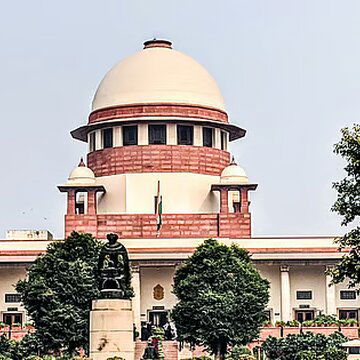
The Supreme Court of India on Monday directed that every aspect of the investigation into the death of Twisha Sharma be independently examined by the concerned authorities, while also cautioning both the victim’s and accused’s families against making public statements about the case.
Also Read | Supreme Court plea seeks CBI probe into 'Cockroach Janta Party' campaign
Incontrovertible evidence of how Twisha Sharma was abused and maligned by her husband and his mother emerges on tape.
— barkha dutt (@BDUTT) May 20, 2026
Imagine a mother in law who asks her daughter in law about her sexual history, former partners, accusing her of promiscuity- and comparing her to a prostitute,… pic.twitter.com/t2SlIUwGli
'Unfortunate, unnatural death' says the court
The observations came from a three-judge bench led by Chief Justice of India Surya Kant during a hearing into the matter, which has sparked widespread public attention and allegations of institutional bias.
Dictating the order, the bench said the court was concerned about the “narrative" being created around the case, particularly claims suggesting that the judiciary or local authorities were interfering with a fair probe because the deceased woman’s mother-in-law is a former district judge.
The bench further observed that Twisha Sharma had suffered an “unfortunate unnatural death". The apex court had taken suo motu cognisance of the matter on May 23, following extensive media coverage and allegations of procedural irregularities in the investigation.
Twisha Sharma died on May 12, after which her family alleged dowry harassment, delays in the registration of the FIR, procedural lapses during the investigation, and possible tampering with evidence. The allegations triggered outrage and led to demands for an impartial inquiry into the circumstances surrounding her death.
Also Read | Supreme Court questions OBC quota for children of IAS officer parents in creamy layer issue
His name is Samarth Singh.
— Sann (@san_x_m) May 24, 2026
He is the husband of Twisha Sharma, the 33 year old former Miss Pune and actress who was found dead at her marital home in Katara Hills, Bhopal on May 12 2026.
Samarth Singh has now been arrested.
He was brought to Bhopal in the early hours of May 23… pic.twitter.com/knOiX44x4P
Order against spreading false, unverified statements
During the hearing, a significant portion of the discussion focused on media coverage and public comments made by individuals connected to the case. Chief Justice Surya Kant urged journalists to avoid airing statements from potential witnesses, observing that such reporting could prejudice the investigation and adversely affect the proceedings.
The Supreme Court stressed the need for a fair and unbiased inquiry while underlining that the investigation must proceed independently without influence from public narratives or speculation.
Twisha Sharma’s final rites were conducted at a crematorium in Bhopal by her brother, Major Harshit Sharma, after the family received her body following a second post-mortem examination. The family had earlier raised concerns over alleged discrepancies in the initial post-mortem report and sought a second autopsy to ensure transparency in the investigation.
The case continues to remain under close scrutiny amid growing public attention and calls for accountability.