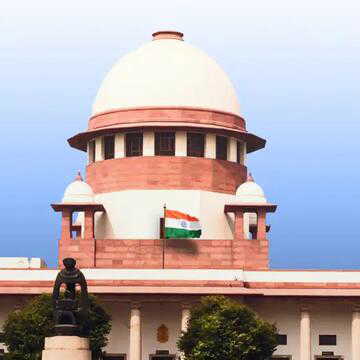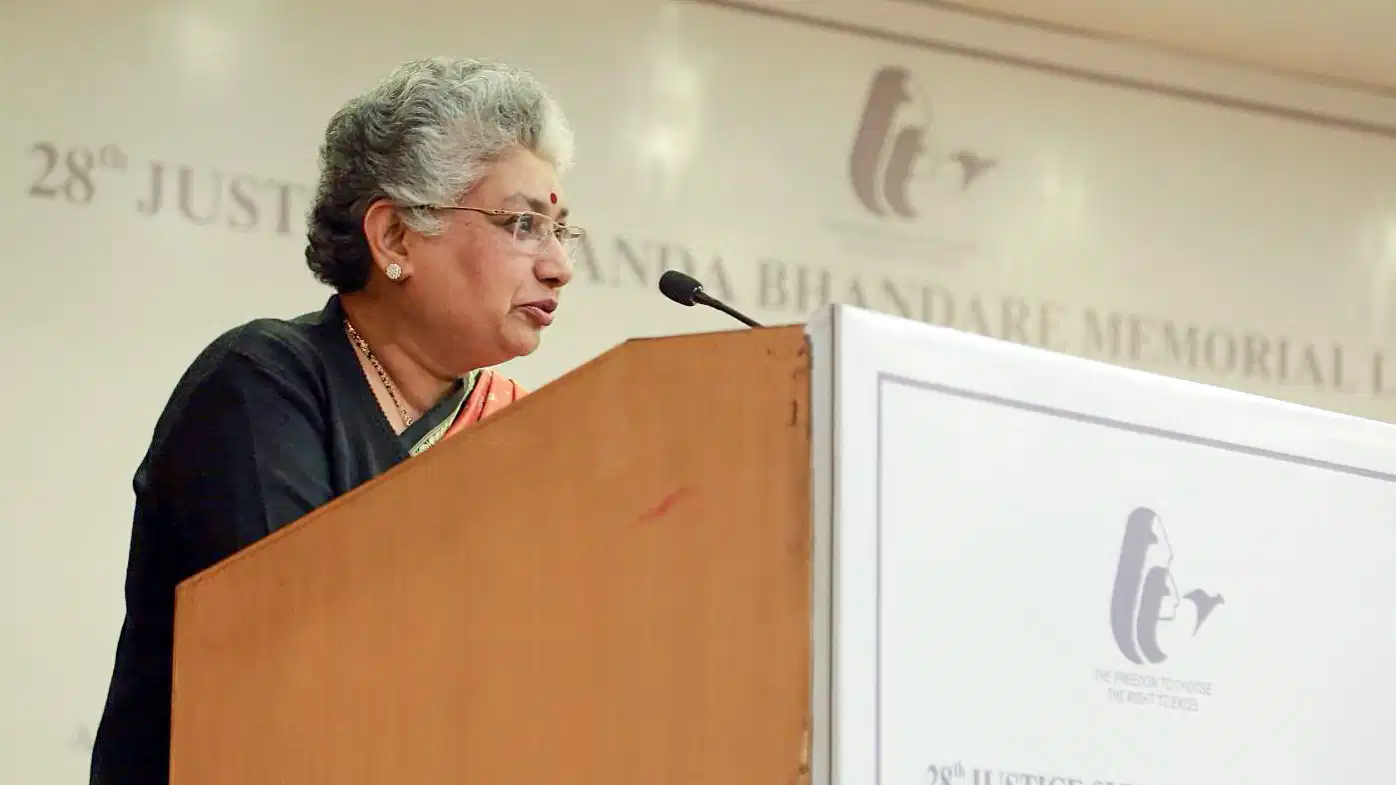
The Supreme Court of India on Tuesday heard arguments on petitions concerning women’s entry into religious places, including the Sabarimala temple, with Justice BV Nagarathna raising questions on the logic of exclusion linked to menstruation.
Hearing the matter as part of a nine-judge Constitution bench, Justice Nagarathna remarked that a woman cannot be treated as “untouchable” for a few days each month and then cease to be so immediately after.
Bench questions scope of ‘untouchability’
Referring to arguments around Article 17 of the Constitution, which abolishes untouchability, Justice Nagarathna said its application in the Sabarimala case required careful scrutiny.
Also Read | 'Patriarchy still permeates the everyday': Supreme Court calls violence against women a deeper issue
“Speaking as a woman, there can't be a three-day untouchability every month, and on the fourth day, there is no untouchability,” she observed during the hearing.
The remark came as the bench examined whether the exclusion of women from certain religious spaces could fall within the ambit of constitutional prohibitions on discrimination. The proceedings relate to broader questions on the intersection of religious freedom and fundamental rights across faiths, as reported by PTI.
Centre contests ‘untouchability’ argument
Appearing for the Centre, Solicitor General Tushar Mehta objected to the interpretation adopted in the 2018 Sabarimala judgment, which had linked the restriction on women’s entry to the concept of untouchability.
He argued that the restriction at Sabarimala applied only to a specific age group and was not based on menstruation.
“Let us be clear. Sabarimala concerns only a particular age group… It is only one temple which has this restriction,” Mehta submitted, according to PTI. He further maintained that the issue should not be viewed through a generalised lens of patriarchy or gender discrimination.
Also Read | Delhi HC rejects journalist’s plea over X post on alleged flight harassment
Background of the case
According to a decision made by the Supreme Court of India in 2018, all women were permitted access to the Sabarimala temple without regard to their age because discrimination on the basis of biological characteristics was unconstitutional.
Moreover, the Supreme Court noted that discrimination against women placed them at a disadvantage and discriminated against them. This case before the nine-member bench addresses broader issues in relation to the former decision.