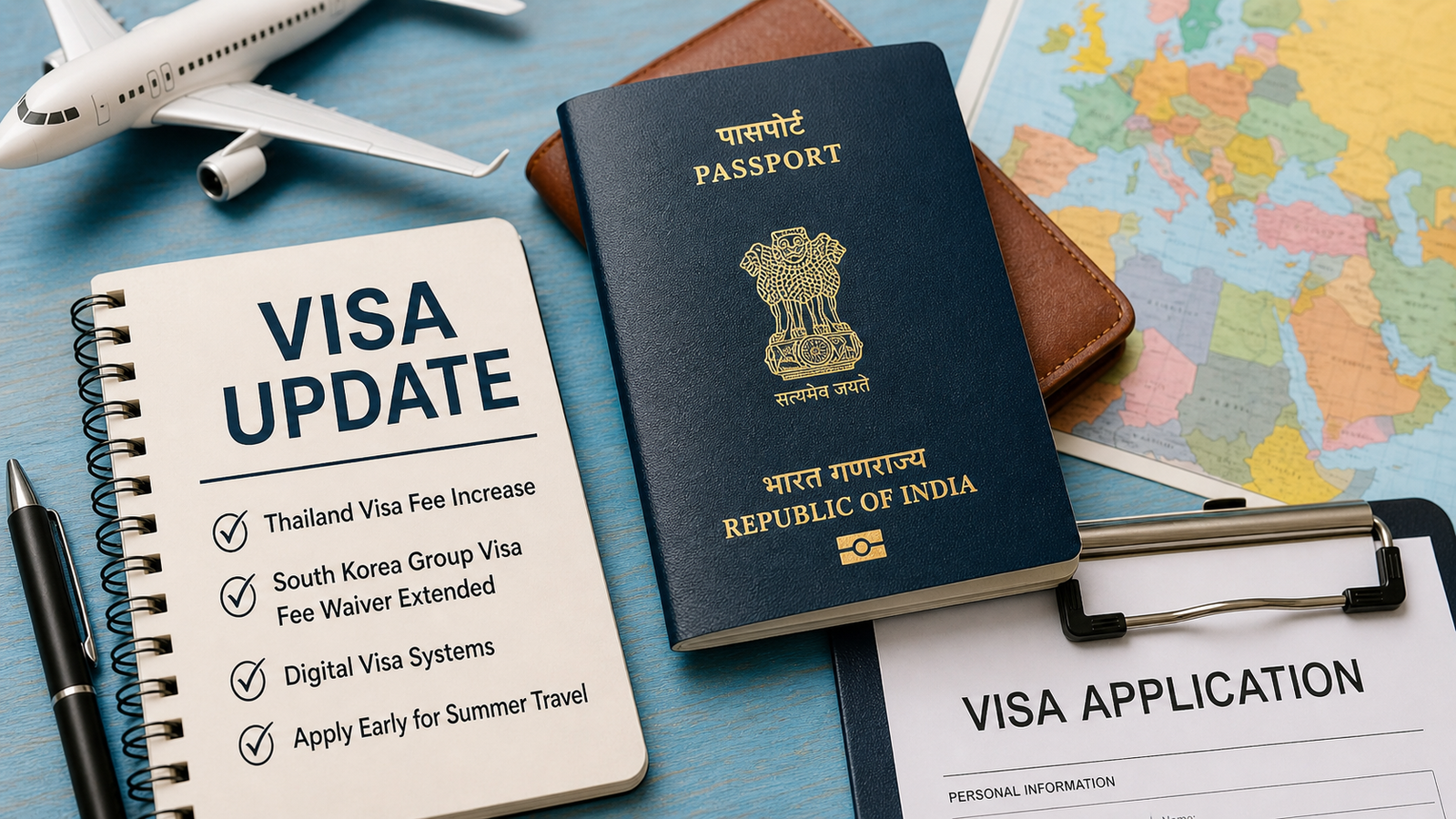
With summer holidays approaching, many Indian travellers are preparing for overseas trips. But before confirming flights and hotels, it is equally important to check the latest visa rules. Several countries have recently updated entry systems, visa charges and travel policies that may affect Indian tourists.
These changes can influence travel budgets, timelines and documentation requirements. Here are four important visa updates Indian travellers should know before planning their next summer vacation.
Thailand increases visa fees for certain travellers
Thailand remains one of the most popular destinations for Indian tourists. Indian passport holders continue to enjoy visa-free entry for short stays of up to 60 days, making it a convenient choice for quick holidays.
However, travellers planning longer stays or frequent visits should note the revised visa fees introduced from April 27, 2026. A single-entry tourist visa now costs ₹3,000, while a multiple-entry tourist visa has been increased to ₹13,500.
The fee revision is especially relevant for remote workers, business visitors and travellers who may need multiple entries during their stay. Those planning extended holidays should calculate these added costs before booking.
South Korea extends group visa fee waiver
South Korea has announced good news for Indian group travellers by extending its visa fee waiver scheme until June 30, 2027.
Under this policy, eligible Indian tourists travelling as part of organised group tours through authorised travel agencies can avoid the regular visa processing fee. This could make South Korea a more affordable option for families, friend groups and travellers joining package tours.
However, the benefit applies only to approved group applications submitted collectively. Solo travellers and independent applicants are not covered under this waiver. Travellers should check with their chosen agency regarding eligibility and documentation.
Digital visa systems are becoming more common
Many countries are gradually moving toward paperless visa systems. Instead of traditional visa stickers or physical paperwork, travellers may increasingly need online approvals, digital confirmation letters or account-linked visa records.
Also Read | Losing your temper at the office? Try these simple ways to manage anger
For Indian tourists, this means being extra careful while filling out applications online. Passport numbers, names, travel dates and email addresses must match official records exactly.
Travellers should also monitor emails regularly, since visa approvals, requests for additional documents or updates may be sent digitally. While online systems are often faster and more convenient, even small mistakes can delay approvals.
Applying early is more important during summer
Summer is one of the busiest travel seasons worldwide. As a result, visa appointment slots, processing timelines and embassy workloads can become more crowded during this period.
Also Read | Want to see your younger self? These AI prompts can recreate you across different decades
Travellers are advised to begin applications early rather than waiting until the final weeks before departure. This is especially important for countries that require interviews, biometric appointments or additional paperwork.
Even destinations offering visa-free access may still require documents such as return tickets, hotel bookings or proof of sufficient funds at the time of entry. Checking all conditions in advance can prevent unexpected issues at the airport.
Why these updates matter
Visa rules often change based on tourism demand, diplomatic agreements and border management systems. For Indian travellers, staying updated can help avoid unnecessary expenses, delays or rejected applications.
A destination may seem easy to visit, but new fees or revised procedures can quickly alter travel plans. Spending time on visa research before booking can save both money and stress later.
Before heading abroad this summer, travellers should check the latest official visa guidelines for their chosen country. Along with flights and hotels, entry rules are now one of the most important parts of trip planning.