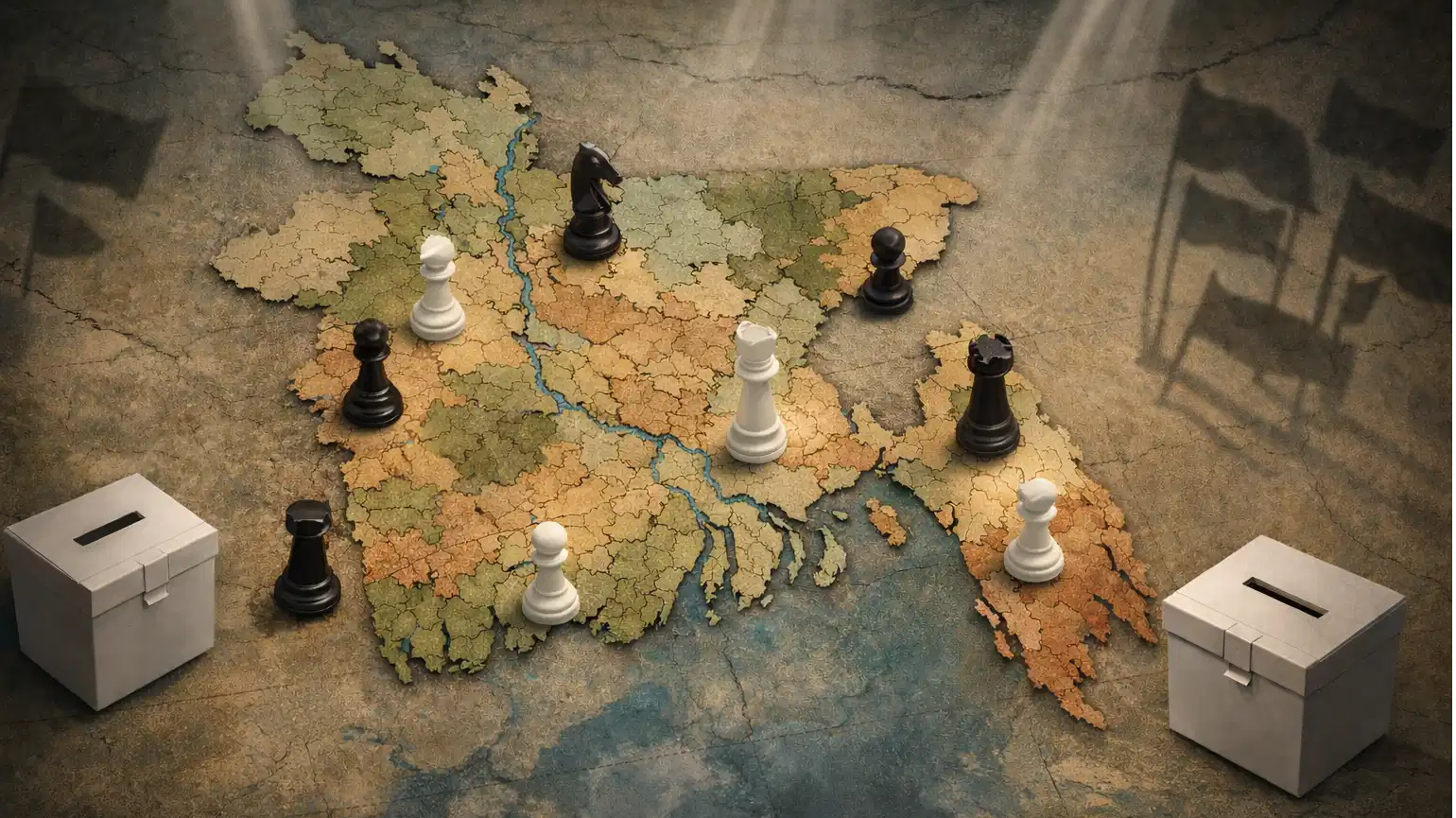
Barely two months into 2026, the political spectrum is already heating up in South Asia, as Bangladesh gears for high-stakes general elections, barely two years after the infamous 2024 elections, which saw a landslide victory for Sheikh Hasina's Awami League amidst large-scale allegations of rigging and electoral malpractice. Since then, a lot has altered in the country's political realm, especially after the historic July revolution led by the Students community, which marked the end of Awami League rule in the country. As Bangladesh prepares itself for the first proper election since 2008 under the interim government, the discussions inevitably shift to the issue of equal political agency across communities.
Also Read | Chhibo: A hidden paradise of misty hills, quiet trails, and tranquil escapes in scenic Kalimpong
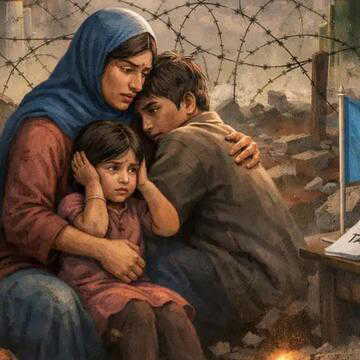
For many of Bangladesh's 15 million Hindus, Christians and Buddhists, the election directly affects their future as they try to navigate through the post Awami league uncertainty, which brought back large-scale violence against minorities, reminding observers of the grim days of 2001 when the Awami League had been then voted out of power. The situation is starkly different now for most of these voters as Awami League has been officially banned from contesting the elections amid redrawn political contours. Two major stakeholders in these polls are likely to be BNP led by former MP Khaleda Zia's son Tarek Rahman and the Jamaat-NCP alliance. For the minorities though, it's a new reality as none of the political stalwarts of the community are taking part in this election.
Hindu and Buddhist leaders under pressure from interim administration
Post the exit of Sheikh Hasina from the country, Awami League leaders across rank and file were targeted by the interim administration and most of the leaders from the Minority community bore the brunt of it. Among those who were convicted of financial fraud and other cases include Sadhan Chandra Majumdar and Swapan Bhattacharya from the Hindu community. Kujendra Lal Tripura from the indigenous tribal communities and record 7-time MP Bir Bahadur Ushe Singh from the Buddhist community of the Bandarban area. Ushe Singh, considered to be among the most influential leaders of the Chittagong Hill Tracts area, is not even allowed to leave the country. Recently as the death of Osman Hadi triggered a fresh wave of violence in Bangladesh, Singh’s house in Bandarban town was burnt down. From the latest data that is available, none of the Awami League leaders from the minority community have filed their nominations as independents or from other parties.
Also Read | A broken butterfly kite and the quiet lesson it taught on Makar Sankranti
Fresh faces come in- BNP tries to woo Hindu voters
Sensing a void in the post-Awami League political order, the Bangladeshi Nationalist Party has turned its attention to the Hindu and Buddhist communities in the upcoming elections. For the first time in decades, the BNP has moved away from its alliance with the Jamaat, with the two parties contesting the elections separately. BNP has fielded 6 minority candidates, including some familiar and old names. Among them is Gayeshwar Chandra Roy, veteran leader and member of the party’s standing committee. Considered to be one of the closest aides of the late former PM Khaleda Zia, Roy is contesting from Dhaka-3, a prestigious constituency in the capital of the country. 77-year-old former MP, Nitai Roy Chowdhury is contesting this time on a BNP ticket from Magura-2. The seat has a substantial Hindu population and was previously represented by Awami League veteran Biren Sikdar, who was also a minister in the Sheikh Hasina Cabinet. Roy Chowdhury was previously an MP from Ershad’s Jatiya Party, as he won the same seat in the 1988 elections. More than 38 years later, he gets another chance to be back in the parliament. Among others, Saching Jerry Prue, will contest in a high-stakes battle from Bandarban as he looks to reclaim his former family baston. Prue had represented the seat previously as had his father. He comes from a loyal lineage of the Bohmong Circle in the Chittagong Hill Tracts. The BNP began courting the Hindu community from the time of Durga Puja in October last year, as their minority cells became active in various districts of Bangladesh. Recently in Barishal, BNP candidates were seen participating in a program marking the birth anniversary of Jogendranath Mondal, one of the most prominent Dalit Hindu leaders to come from the region.
The Jamaat-NCP alliance have also tried to attract the minority voters sensing that the BNP had been racing away from them. Krishna Nandi- a prominent businessman from Khulna, is contesting from Khulna-1, while Preetam Das is contesting from Moulavibazar on behalf of NCP. At 17, the communist parties have nominated the highest number of Hindu candidates in the election.
Strategic impact- How Hindu votes can impact constituencies in Bangladesh
Minorities make up around 9 per cent of Bangladesh’s total population and their share in the population has declined steadily since the formation of the country in 1971, when it stood at 15 per cent. Despite the dwindling numbers, Hindus along with Christians and Buddhists make up a sizeable minority which can strategically influence around 50-60 parliamentary seats in Bangladesh. Khulna, which at the time of partition of India was a Hindu-majority district, now has one of the highest percentages of the Hindu population at 20 per cent. Gopalganj, the birthplace of Bangabandhu Mujibur Rahman and Sheikh Hasina tops the chart with 26 per cent Hindus. The likes of Jessore, Barishal, Thakurgaon and Moulavibazar also have a substantial population of minorities, while the Chittagong Hill Tracts has around 48 per cent minority population, which includes Buddhists(28 per cent) along with Hindus, Christians and Indigenous Tribal Groups. Some of the constituencies like Mymensingh-3, Magura-2, Pirojpur, Dinajpur-1, Netrokona, Jessore-5 and Habibganj are influenced by the Hindus. Khagrachari, which was previously represented by Kujendra Lal Tripura, also has a substantial tribal population which comprises of Chaka, Marma and Tripuri groups.
Also Read | When power breaks the law
Conclusion
Overall, around 80 candidates from the various minorities are in fray for the general elections in Bangladesh this time. The dilemma however, remains for the Hindus as to what a new Bangladesh, in the post-Yunus era might look like. For many Hindus, the BNP is an option as a part of the lesser evil theory, especially when they have to choose between them and the Jammat alliance. The Jamaat-NCP alliance, for their own part, have suggested their ambitions for creating a Bangladesh that will be equal for all but as of now, the Hindus remain cautious considering the past records. History suggests that, be it 2001 or 2024, Hindus and other minorities have always been at the receiving end of violence every time Bangladesh has gone through a regime change. Therefore, voting patterns will not just be defined by party loyalties. In several areas, local power dynamics, perceived images of the candidates, along with assessments of community security will play a vital role. In this context, minority voting in Bangladesh is best understood not as an ideological choice but as a strategic response to past violence, present vulnerability, and the search for credible local representation in future.
Soumarya Dutta is a Research and Program Associate at North-East India’s premier Think Tank, Asian Confluence, Shillong. His work focuses on regional connectivity and development cooperation in North-East and Southeast Asia. With an academic background in Conflict Management and Development, he explores the intersections of ecology, economy, and geopolitics in India’s Northeast and the Bay of Bengal region