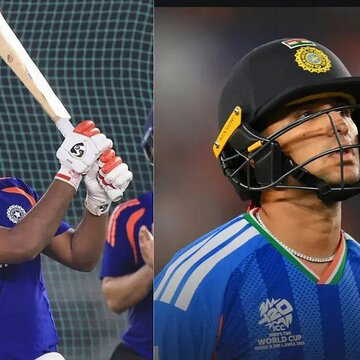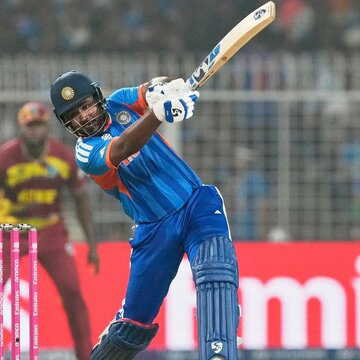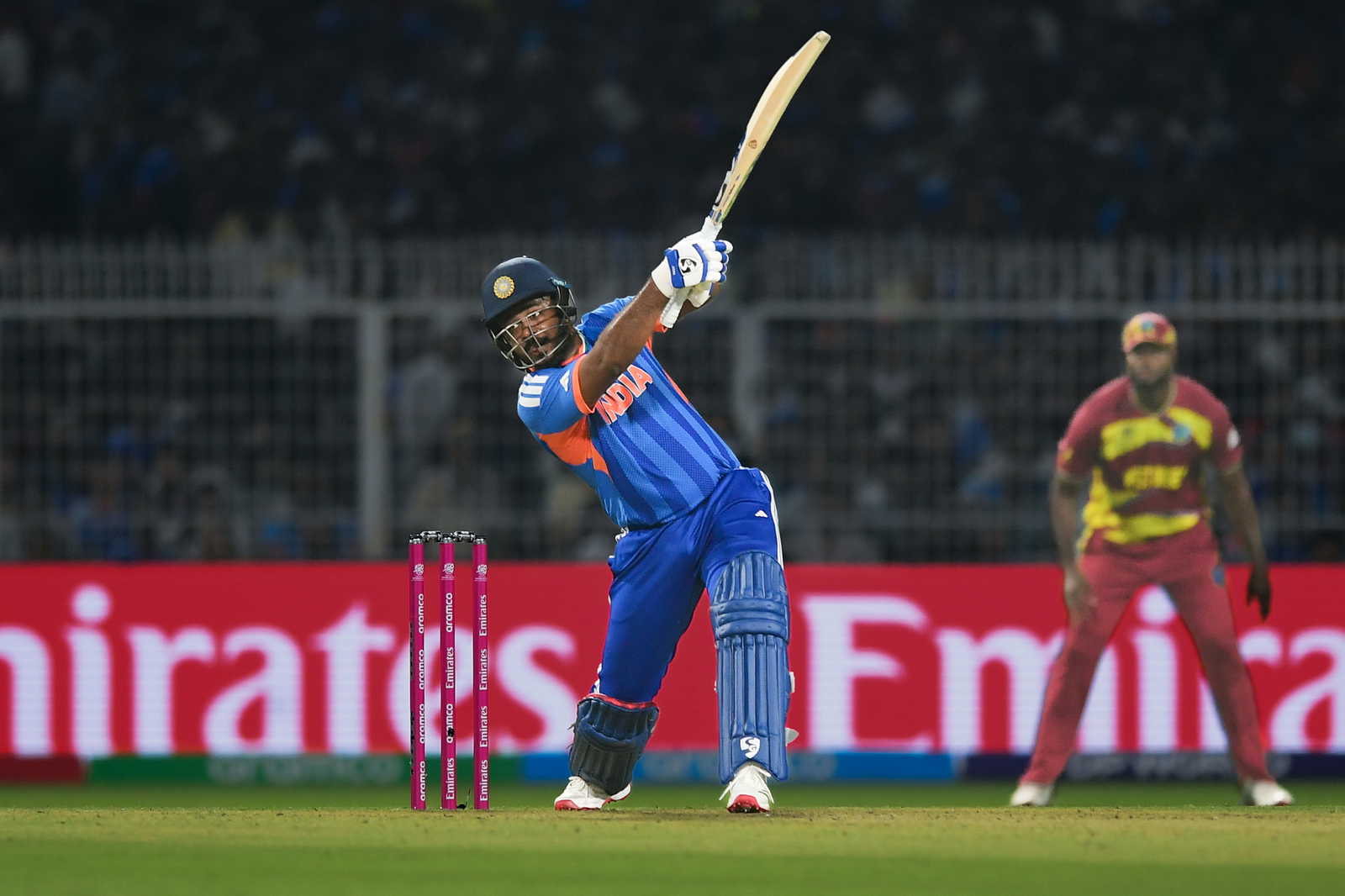
Sanju Samson’s match-winning celebration against the West Indies has come under scrutiny, with reports suggesting the Indian batter could face action under the ICC Code of Conduct ahead of the T20 World Cup 2026 semi-final.
Samson played a crucial role in India’s victory and sealed the chase with a boundary. However, moments after hitting the winning shot, he removed his helmet and threw it to the ground before dropping to his knees and thanking the Almighty. The celebration, though emotional, has sparked discussions about whether it violated the ICC’s conduct guidelines.
Speaking later, Samson described the moment as deeply personal.
“I am a great believer, and I want to keep it very private. And, it’s a very special moment for me,” he said during a conversation with Parthiv Patel on JioHotstar.
ALSO READ | India suffer late heartbreak against Vietnam in AFC Women’s Asian Cup opener
Why Sanju Samson’s celebration is under scrutiny
The ICC Code of Conduct requires players to maintain appropriate behaviour on the field. Under Article 2.2, players can be penalised for “abuse of cricket equipment,” which includes actions such as throwing or hitting items like helmets, bats, or stumps.
Any act that deliberately, recklessly, or negligently causes damage to objects such as advertising boards, boundary fences, dressing room doors, mirrors, windows, or other fixtures may be considered a breach of the code.
A similar incident occurred earlier in the tournament. On February 18, Scotland’s George Munsey received one demerit point for throwing his helmet after being dismissed in a T20 World Cup 2026 match.
Can Samson actually be banned?
In most cases, such incidents are classified as Level 1 offences under the ICC Code of Conduct. Match referees generally show leniency when a player’s action stems from celebration rather than anger or protest.
ALSO READ | Why did the Mohun Bagan Super Giant and All India Football Federation clash over the March 6 ISL match?
For Level 1 offences, the maximum penalty is a fine of up to 50% of the player’s match fee along with two demerit points. Match bans at this level are uncommon.
However, a ban can be imposed if the offence is upgraded to Level 2 or if a player accumulates four demerit points within 24 months.
India are scheduled to face England in the T20 World Cup 2026 semi-final on March 5 at Mumbai’s Wankhede Stadium.