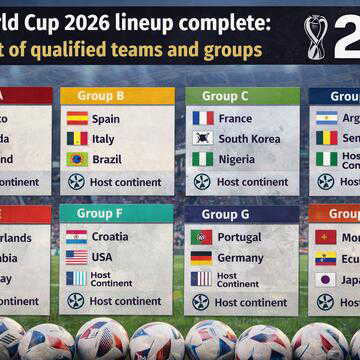
The 2026 World Cup marks a significant shift in global football, with 48 teams participating, up from 32 in previous editions. However, even with increased slots across confederations, only a fraction of FIFA’s 211 member associations made it through. According to available data, 48 teams qualified, 5 faced suspension or special circumstances, and 158 teams were eliminated during the qualification process.
Each confederation, UEFA, CAF, AFC, CONMEBOL, CONCACAF, and OFC received more slots than before, but the competition remained fierce. Several teams were knocked out in early rounds, while others fell short in playoffs or final qualification stages.
Confederation-wise eliminated teams
UEFA (36 teams eliminated)
Albania, Andorra, Armenia, Azerbaijan, Belarus, Bulgaria, Cyprus, Denmark, Estonia, Faroe Islands, Finland, Georgia, Gibraltar, Greece, Hungary, Iceland, Israel, Italy, Kazakhstan, Kosovo, Latvia, Liechtenstein, Lithuania, Luxembourg, Malta, Montenegro, North Macedonia, Northern Ireland, Poland, Republic of Ireland, Romania, Serbia, Slovakia, Slovenia, Ukraine, and Wales.
Also Read । FIFA World Cup 2026 lineup complete: Full list of qualified teams and groups
CONMEBOL (4 teams eliminated)
Chile, Peru, Venezuela, and Bolivia.
CAF (43 teams eliminated)
Angola, Benin, Botswana, Burkina Faso, Burundi, Cameroon, Central African Republic, Chad, Comoros, Congo, Djibouti, Equatorial Guinea, Eswatini, Ethiopia, Gabon, Guinea, Guinea-Bissau, Kenya, Lesotho, Liberia, Libya, Madagascar, Malawi, Mali, Mauritania, Mauritius, Mozambique, Namibia, Niger, Nigeria, Rwanda, São Tomé and Príncipe, Seychelles, Sierra Leone, Somalia, South Sudan, Sudan, Tanzania, The Gambia, Togo, Uganda, Zambia, and Zimbabwe.
AFC (37 teams eliminated)
Afghanistan, Bahrain, Bangladesh, Bhutan, Brunei, Cambodia, China PR, Chinese Taipei, Guam, Hong Kong, India, Indonesia, Kuwait, Kyrgyz Republic, Laos, Lebanon, Macau, Malaysia, Maldives, Mongolia, Myanmar, Nepal, North Korea, Oman, Pakistan, Palestine, Philippines, Singapore, Sri Lanka, Syria, Tajikistan, Thailand, Timor-Leste, Turkmenistan, United Arab Emirates, Vietnam, and Yemen.
CONCACAF (28 teams eliminated)
Anguilla, Antigua and Barbuda, Aruba, Bahamas, Barbados, Belize, Bermuda, British Virgin Islands, Cayman Islands, Costa Rica, Cuba, Dominica, Dominican Republic, El Salvador, Grenada, Guatemala, Guyana, Honduras, Jamaica, Montserrat, Nicaragua, Puerto Rico, Saint Kitts and Nevis, Saint Lucia, Saint Vincent and the Grenadines, Trinidad and Tobago, Turks and Caicos Islands, and US Virgin Islands.
OFC (10 teams eliminated)
American Samoa, Cook Islands, Fiji, New Caledonia, Papua New Guinea, Samoa, Solomon Islands, Tahiti, Tonga, and Vanuatu.
Notable teams that got eliminated
One of the biggest talking points of the qualification campaign was the elimination of several high-profile football nations. European giants such as Italy, Poland, and Ukraine failed to make the cut, underscoring the unpredictability of the qualification process. In Africa, strong sides such as Nigeria, Cameroon, and Mali also missed out despite their rich footballing pedigree.
From South America, Chile and Peru, both regular World Cup participants in recent decades, were unable to secure qualification. In Asia, teams like China PR and India fell short once again, reflecting the growing competitiveness in the region. Competitive sides such as Costa Rica, Jamaica, and Honduras were eliminated, signalling a shift in regional dynamics as newer teams emerged.
Also Read । ISL 2025-26: Punjab FC Complete Second-Half Comeback to Beat Mohammedan SC 2-1
The elimination of 158 teams from the World Cup 2026 qualifiers underscores the sheer scale and competitiveness of global football. While the expanded format has opened doors for more nations, it has also intensified the battle for qualification. The absence of several established footballing nations serves as a reminder that reputation alone is no longer enough; consistent performance and adaptability are key in modern international football.