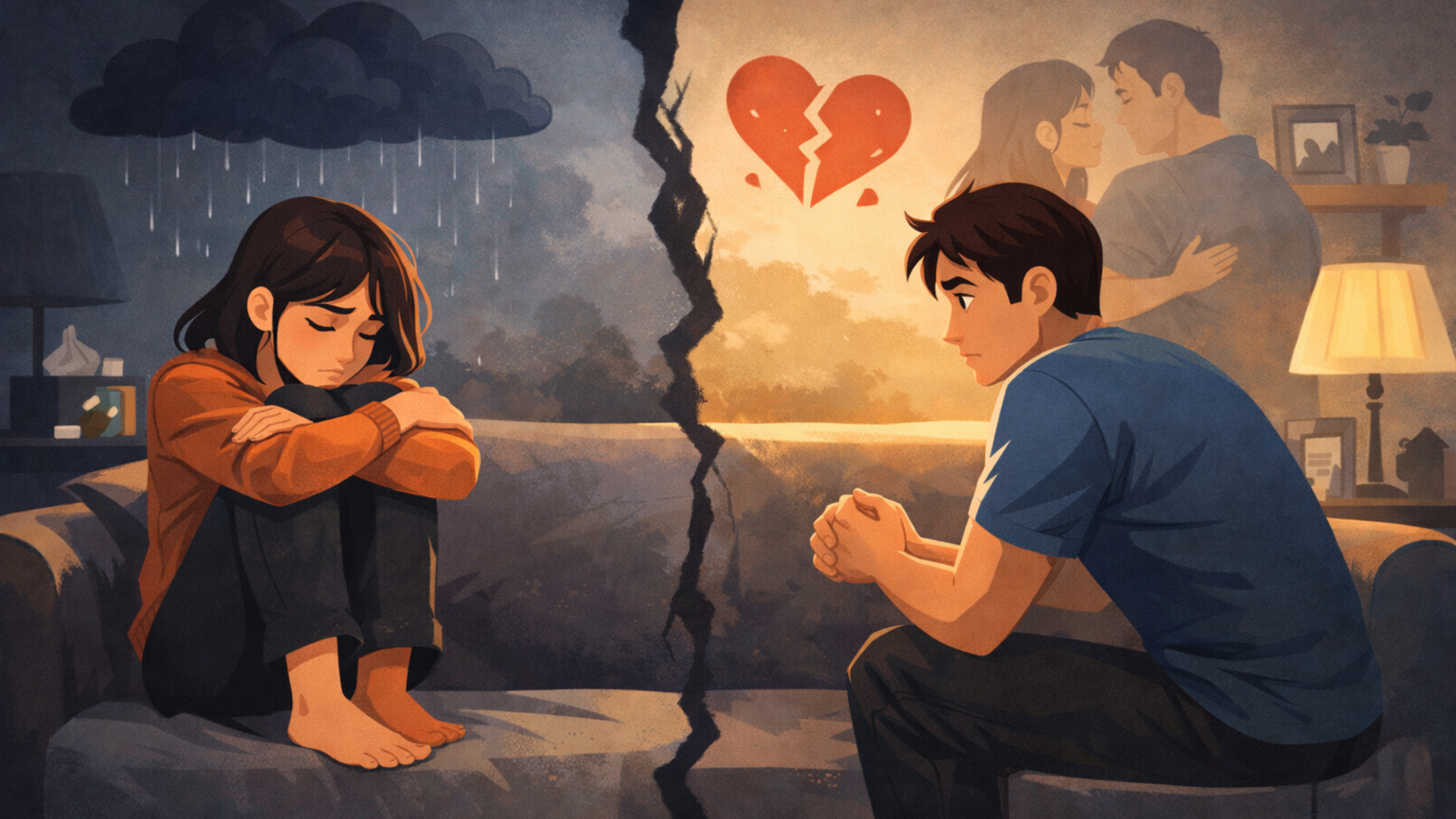
Depression, even in the modern world, is often drastically misunderstood. It is frequently labelled as just a state of sadness, but in reality, it is a serious medical condition that affects an individual’s behaviour, energy levels, and emotional responses. According to the National Institute of Mental Health, depression affects nearly 21 million adults in the US each year, reinforcing its scale and seriousness.
“Partners need to understand that depression isn’t simply sadness; it is a state that can fundamentally affect how a person sees themselves, their partner, and the world around them,” Cosmopolition quoted relationship expert Carolina Pataky, PhD, as saying.
Mental health resources such as Healthline and WebMD highlight that individuals suffering from depression may struggle with motivation, communication, and daily functioning, which can impact both their everyday life and their relationships.
Emotional distance and misinterpretation
Out of everyone around them, the person most affected by the illness is often the individual’s partner or spouse. Depression has a history of causing emotional withdrawal, which is often misunderstood as disinterest. Talkspace reports suggest that people affected by depression may appear distant or disengaged, even if they remain emotionally involved.
Also Read | What is coffin-lying? The wellness trend in Japan that’s raising eyebrows
“When you love someone with depression, you may notice moments where they withdraw, struggle to engage, or feel disconnected from the joy and connection you share,” says Pataky. “This isn’t a reflection of their love, but the lens depression places over their experience.”
This often leads to misinterpretation, where partners may begin to believe that their loved one no longer cares for them, perceiving it as rejection rather than a symptom. If not understood in time, this can slowly damage the relationship.
Why can support not replace treatment?
People often believe that it is their job to “fix” their partner’s depression. Although mental health professionals emphasise that emotional support and understanding are crucial, they cannot substitute professional treatment. WebMD states that attempting to fix a partner’s depression can create additional pressure on both individuals, leading to frustration on both sides.
“As their partner, it is normal to want to help them find relief… however, you will not be able to completely eradicate their depression,” Cosmopolitan cited psychotherapist Markesha Miller, PhD as stating.
“Depression deserves the same attention and care we would give to any medical condition,” adds Pataky. “Partners can support the journey, but they are not the cure.”
For long-term management, structured treatment, including therapy or medication, remains essential.
Communication challenges within the relationship
Depression also affects the way people process and respond to communication. Research by Talkspace indicates that even positive reassurance may be filtered negatively due to cognitive distortions associated with depression. It is crucial to understand that this is not the individual’s fault but a symptom of the condition.
“Supporting a partner with depression begins with presence, not fixing,” says Pataky. “Simple validation like ‘I’m here with you’ can be more powerful than advice.”
This can be managed through consistent, patient, and non-judgmental communication.
Also Read | Why Gen Z is ditching digital for vinyl, Polaroids and real-life experiences
The role of boundaries and self-preservation
As per the report by Cosmopolitan, therapists recommend maintaining personal boundaries when a partner is struggling with depression. According to counselling sources, partners must protect their own mental well-being while offering support.
“Relationships affected by depression require a deeper commitment to empathy, patience, and boundary-setting,” says Pataky.
Without boundaries, there is a higher risk of emotional burnout, which can further strain the relationship over time.
Changing relationship dynamics
A study published on the National Institutes of Health (NIH) platform indicates that depression can influence relationship satisfaction, increasing conflict while reducing intimacy.
“This can create imbalances where one partner feels responsible for lifting the other up emotionally,” explains Pataky, highlighting the need for awareness and balance.
However, the same research also suggests that stable, supportive relationships can positively contribute to managing depressive symptoms.
Disclosure and stigma in dating
Surveys conducted by mental health platforms suggest that individuals often hesitate to open up about depression in the early stages of a relationship due to fear of being judged. However, those who do disclose their condition frequently report better understanding, stronger communication, and improved emotional connection.
Experts often say that while depression looks different for everyone, open conversations can help reduce stigma and build trust between partners.