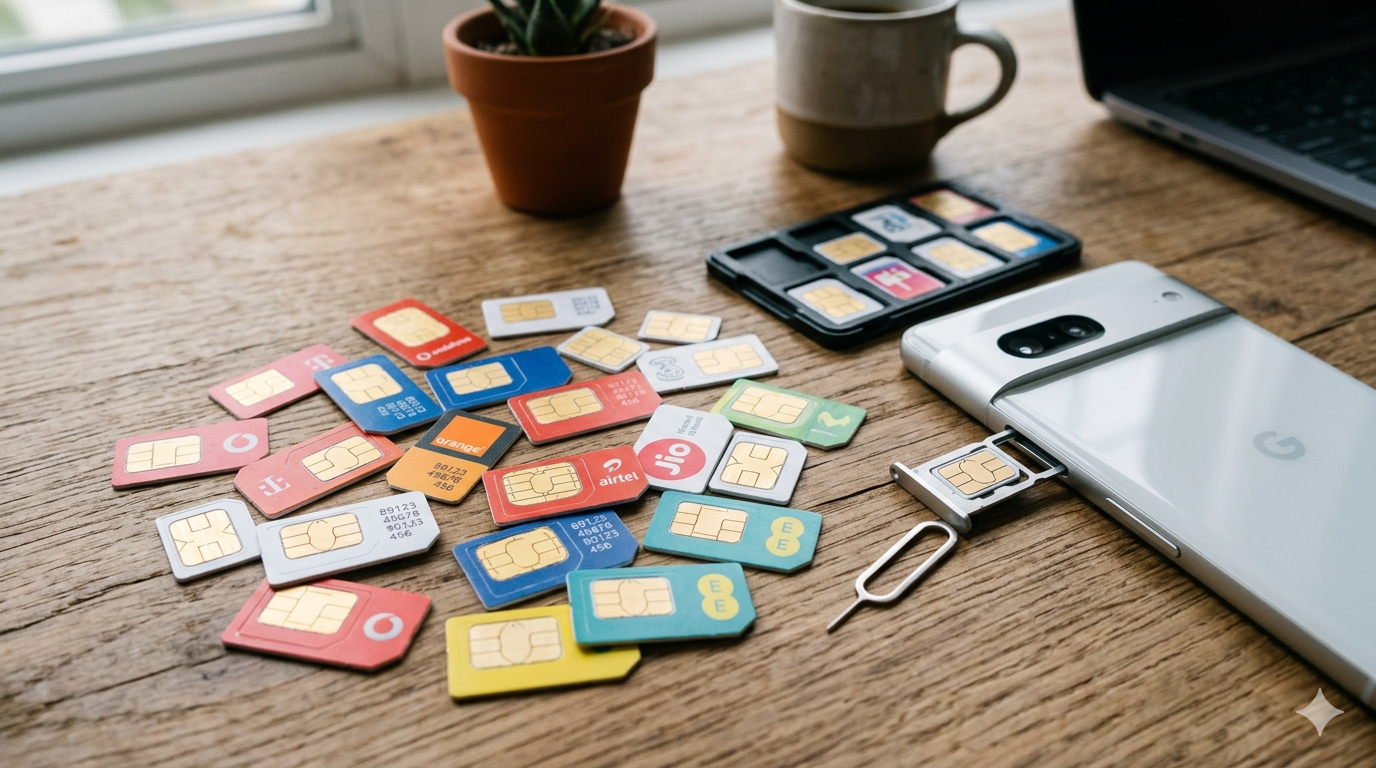
Have you ever noticed that small cut on one corner of your SIM card and wondered why it’s there? It may look like a minor design detail, but it plays a crucial role in how your phone works every day, according to Zee News.
The cut corner on a SIM card is known as a “key.” Its main purpose is to ensure that the card is inserted into a phone in the correct direction. This angled edge acts as a guide, since SIM cards are small and can easily be placed the wrong way.
Also Read | How AI is reshaping political campaigning across key Indian states?
Without this design, smartphone users could accidentally insert the SIM card the wrong way, potentially damaging the card or the phone’s internal connectors.
The cut corner significantly reduces this risk. It ensures proper alignment of the metallic contacts on the SIM card with the pins inside the SIM tray, which allows smooth communication between the device and the network.
Universal design
This feature is not limited to one brand or model. The cut corner design follows global telecom standards, making SIM cards compatible with phones worldwide. Whether it’s a standard SIM, micro SIM, or nano SIM, the same angled corner exists across all formats.
Also Read | Why satellite phones work on mountain tops but are restricted in India: Here's what you need to know
Reliable manufacture
Apart from ease of use, the design reportedly also helps manufacturers streamline production. With a fixed orientation system, device makers can design SIM slots more efficiently, reducing errors during manufacturing and improving overall reliability.
While it may seem like a small detail, the cut corner on a SIM card is a smart and practical solution. It prevents user mistakes, protects devices, and ensures seamless connectivity. The next time you insert your SIM card, that tiny, angled edge will remind you how thoughtful design can quietly power everyday technology.