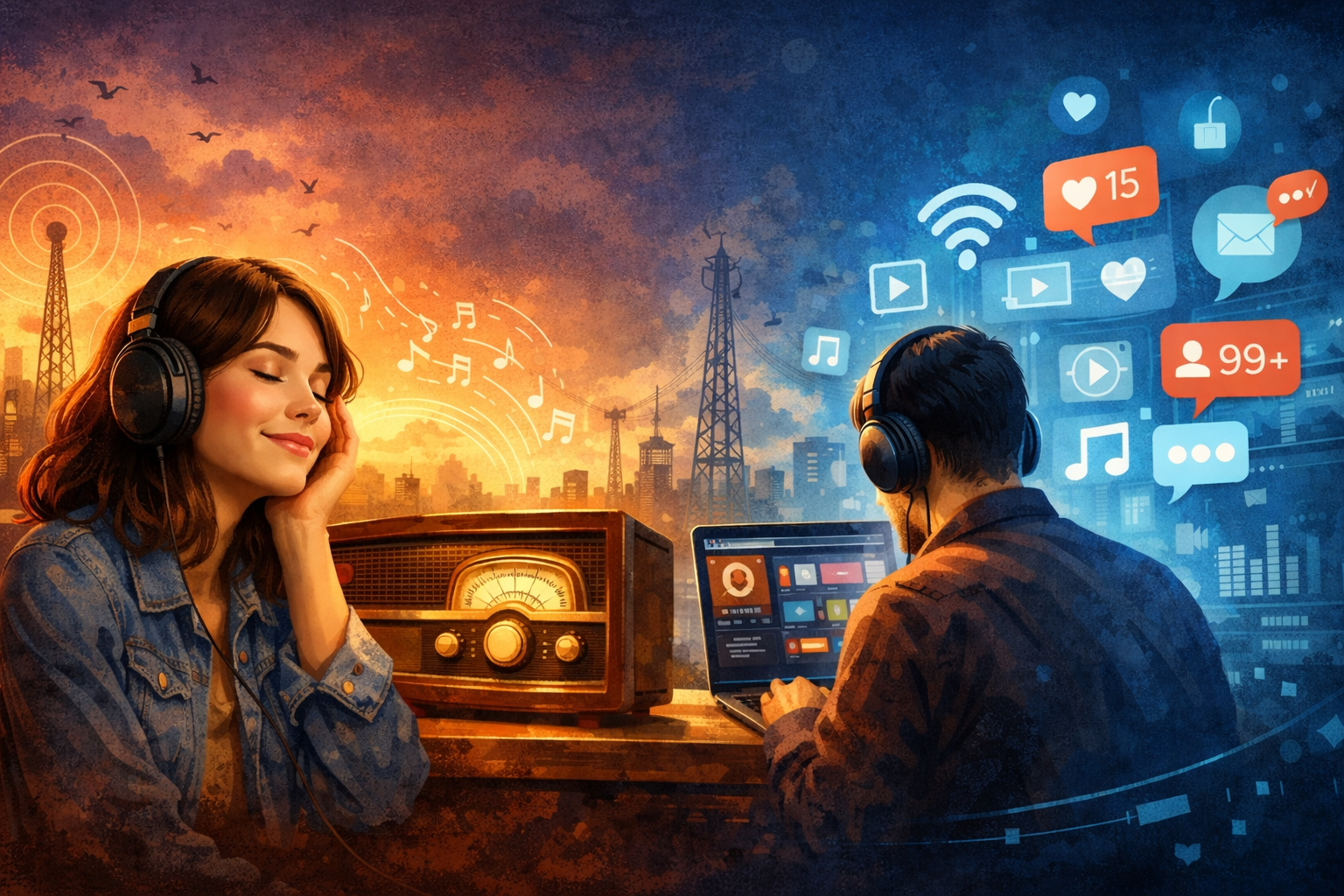
All India Radio once filled living rooms across the country, until television gradually pushed radio into the background. The arrival of Doordarshan marked a visual shift that changed audience habits and advertising patterns. For a while, it seemed the age of listening had dimmed.
Yet in the digital era where podcasts, audiobooks and streaming platforms are ruling the content landscape, audio is not fading, it is evolving... On World Radio Day, two radio jockeys reflect on whether “just listening” has quietly found its way back.
Imagination in a screen-dominated age
Radio artist Tomojit Das believes radio’s strength lies in its ability to preserve imagination. “I believe radio keeps our imagination alive. In this era dominated by visuals, amid countless images and screens, many people still turn to the radio to rediscover their thoughts, imagination, and the power of reflection. They imagine things in their own way, something that is only truly possible through an auditory medium,” he said.
“No, there is no break from visual overload… radio is never a break from visual overload. On the contrary, when we try to take a break in our life, when we like to take a break, when we try to think of something new in life, then we keep the radio close.”
He adds that, unlike digital videos that may “force people to think like them,” radio allows space for personal thought. “When I close my eyes and listen to him, then a place of thought is created in my own way.”
Competition or continuation?
On the rise of podcasts and audiobooks, Tomojit is clear: “Podcasts, audiobooks, and audio OTT platforms are all pre-recorded; they follow a script. But radio shows are entirely live, where there is very little room for correction. Podcasts, audiobooks, OTT, and radio are never competitors of one another.”
Calling them an “extension of the same storytelling,” he says audiobooks are “just carrying that thread in today's format.”
The power of emotional bonding
Radio artist Arijit Chatterjee highlights radio’s emotional immediacy. “Absolutely, there is no doubt here that this is the biggest medium of emotional connection, except radio, we can't connect emotionally with it to date.”
Also Read | ‘Research itself is a thriller for me’: Srijit Mukherji spills why unanswered pasts excite him
He who anchors a late-night counselling-based programme says listeners often wait an entire week for their moment to speak. “That act of waiting for a specific time carries its own significance … who is there to listen to my mind? Who is there to listen to my words? For that, there is a radio.”
Even as radio jockeys are now visible on social media, he insists the magic remains. “When we heard his voice, we imagined him as one of us… This is the uniqueness of a radio.”
In an age of endless scrolling, the quiet act of listening appears not outdated, but enduring.