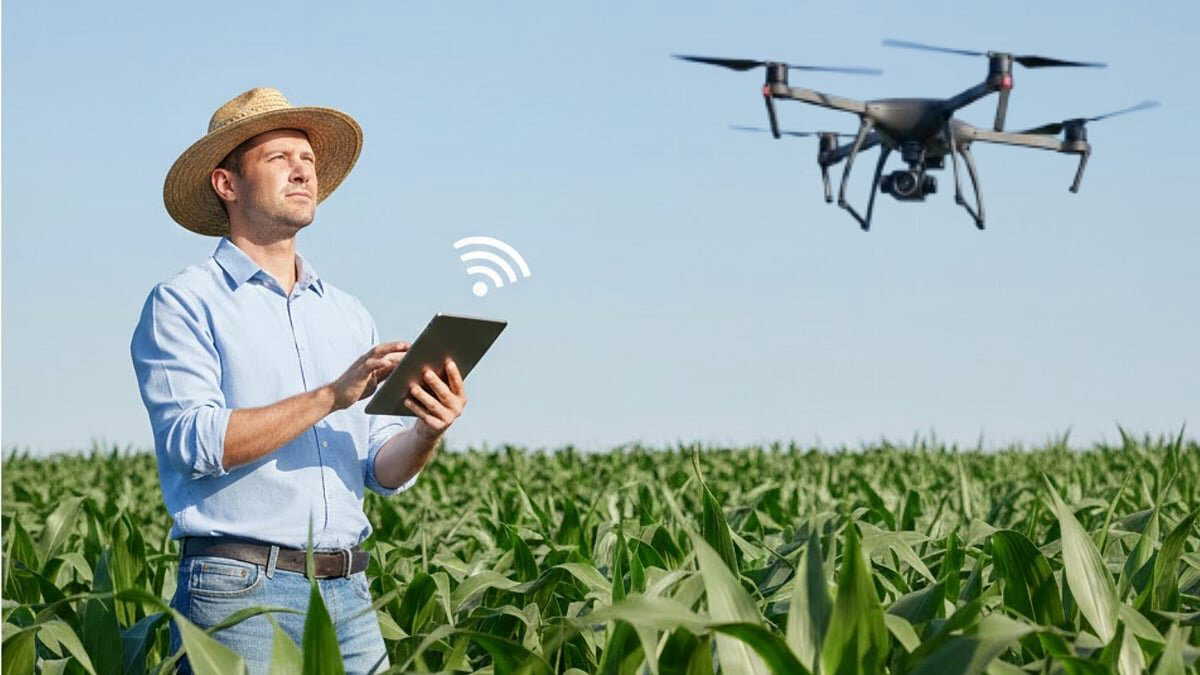
Agricultural experts believe that meaningful progress in farming is no longer possible without adopting technology-driven or precision agriculture practices. By using sensors, drones, GPS systems and artificial intelligence (AI), farmers can increase yields while reducing costs. This approach, often referred to as technology farming, allows for more efficient and scientific cultivation.
However, experts have expressed concern that in Durgapur, known both as an industrial city and now an emerging education hub, there is still no academic programme dedicated to precision agriculture. The city hosts several colleges and institutions offering professional courses in medicine, nursing, engineering and hotel management, among others. Yet students have no opportunity to formally study precision farming, despite the growing scope for employment and self-reliance in this field.
In an effort to introduce such a course, Swarup Chattopadhyay, former director of the Indian Council of Agricultural Research (ICAR), recently held discussions with the authorities of a private college in Durgapur. He said, “The college authorities have expressed interest. The United States, Israel, New Zealand and various other countries started technology farming long ago. The demand for precision agriculture is gradually increasing in our country and in this state.”
Precision agriculture enables farmers to monitor crop health and apply pesticides or fertilisers using drones. GPS-guided tractors and automated irrigation systems help minimise the wastage of water and fertilisers while ensuring better yields. Advanced Yara N-sensors installed on the tractor canopy, the roof above the driver’s seat, offer further advantages. These sensors can measure the nitrogen requirement of crops in real time, ensuring that each part of the field receives exactly the amount of fertiliser needed.
ALSO READ | Ex-Kolkata CP’s son duped in cyber scam; accused nabbed in Odisha
Aniruddha Raychaudhuri, former official of the state government’s Horticulture Department and a noted agriculturist, pointed out that cultivable land is steadily shrinking. “To achieve higher yields through environment-friendly farming on less land, there is no alternative to technology farming,” he said. He added that modern farming requires advanced tools such as drones, AI systems, sensors, GPS-enabled devices, data analytics and internet connectivity. According to him, this approach makes it possible to increase profits while maintaining crop quality.
Kartik Kalindi, a resident of Nabdiganta Colony in Ward 28 of Durgapur, studied precision agriculture at IIT Kharagpur. He has recently trained farmers in Durgapur as well as in Barabani (West Bardhaman), Phulberia (Bankura) and Dhanbad (Jharkhand). He has also applied these methods in his own farming practices.
Kalindi explained that conventional farming results in nearly 25 percent wastage of resources such as water and fertilisers -a problem that precision agriculture can significantly reduce. He noted that in paddy cultivation, spreading azolla, an aquatic fern, in the field allows it to dry and convert into nitrogen naturally. Using GPS technology, farmers can determine which crops are best suited for specific plots of land. “This will not only produce very high-quality yields, but production will also be three times higher,” he said.
Still, he expressed disappointment that despite the range of professional courses available in Durgapur’s colleges, there is no dedicated programme in precision agriculture.