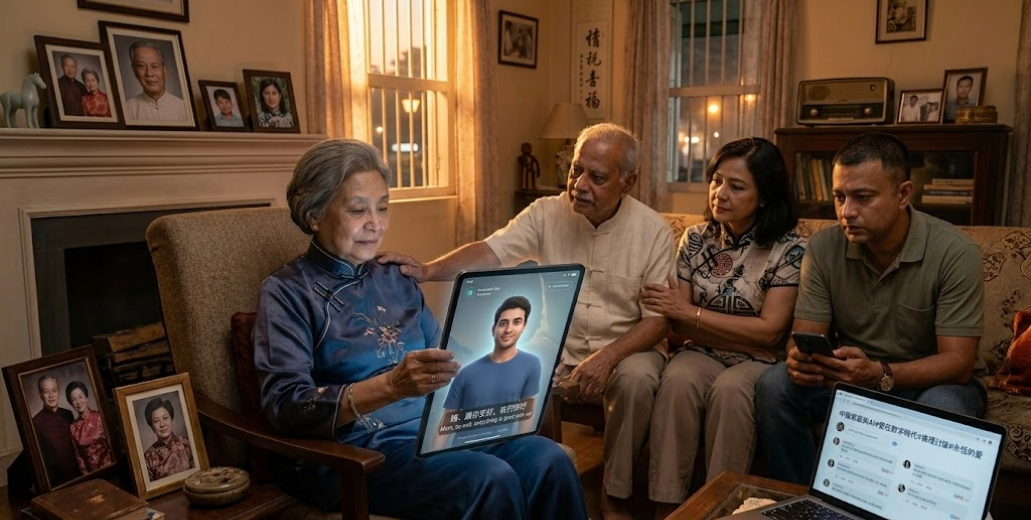
AI is growing fast and changing how people deal with loss, memories, and emotions. In a very emotional and controversial case from China, a family used AI to recreate their dead son to comfort his elderly mother. The story quickly went viral and made people question the use of technology in such situations.
Now, AI can easily create realistic digital versions of people using very little data. It can copy voices, faces, and even behaviour.
This case shows how far families can go to protect their loved ones from pain. At the same time, it has started a global debate on whether this is caring or misleading.
Also Read | Kashmir’s tulip garden sees record tourist surge this spring — here’s what we know
How the AI avatar was created
The family from Shandong province decided to approach an AI company after struggling with how to break the news of the son’s death to his elderly mother, who is in her 80s and suffers from heart disease. They wanted to avoid causing her severe emotional distress. According to a report by South China Morning Post, after thinking it through, the man’s son contacted Zhang Zewei and asked him to create a digital avatar of his father.
The son provided multiple photos, videos, and audio recordings of his father. Using this data, the AI team recreated a digital version that closely resembled the deceased man, even copying his way of leaning forward while speaking.
Daily conversations with a virtual son
Not knowing the truth, the elderly mother now talks to the AI version of her son every day through video calls. It feels so real that she continues her normal conversations with him.
She often expresses care and concern, saying, "You should call me more often so that I know whether you live well or not in another city. I am missing you so much. I feel so sorry that I cannot see you in person." The AI responds in a similar tone, maintaining the illusion.
A comforting lie or emotional risk?
The AI “son” tells her that he is working in another city and will return after earning enough money. While this brings her comfort, it raises serious ethical questions about truth and emotional well-being.
Experts and social media users are divided on whether such use of AI is helpful or harmful, especially in the long run.
Also Read | 'We were five people and 37 minutes late': Kimono rental delay turns dramatic for Indian family in Japan
Social media reacts strongly
The story has received mixed reactions online. Some people feel the family’s decision is kind and needed to protect the elderly woman’s health.
Others, however, feel that this could lead to deeper emotional harm. One user said, "Wasn't this literally the premise of a Black Mirror episode?" Another wrote, "It is very touching. The AI son is a gentle lie." A third commented, "My father-in-law has Alzheimer's and when we told him his wife died, it crushed him. Then he'd forget and ask where she was, it crushed him each time, so we started lying about her whereabouts. She's in rehab, at the doctor's office, etc. This, this isn't that. No good will come of this."
This incident shows how strong AI has become in affecting people’s lives, especially during sad times. Even though the family did it out of love, but it also makes it hard to know what is the real truth.
As AI keeps growing, people will need to think more about what is right and wrong.Some may see it as kind, while others may find it risky.It clearly shows how technology is now closely connected to human emotions.