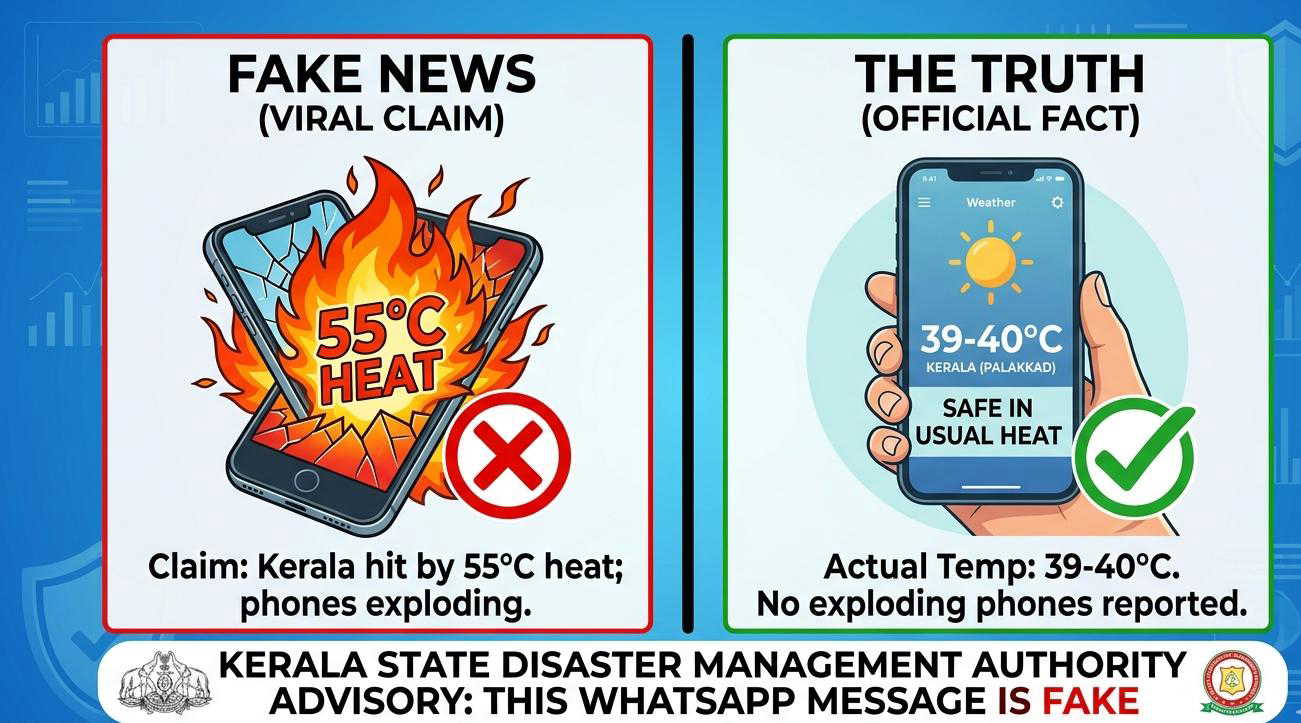
A viral message circulating on WhatsApp has sparked concern by claiming that extreme heat in Kerala could cause mobile phones to explode. However, authorities have clarified that this warning is completely false and misleading.
What the viral message claimed
The widely shared message stated that Kerala would experience temperatures between 45 degrees and 55 degrees from April 29 to May 12, reported News 18. It also warned people against stepping outdoors, claimed that mobile phones could explode due to the heat, and advised against filling fuel tanks completely.
Also Read | Shocking neglect case: Toddler ate 'diapers' and 'drywall' before death, parents arrested in Indiana
Per News 18, the message was circulated in the name of a “Civil Defense Department,” giving it an appearance of credibility. However, authorities have confirmed that the claims are baseless.
The Kerala State Disaster Management Authority (KSDMA) has clearly stated that the message is fake. It pointed out that there is no official forecast predicting temperatures as high as 54 degrees or 55 degrees anywhere in the state.
Officials also clarified that Kerala does not have a separate “Civil Defense Department” issuing such alerts. Civil defence functions in the state are handled as a volunteer wing under the fire services, and no such advisory has been released. The claims about mobile phones exploding and other precautions mentioned in the message were described as completely unfounded and intended to create panic.
According to official data, temperatures in Kerala have been high but remain within expected summer ranges. For instance, Palakkad recorded temperatures around 39–40 degrees, which are far from the extreme figures mentioned in the viral message. Weather agencies have not issued any warnings predicting a spike to 50 degrees or beyond in the state.
Legal warning against spreading
Authorities have also warned that spreading such false information is a punishable offence. Under Section 54 of the Disaster Management Act, 2005, creating or sharing fake warnings can lead to legal action. The advisory stressed that such messages, especially when disguised as official alerts, can cause unnecessary fear among the public.
Also Read | What is 'blood kick'? Inside the chilling new addiction worrying doctors in Bhopal
Rely only on official sources
Officials have urged people to avoid forwarding unverified messages and instead rely on trusted sources for updates. For accurate weather alerts and safety guidelines, citizens are advised to check official platforms of the disaster management authority and the meteorological department.