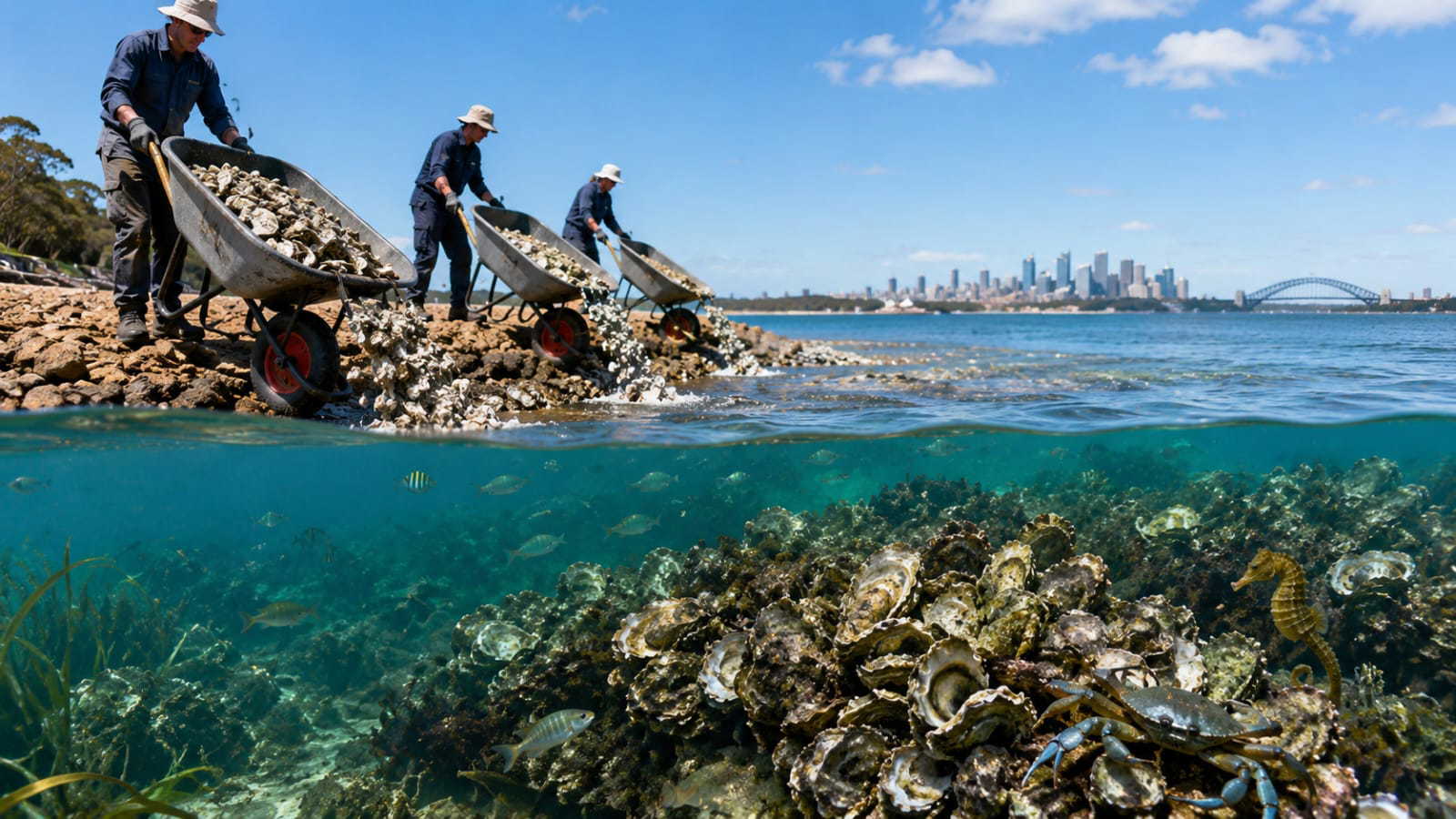
In one of the world's largest marine restoration efforts, Australia has transformed thousands of tonnes of discarded oyster shells into thriving underwater habitats, helping bring back native oyster reefs that had nearly vanished over the past two centuries.
The project has recycled the equivalent of more than 150,000 wheelbarrows of oyster shells, creating new reef structures that support marine life, improve water quality and strengthen coastal ecosystems.
A lost ecosystem returns
Native oyster reefs were once widespread along Australia's coastline. However, overharvesting, pollution and habitat destruction led to the disappearance of an estimated 99% of these reefs since European settlement.
Scientists have long considered oyster reefs among the most endangered marine ecosystems on the planet, making restoration efforts increasingly important.
Why oyster shells matter
Oyster shells serve as the foundation for new reefs. Young oysters naturally attach themselves to hard surfaces, and recycled shells provide the perfect habitat for them to grow.
Instead of sending shells from restaurants and seafood businesses to landfill sites, conservation groups began collecting, cleaning and returning them to coastal waters.
Over time, the shells create structures that attract marine organisms and encourage new oyster populations to develop.
More than 150,000 wheelbarrows of shells
The restoration initiative has recycled thousands of tonnes of shells, equivalent to more than 150,000 wheelbarrow loads.
The shells have been used across multiple reef restoration sites, helping rebuild habitats that support fish, crabs, seahorses and numerous other marine species.
Also Read | 'A rare sense of safety': Indian woman walks barefoot at 4:30 am in France
According to Times of India report, conservationists say the scale of the project demonstrates how waste materials can be repurposed to achieve significant environmental benefits.
Benefits for marine life and water quality
Oyster reefs provide numerous ecological advantages.
They:
Create habitats for fish and other marine animals
Improve biodiversity
Help protect shorelines from erosion
Filter and clean seawater
A single oyster can filter large quantities of water each day, helping remove excess nutrients and particles that can harm aquatic ecosystems.
A model for future restoration project
As per Times of India, environmental experts view the project as a successful example of large-scale ecosystem recovery.
By combining recycling, scientific research and community participation, Australia has shown that damaged marine habitats can be restored when long-term conservation efforts are supported.
Also Read | Gen Z brings back millennial-era fashion trends: Niti Bothra reveals
As per Times of India, researchers hope similar reef restoration initiatives can be expanded to other regions facing biodiversity loss and habitat degradation.
Hope beneath the wave
The return of oyster reefs offers a rare environmental success story at a time when many ecosystems are under pressure from climate change, pollution and human activity.
According to Times of India report for scientists and conservationists, the project highlights how innovative restoration methods can help rebuild natural habitats while benefiting both wildlife and coastal communities.
FAQs:
Why were oyster shells used in the restoration project?
Oyster shells provide a natural surface for young oysters to attach to and grow, helping create new reef habitats.
How many oyster shells were recycled?
The project recycled the equivalent of more than 150,000 wheelbarrows of oyster shells.